How to Make Your AI Tools Talk to Each Other


Why AI Tool Integration Is the Missing Link in Your Marketing Stack
AI tool integration is the process of connecting separate AI applications, data sources, and business systems so they can share context, pass information, and act together as a unified workflow — rather than as isolated point solutions.
Here's what that means in practice:
- Standalone AI tools (like a writing assistant, a chatbot, or an analytics platform) each work in their own silo
- Integrated AI connects those tools so data and context flow automatically between them
- The result is a system that learns, adapts, and acts across your entire stack — without manual handoffs
The core benefits of AI tool integration:
| Benefit | What It Solves |
|---|---|
| Context continuity | Eliminates data loss between tools |
| Workflow automation | Removes manual "copy-paste" between apps |
| Scalable intelligence | Turns point solutions into a compound system |
| Brand consistency | Applies your rules and voice across all outputs |
Here's the problem most senior marketers run into: you've already adopted AI. You have a writing tool, a research assistant, maybe a chatbot. But they don't talk to each other.
Someone on a Reddit automation forum described it well — it's like having five copilots all ignoring each other. Every tool is impressive in isolation. But moving information between them still falls on you. You're doing the connecting manually. That's the "swivel chair" problem — and it's exactly what integrated AI is designed to eliminate.
In 2026, the gap between teams that have stitched their tools together and those still copy-pasting between chat windows is becoming a serious competitive disadvantage. AI integration isn't just an IT project. It's a strategic force multiplier — the difference between a stack that assists your team and one that actually runs workflows on your behalf.
I'm Florian Radke, brand strategist and fractional CMO with 25 years of experience building brands at the intersection of technology and marketing — including AI-driven content engines for international brands and martech stacks scaled to eight-figure revenue. AI tool integration is one of the most consequential decisions a marketing leader can make right now, and this guide will give you the strategic framework to do it right.
Terms related to AI tool integration:
The Architecture of Modern AI Tool Integration
To move from static tools to adaptive systems, we need to understand the "plumbing" of the modern AI stack. In the past, integration meant brittle, custom-coded bridges. Today, the landscape has shifted toward a unified data fabric.

The primary challenge of siloed AI is context loss. When you move from a research tool to a content generator, the "state" of your project vanishes. You end up re-prompting, re-uploading, and re-explaining your brand's unique needs. This is where Tool calling and the Model Context Protocol (MCP) come into play.
MCP is becoming the industry standard for tool discovery and execution. It allows an AI assistant to "see" and "use" external data sources and apps through a standardized bridge. Instead of building 50 different connections, you connect your AI to an MCP-compliant hub that governs access to your entire Marketing Technology Stack.
Strategic leaders are now looking at "zero-copy" data architectures, championed by partnerships like Salesforce and Google Cloud. This approach allows AI agents to read data from sources like Google Lakehouse or BigQuery without actually moving or duplicating it. By keeping data in place, you reduce security risks and ensure your AI is always working with the most current business intelligence. This is a critical step in any AI Transformation Roadmap.
Bridging the Gap: No-Code vs. Developer-First Platforms
Choosing the right platform for AI tool integration depends on your team's technical depth and the complexity of your workflows. We generally categorize these into no-code orchestrators and developer-first infrastructure.
| Platform Type | Primary Examples | Best For | Key Advantage |
|---|---|---|---|
| No-Code | Zapier, Workato | Marketing Ops, Growth Teams | Speed and 10,000+ connectors |
| Developer-First | Composio, Nango, Arcade | Engineering, Product Teams | Managed Auth & Tool Execution |
| Internal Tooling | Retool | Internal Ops, Custom Apps | Secure, data-connected interfaces |
The "hard part" of integration isn't the AI's logic — it's the authentication. Managing OAuth 2.0 flows, API key rotation, and token storage can take weeks of development time. Modern platforms now offer managed authentication, abstracting that complexity away so you can focus on the workflow itself.
Scaling with No-Code AI Tool Integration
For most marketing teams, Zapier remains the gold standard for rapid deployment. With over 10,000 connections and specialized AI by Zapier: Easily add AI steps to your workflows | Zapier actions, you can build autonomous agents that trigger based on real-world events.
For example, a "New Lead" in your CRM can trigger an AI step that researches the prospect's LinkedIn, summarizes their recent posts, and drafts a personalized outreach email in your Marketing Workflow Software. By using the Zapier Chrome extension AI by Zapier Integration - Quick Connect - Zapier, your team can even trigger these complex chains directly from their browser, turning every web page into an input for your automated systems.
Crucially, these no-code platforms are introducing "Human-in-the-loop" steps. This ensures that while the AI does the heavy lifting, a human provides the final "push" or approval before content reaches a customer, preserving brand integrity.
Developer-Centric AI Tool Integration with Composio and Nango
When you need to build deeper, more reliable agents, developer-first platforms like Composio and Nango provide the necessary infrastructure. Composio offers over 850 pre-built connectors that are "Type-safe," meaning the AI can easily discover what each tool does and how to use it without making execution errors.
These platforms excel at observability. When an AI agent fails, you need to know why. Did the API change? Did the LLM hallucinate the arguments? Platforms like Retool AI and Composio provide native tracing, allowing you to debug non-deterministic agent behavior in production. This level of control is essential for Advanced AI Techniques for Content Creators Workflow Optimization.
Strategic Implementation: From Data Silos to Brand Moats
In the age of AI, your brand is your moat. If your AI integrations only produce generic content, you're participating in a race to the bottom. To win, your AI tool integration must be "brand-aware."
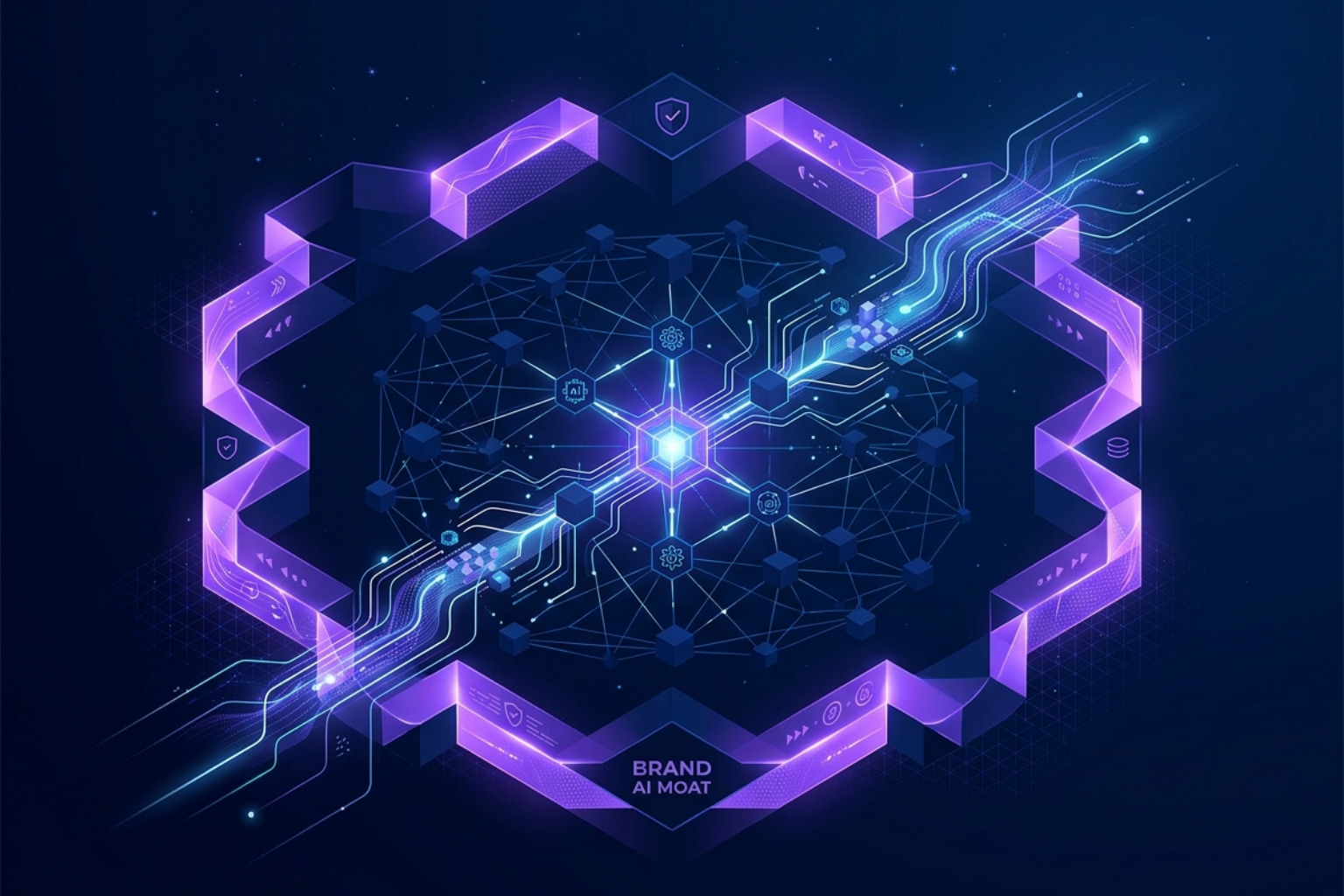
This requires a centralized Knowledge Base. Tools like Jasper AI allow you to connect "Knowledge Connectors" (like Google Drive or SharePoint) directly to the AI. This ensures that every piece of content generated across your stack is grounded in your Jasper AI Brand Voice and factual brand data.
When you integrate AI that knows your brand, you move beyond simple automation into Generative Engine Optimization (GEO). Your tools aren't just talking to each other; they are collaborating to reinforce your unique market position. This is the cornerstone of a modern AI Strategy for CMO and is vital for extracting AI for Customer Insights.
Security, Governance, and Observability in Integrated Workflows
As we grant AI agents more power to act across our systems, security becomes the primary bottleneck. IT leaders are rightfully concerned about "Shadow AI" — teams connecting sensitive data to unvetted models.
Effective AI tool integration requires a governance layer that includes:
- PII Detection & Redaction: Automatically scrubbing personally identifiable information before it reaches an LLM.
- AI Guardrails: Implementing filters for toxic language, prompt injections, and off-brand sentiment.
- Audit Trails: Maintaining a complete, searchable log of every action an AI agent takes across your company.
- RBAC (Role-Based Access Control): Ensuring only authorized team members can trigger specific AI actions or access sensitive data sources.
Platforms like Workato and Zapier Enterprise now offer "Bring Your Own Model" (BYOM) capabilities. This allows you to use your own secure infrastructure (like Amazon Bedrock or Azure OpenAI) while leveraging the integration's workflow logic. Following an AI Content Generation Ethics Guide is no longer optional; it’s a prerequisite for enterprise-grade adoption.
Frequently Asked Questions about AI Integration
What is the difference between standalone AI and integrated AI?
Standalone AI tools are isolated destinations where you go to perform a specific task (like ChatGPT for writing). Integrated AI is a fabric that connects those capabilities directly into your existing systems. Standalone AI requires you to bring the data to the tool; integrated AI brings the intelligence to your data.
How do I solve the "swivel chair" problem in my marketing stack?
The solution is to pick a "hub" where your team already works — such as Slack, Microsoft Teams, or your CRM — and use it as the orchestration layer. By using Marketing Technology Stack connectors, you can trigger AI actions across multiple apps from a single interface, eliminating the need to manually move context between windows.
Can I integrate AI into my existing systems on a budget?
Yes. Most major providers (Google Cloud, AWS, OpenAI) offer generous free tiers and credits for developers and startups. You can prototype your integration using free versions of tools like Zapier or Google AI Studio before scaling. Start with a single, high-impact workflow — like automated lead triaging — and expand as you prove ROI. Our DTC Brand AI Playbook offers more specific low-cost tactics.
Conclusion: Building the Agentic Enterprise in 2026
The shift from "AI as a tool" to "AI as an employee" is happening through integration. In 2026, the most successful organizations won't just have the best prompts; they will have the best-connected systems.
At The Brand Algorithm, we believe that AI tool integration is the key to unlocking true operational efficiency without sacrificing brand distinctiveness. By building a stack where your tools share a unified brand "brain," you free your creative team to focus on strategy and storytelling while the machines handle the orchestration.
The future is agentic. Your job is to build the framework that allows those agents to succeed.
Ready to move beyond generic AI? Sign up for the AI Brand Strategy Guide to learn how to build a defensible brand in an automated world.