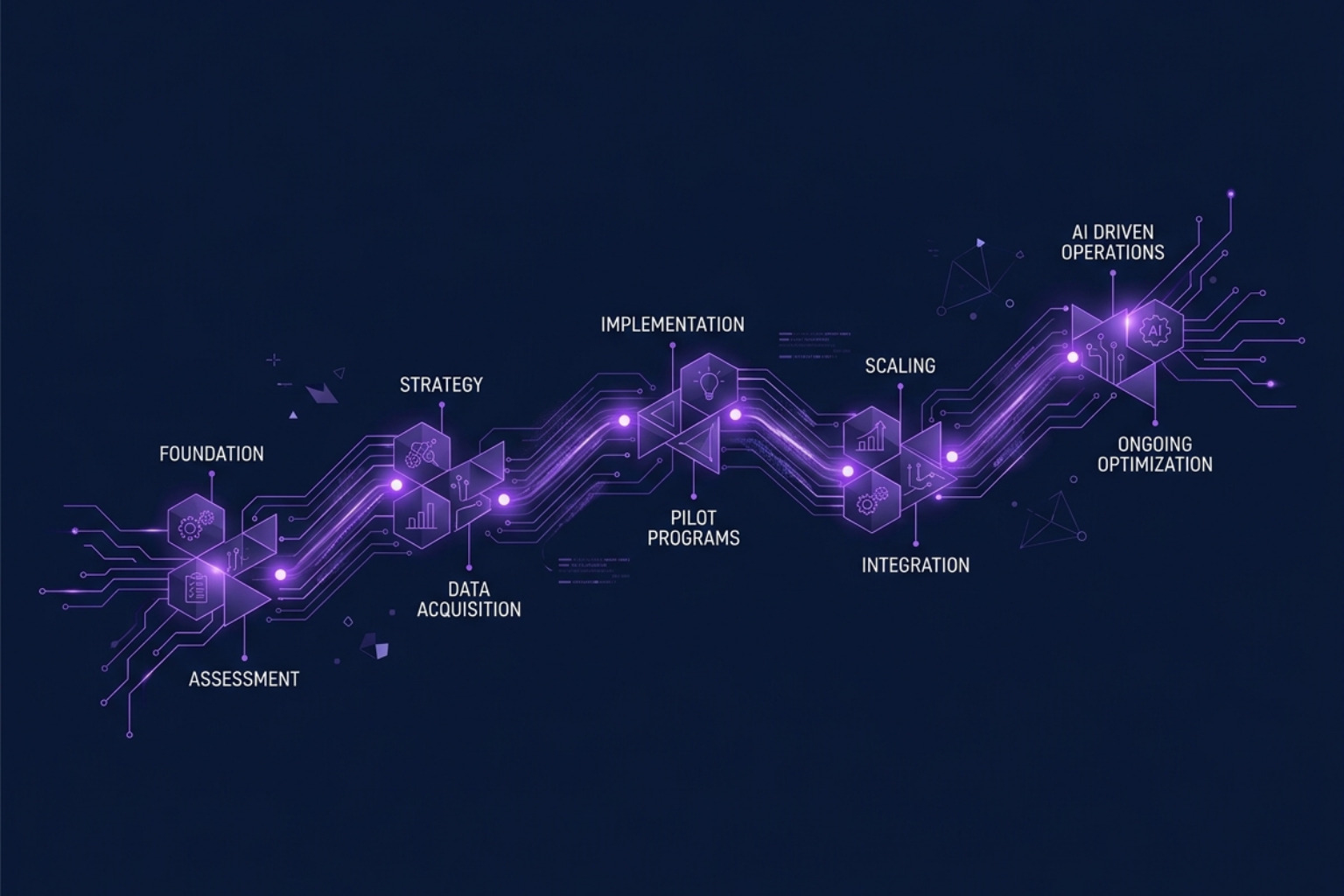
Your AI Brand Strategist is Ready to See You Now


Why AI Brand Strategy Is Now a Competitive Necessity
AI brand strategy is the practice of using artificial intelligence — including machine learning, natural language processing, and predictive analytics — to accelerate and sharpen how brands are researched, positioned, and expressed.
Here's what that looks like in practice:
- Research: AI scans thousands of data points — social sentiment, competitor positioning, audience behavior — in hours instead of weeks
- Positioning: AI generates and stress-tests brand positioning statements against real market data
- Messaging: AI drafts, refine, and validates brand voice across channels at scale
- Consistency: AI enforces brand guidelines across teams, tools, and markets in real time
- Optimization: AI monitors brand health and flags drift before it becomes a problem
This is not a future-state conversation. It's happening now — and the gap between brands using AI strategically and those still running on static PDFs and gut instinct is widening fast.
In the past two years, AI has gone from a boardroom talking point to a daily reality for brand strategists, designers, and senior marketers. The pressure is real. Boards want an AI strategy. Clients are asking what it means for their brand. And the tools are moving faster than most teams can evaluate them.
But here's the tension nobody talks about plainly: AI is exceptionally good at generating options, and exceptionally bad at making the right call.
It can surface patterns in consumer sentiment that would take a human team weeks to find. It can produce ten positioning statements before lunch. What it cannot do — at least not yet — is decide which one is true to your brand, or bold enough to actually differentiate you.
As one perspective in the branding world puts it, the risk of leaning too hard on AI outputs is what some have called the "Vanilla Effect" — a slow homogenization of brand voices as companies all draw from the same algorithmic well, producing work that is technically competent and strategically forgettable.
The brands winning right now are treating AI as infrastructure, not authorship. They are using it to move faster, see further, and execute more consistently — while keeping human judgment at the center of every strategic decision that actually matters.
This guide is built for the strategist, CMO, or brand lead who wants to do exactly that. As the industry evolves, we are seeing a fundamental shift from Brand Strategy to Survival Strategy: How AI is Changing the Landscape for Marketing and Business, where AI integration becomes the primary driver of market relevance.
Defining the Modern AI Brand Strategy
In the traditional world of marketing, a brand strategy was often a 60-page PDF that sat on a server, slowly becoming obsolete the moment it was exported. We call this "static intelligence." It relies on tribal knowledge and manual updates.
Modern AI brand strategy shifts us toward "machine-readable intelligence." Instead of a document, your brand becomes a structured operating system. This allows your brand guidelines to be "aware" of their surroundings. When a team member or an AI agent needs to create an asset, the brand's core DNA—its voice, values, and visual rules—is instantly accessible and enforceable.
This transition is often called "Brand Engineering." It involves taking unstructured brand knowledge (decks, meeting notes, old campaigns) and turning it into a "Brand Foundation." This foundation allows AI tools to understand your brand with the same nuance as a tenured creative director.
To help your team navigate this shift, we've developed comprehensive resources like our CMO AI Strategy Complete Guide and our specific breakdown on AI Strategy for CMO.
Traditional vs. AI Brand Strategy: A Comparison
| Feature | Traditional Brand Strategy | AI-Powered Brand Strategy |
|---|---|---|
| Research Speed | Weeks or months of focus groups | Real-time sentiment analysis in hours |
| Documentation | Static PDF guidelines | Living, machine-readable intelligence |
| Voice Consistency | Manual review and "gut feel" | AI-driven voice validators (87%+ accuracy) |
| Personalization | Broad audience segments | Hyper-personalized micro-segments |
| Competitive Edge | Reactive to market shifts | Predictive forecasting of trends |
By moving to an AI-driven model, we aren't just making things faster; we are making the brand more resilient. As Goldman Sachs research suggests AI could replace the equivalent of 300 million full-time jobs, the role of the brand strategist isn't disappearing—it's evolving into a role that manages these complex, automated systems.
The 5-Step Framework for Building Brand Identity with AI
Building a brand identity with AI isn't about clicking a "generate" button and walking away. It’s a structured process that combines high-speed data processing with high-level human synthesis. Whether you are navigating Branding for B-2-B or a consumer-facing startup, the framework remains the same.
Phase 1: AI Brand Strategy Research and Discovery
The first step is moving from "I think" to "I know." AI excels at scanning the landscape for white space. By using natural language processing (NLP), we can perform sentiment analysis across thousands of reviews and social posts. Research shows that 67% of consumers are influenced by online sentiment—AI helps us quantify that influence instantly.
In this phase, we use AI to:
- Identify Audience Archetypes: Moving beyond demographics to psychographic needs.
- Competitor SWOT: Analyzing competitor messaging at scale to find what they aren't saying.
- Trend Forecasting: Spotting patterns in cultural shifts before they hit the mainstream.
This approach is equally effective whether you are looking at Branding B2B vs B2C, as the AI can adapt its data sources to the specific market logic of your industry.
Phase 2: Defining Positioning and Messaging
Once we have the data, we need to find our "angle." AI can generate dozens of positioning statements based on proven frameworks like the STP (Segmentation, Targeting, Positioning) model. However, the goal here is differentiation.
A great brand strategist knows that if a positioning statement doesn't make you feel slightly uncomfortable with its specificity, it’s probably too generic. We use AI to stress-test these statements: "If I swap my brand name for a competitor's, does this still make sense?" If yes, the AI helps us iterate until the position is exclusive to us.
Crucially, this is where we establish the brand voice. To ensure that every piece of content stays on track, we recommend Ensuring Brand Voice Consistency in AI-Generated Content.
Phase 3: Visual Identity and Moodboarding
AI has revolutionized the visual "discovery" phase. Instead of spending days on Pinterest, we can use generative tools to explore color psychology and symbolism through conversation. By inputting our brand strategy, we can generate "visual extensions"—moodboards that represent our brand's soul through abstract shapes and light patterns.
This isn't just about logos; it’s about a visual system. For a deeper look at this, see our guide on Generative AI Branding.
Phase 4: Strategy Synthesis and Validation
In this phase, we take the outputs from the first three steps and compile them into a cohesive "Brand Operating System." This is where human expertise is paramount. We review the AI's suggestions for cultural nuance, emotional depth, and long-term viability. We don't just accept the "average" suggestion; we look for the outlier that feels human.
Phase 5: Implementation and Scaling
Finally, we deploy. This involves training custom AI models on our brand's specific "Brand Foundation." Now, every headline, social post, and press release generated by the team is automatically checked against our living guidelines.
Leading Tools and Platforms for Brand Engineering
The landscape of AI brand strategy tools is growing daily. We categorize these into three main buckets:
- Brand Management Infrastructure: Tools like brand.ai are leading the way in "brand engineering." They turn your static guidelines into structured intelligence that can power every other tool in your stack.
- Conversational Strategists: Platforms like AI Brand Strategist allow you to develop a full strategy through voice-guided conversation. These tools often use a 9-step framework to guide you from "Who are we?" to a fully editable strategy deck in minutes.
- Creative and Messaging Assistants: Tools like Jasper or Claude are excellent for drafting and refining voice. For those using these tools, our Jasper Brand Voice Complete Guide is an essential read.
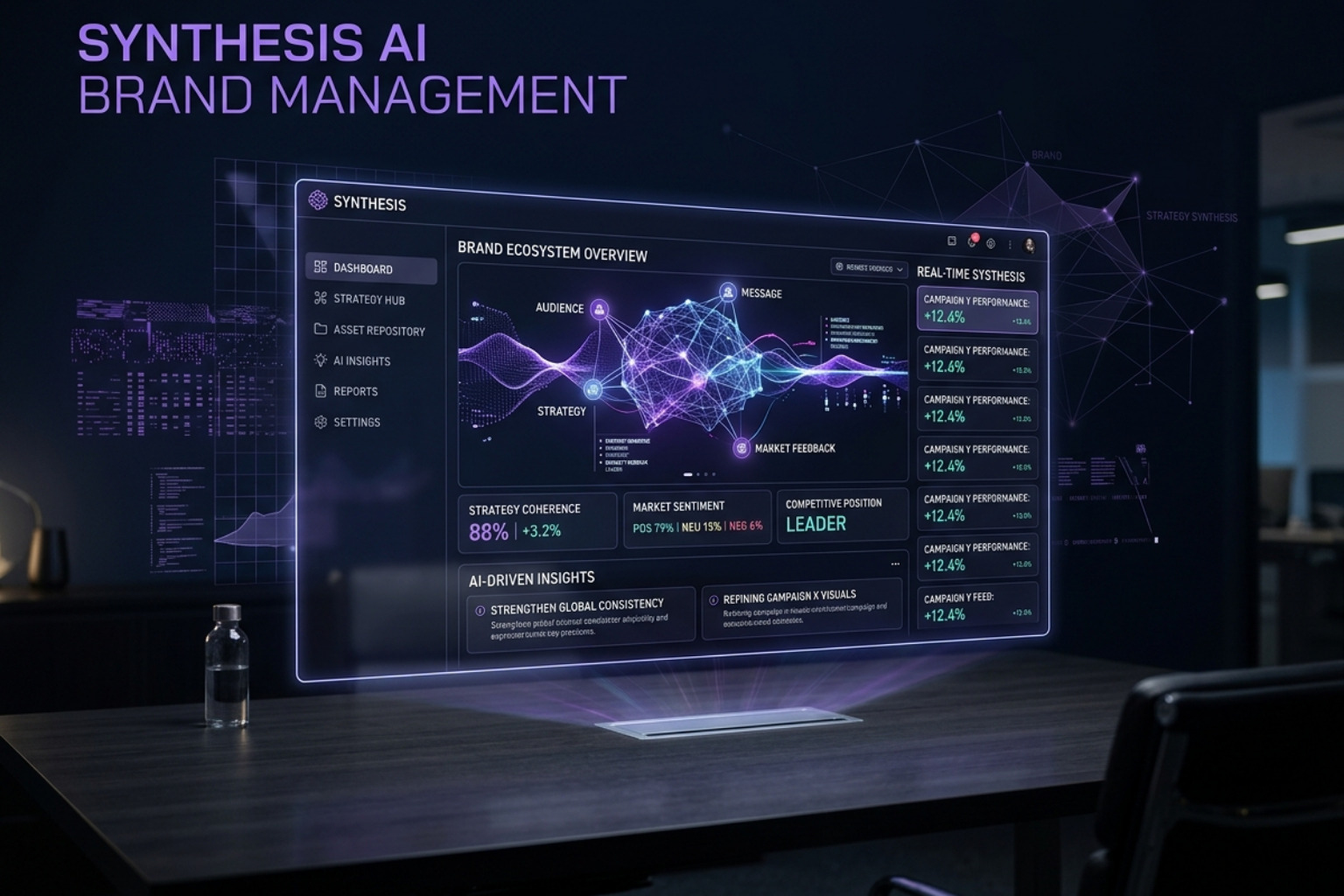
When selecting your stack, it's important to look for tools that offer "voice validation"—the ability to flag content that drifts from your established tone. For a full breakdown of the current market, see our Marketing AI Tools Evaluated page.
Overcoming the "Vanilla Effect": Maintaining Human Authenticity
The biggest threat to AI brand strategy isn't that the AI will fail—it's that it will be too successful at being average. Because most AI models are trained on the "middle" of the internet, their default output tends to be safe, neutral, and ultimately boring. This is the "Vanilla Effect."
To avoid this, we must remember that GPT-4, while demonstrating an estimated IQ of 155 (surpassing 99% of human intelligence), lacks lived experience. It doesn't have a "gut feel." It doesn't know what it’s like to take a risk because of a personal belief.
Balancing AI Efficiency with Strategic Soul in AI Brand Strategy
The secret to a breakthrough brand is unpredictability. AI is predictive by nature; it tells you what usually happens next. Great branding tells you what nobody expected to happen next.
We must use AI to handle the "boring" tasks—data cleaning, initial drafting, and grammar checks—so that we can spend our human energy on "strategic soul." This means focusing on emotional resonance and creative intuition. For more on optimizing this balance, explore our insights on Advanced AI Techniques for Content Creators Workflow Optimization.
Ensuring Brand Uniqueness in an AI Brand Strategy
How do we stay unique?
- Infuse Personal Stories: AI can't invent your company's founding "aha!" moment.
- Values-Driven Logic: Use your brand's specific values as "constraints" in your prompts.
- Voice Validation: Regularly audit your AI outputs. If they start sounding like everyone else, it’s time to retrain your model.
We’ve seen brands like Turo see a 20% increase in searches after using AI for authentic, human-sounding comments on trending videos. The key wasn't the AI—it was the authentic human strategy behind the AI's execution. Tools like Jasper AI Brand Voice can help maintain this distinctiveness at scale.
The Future of Branding: GEO and LLM Optimization
As search moves away from "blue links" and toward "AI answers," brand strategy must adapt to a new audience: the Large Language Models (LLMs) themselves. This is the era of Generative Engine Optimization (GEO).
In the near future, your brand won't just need to be "mentally available" to humans; it will need to be "model available" to AI. When a user asks an AI agent for a recommendation, will your brand be the one it cites?
To win in this environment, brands must:
- Create Structured Data: AI models love information-dense, well-structured content.
- Earn Citations: Just as backlinks mattered for SEO, being mentioned in authoritative sources (like Reddit, reputable news, or industry journals) matters for LLM training data.
- Optimize for Agents: We are moving toward "Agentic AI," where AI doesn't just answer questions but takes actions. Your brand needs to be "legible" to these agents so they can facilitate purchases or interactions seamlessly.
For the latest tactics on this front, check out our Best Practices for Increasing Brand Visibility in AI-Generated Search Results and our guide on Global AI Content Optimization Strategies.
Frequently Asked Questions about AI Brand Strategy
How does AI brand strategy differ from traditional methods?
Traditional brand strategy is often a static, one-time project resulting in a manual. AI brand strategy is a dynamic, ongoing process that uses real-time data to adapt and "living guidelines" that can be integrated directly into content creation tools. It moves from "gut feeling" to "data-validated intuition."
Can AI replace a human brand strategist?
No. AI can replace the tasks of a brand strategist—research, drafting, and data analysis—but it cannot replace the vision. A human strategist is needed to make the final, often counter-intuitive decisions that create a truly differentiated brand. Think of AI as the co-pilot, not the captain.
How do I ensure my AI-generated brand isn't generic?
To avoid the "Vanilla Effect," never use AI-generated content as a final product. Use it as a "Version 0.5." Always infuse the output with your brand's unique stories, specific values, and human quirks. Use prompt engineering to reference specific frameworks (like Jungian archetypes) to push the AI toward more sophisticated outputs.
Conclusion
The landscape of branding is shifting from a "Brand Strategy" to a "Survival Strategy." With computational power doubling approximately every 6-12 months, the speed of the market is now faster than human reaction time.
At The Brand Algorithm, we believe that the future belongs to the "Brand Engineers"—the senior marketers who understand how to harness the 155-IQ power of AI without losing their human vision. We are at a strategic crossroads: we can either react to the AI revolution or we can define the game ourselves.
The tools are ready. The data is available. Your AI brand strategist is ready to see you now. The only question is: are you ready to lead?
Sign up for the latest AI branding insights to stay ahead of the curve.