AI Content Platforms That Won't Make Your Brand Sound Generic


The Problem with Generic AI Content (And How Brand-Aware Tools Solve It)
AI content generators with built-in brand voice customization are the answer for marketing teams that are tired of AI output that sounds like it could have come from any company on the planet.
Here are the top tools that do this well:
| Tool | Brand Voice Approach | Best For |
|---|---|---|
| Jasper AI | Style guide + tone flagging | Enterprise marketing teams |
| Copy.ai | Sample analysis + saved voice presets | Mid-market teams scaling content |
| HubSpot AI | Content input analysis + presets | Teams inside the HubSpot ecosystem |
| Anyword | Performance data + brand parameters | Performance-focused marketers |
| Juma (Team-GPT) | Custom instructions + personas | Collaborative teams |
| Rellify | Voice, tone, and audience parameters | B2B content marketing |
| Typeface | Enterprise brand kits | Fortune 500 brand governance |
Here is the honest problem with most AI-generated content: it is technically correct and completely forgettable.
It does not sound like Apple. It does not sound like Dove. It sounds like filler.
That is because most AI models are trained to be broadly useful, not specifically yours. Without explicit brand guidance baked into the tool, the output drifts toward the average — competent, bland, and interchangeable with every competitor using the same platform.
For CMOs under pressure to scale content production, this creates a real tension. Move fast and lose your brand voice. Move carefully and lose the efficiency gains.
Brand-aware AI tools are designed to break that trade-off. Instead of treating brand voice as an afterthought you fix in edits, they treat it as a core input — analyzed, documented, and applied consistently across every output.
The business case is not trivial. Research shows brand consistency across channels can increase revenue by 10 to 33%. At scale, the difference between content that sounds distinctly like your brand and content that sounds generic is not just aesthetic — it compounds directly into recognition, trust, and commercial outcomes.
This guide cuts through the noise and shows you exactly which tools are worth your attention.
Why AI Content Generators with Built-in Brand Voice Customization are Essential
We have all seen it: a LinkedIn post that feels "uncanny valley," a blog post that uses the word "delve" three times in the first paragraph, or a customer email that is technically accurate but emotionally colder than a walk-in freezer. This is the "Generic AI" trap. When we use standard Large Language Models (LLMs) without a brand layer, we aren't just producing content; we are diluting our brand equity.
Your brand voice is the consistent personality you project across every touchpoint. It is why a customer can recognize a Nike ad or a Mailchimp newsletter without seeing the logo. In the age of AI, this identity is under threat. AI production accelerates the problem of "brand drift." When teams generate high volumes of content across multiple channels, they often rely on individuals remembering to consult a static PDF style guide. Usually, they don't.
Integrating ai content generators with built-in brand voice customization into your workflow is essential for several reasons:
- Revenue Impact: As noted by industry research, brand consistency across all channels can increase revenue by 10 to 33%. Inconsistency is literally expensive.
- Consumer Trust: Customers crave authenticity. If your brand sounds like a supportive friend on Instagram but a robotic bureaucrat in your blog posts, that friction erodes trust.
- Differentiation: In a sea of AI-generated noise, a unique voice is your only moat. If everyone is using the same underlying models, your specific "flavor" of communication is what keeps you from being a commodity.
- Operational Efficiency: Without built-in customization, your senior editors spend 80% of their time "fixing the AI" to make it sound human. With a brand-aware tool, you move toward a "70-80% pass rate," where the AI gets the vibe right on the first try.
By focusing on AI Marketing strategies that prioritize voice, we ensure that scaling up doesn't mean watering down.
Technical Methods for Teaching AI Your Brand Identity
How does a machine actually "learn" to sound like you? It isn't magic; it's a hierarchy of technical methods, each with its own trade-offs in terms of cost, complexity, and accuracy.
1. Prompt Engineering (The "Instructional" Method)
This is the simplest form. You provide the AI with a detailed set of instructions within the chat window. You tell it: "You are a witty, slightly cynical tech expert writing for Gen Z."
- Pros: Free, instant, and requires no technical setup.
- Cons: High "drift" risk. The AI might forget the instructions mid-conversation, and you have to repeat them for every new session.
2. Retrieval-Augmented Generation (RAG) (The "Library" Method)
RAG connects the AI to a specific database of your brand’s "greatest hits"—your best blog posts, successful ad copy, and internal manifestos. When you ask the AI to write, it first "retrieves" these examples to see how you’ve handled similar topics before.
- Pros: Highly accurate and reduces "hallucinations" because it uses your real data as a reference.
- Cons: Requires a tool that supports an "Infobase" or "Knowledge Base" connection.
3. Fine-Tuning and PEFT (The "Genetic" Method)
Fine-tuning involves actually updating the weights of the AI model using your brand's data. Parameter-Efficient Fine-Tuning (PEFT) is a more modern, cost-effective version of this. It essentially "bakes" your brand voice into the model's brain.
- Pros: The most consistent results possible. The AI is your brand voice.
- Cons: Very expensive and requires significant data science resources.
Comparison Table: AI Training Methods
| Method | Setup Cost | Consistency | Best For |
|---|---|---|---|
| Prompt Engineering | $0 - $500/mo | Low/Medium | Individual creators, small tasks |
| RAG (Knowledge Base) | $500 - $5,000/mo | High | Mid-market marketing teams |
| Fine-Tuning (Full/PEFT) | $50,000+ | Very High | Enterprise-level brand governance |
For most professional teams, AI Content Strategy Services focus on the middle ground: a combination of RAG and sophisticated prompt management to ensure the model stays on track without the six-figure price tag of full fine-tuning.
Leading AI Content Generators with Built-in Brand Voice Customization
Not all tools are created equal. Some "brand voice" features are just glorified text boxes, while others are deeply integrated systems. Here are the leaders in the space.
Jasper AI: The Enterprise Powerhouse
Jasper has moved beyond being a simple writing assistant to a full-scale AI-powered brand voice management platform. Their "Jasper IQ" suite includes a Style Guide and Knowledge base. What makes Jasper unique is its ability to flag off-brand tone in real-time and suggest adjustments, drastically reducing the review cycles for brand managers.
Copy.ai: Scaling with Presets
Copy.ai excels at taking existing content and turning it into a repeatable voice. Their Brand Voice features allow you to input at least 300 words of your best copy—social posts, emails, or memos—which the AI then analyzes to create a permanent profile. You can save multiple voices for different segments or sub-brands, making it ideal for agencies.
HubSpot: The Ecosystem Choice
If your team lives in HubSpot, their AI Brand Voice tool is a logical extension. It allows you to calibrate the AI by analyzing your existing content and saving those settings as "presets." You can then use "slash commands" and "highlight commands" within the editor to ensure the AI output aligns perfectly with your established style.
Anyword: Performance-Driven Voice
Anyword is unique because it doesn't just care about how you sound; it cares about how you perform. It uses a proprietary model trained on billions of top-performing marketing assets. It allows you to layer your brand voice over predictive performance data, ensuring your content is both on-brand and mathematically likely to convert.
Juma (formerly Team-GPT): The Collaborative Hub
For teams that need to work together on prompts, Juma provides a workspace where you can create custom instructions and "personas." This ensures that every team member, from the intern to the VP, is using the same brand parameters when they hit "generate."
Rellify and Typeface: The Specialized Contenders
Rellify focuses on B2B precision, allowing you to set specific parameters for audience personas and phrasing to avoid. Typeface, which recently acquired Narrato, is designed for the Fortune 500. It provides "Brand Kits" that manage not just verbal voice but visual guidelines, ensuring that characters and aesthetics remain consistent across global teams.
How to Build Actionable Brand Voice Guidelines for AI Tools
To get the most out of these tools, you cannot simply say "make it sound professional." AI needs "working infrastructure," not aspirational adjectives.
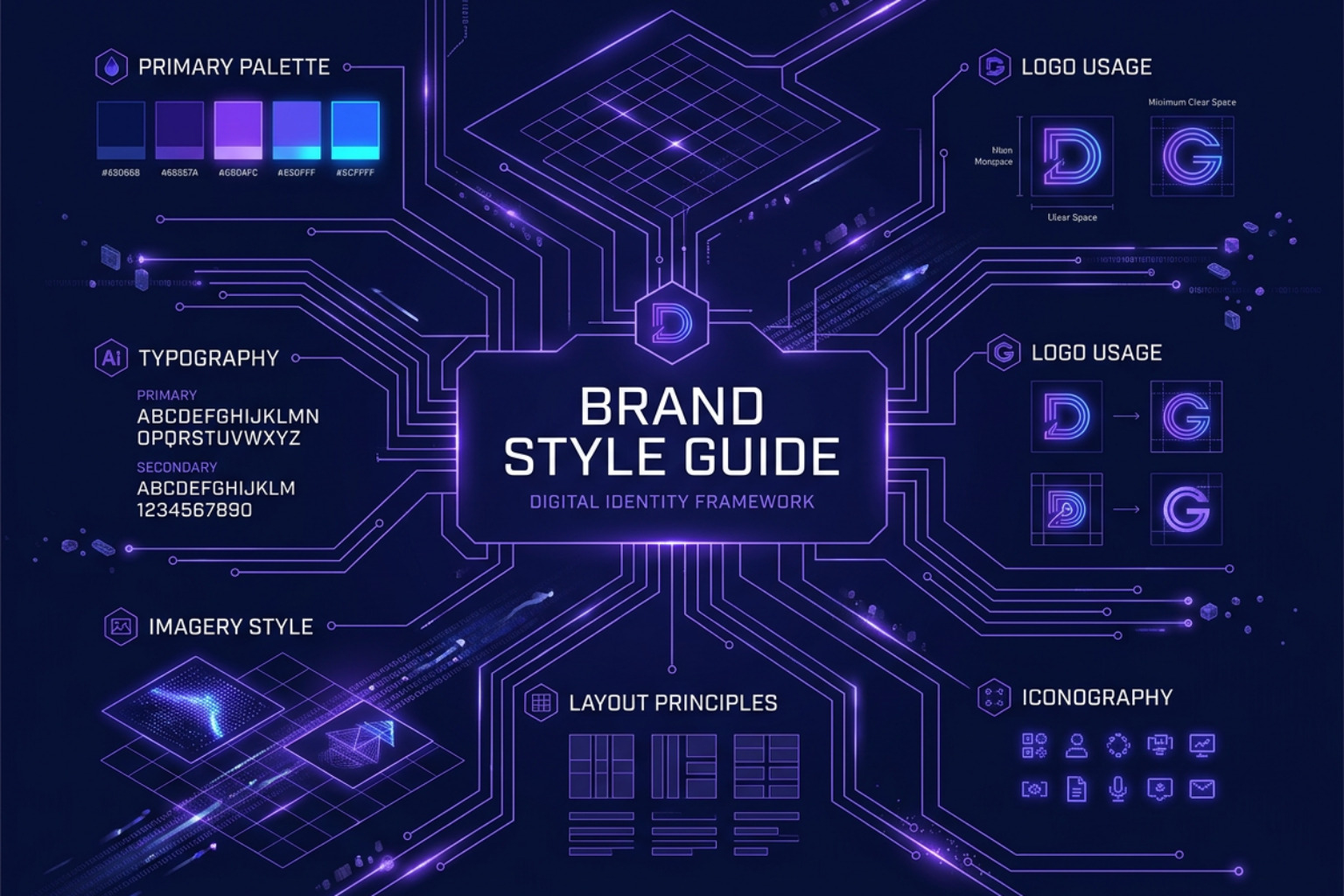
Here is how we recommend building guidelines that an AI can actually use:
- The 300-500 Word Rule: Most tools, like Copy.ai and KoalaWriter, require at least 300 words of sample text to accurately detect patterns. Feed the AI your "greatest hits"—the content that your CEO loves and your customers actually clicked on.
- Use Negative Examples: As the team at LTX Studio points out, telling an AI what you are not is often more helpful than telling it what you are. Include a "Do Not" list: "Do not use corporate jargon," "Do not use exclamation points," or "Do not sound overly enthusiastic."
- Define Tone Adjectives with Context: Instead of just saying "Energetic," say "Energetic like a coach encouraging a runner, not like a game show host."
- Iterative Testing: Don't just set it and forget it. Run a "10-prompt test set" where you ask the AI to write different types of content (a tweet, a blog intro, a formal email) using your new voice. Score the results on a rubric and refine the instructions.
- RACI Framework: Assign roles. Who is the "Owner" of the brand voice profile? Who "Consults" on updates? This prevents "voice creep" where the AI's personality slowly changes as different people tweak the settings.
If you are just starting, you can start your free 14 day trial with Enji to see how their AI copywriter can take a simple brand description and turn it into consistent social captions and blog drafts. Similarly, you can try it for free with Juma to experiment with custom personas and team-based prompting.
Frequently Asked Questions about AI Brand Voice
What is the difference between brand voice and tone in AI content generators with built-in brand voice customization?
Think of it this way: Your Brand Voice is your personality—it is stable and unchanging. Your Tone is your mood—it changes based on the situation.
An AI generator should keep your "Voice" consistent (e.g., helpful, expert, minimalist) but allow the "Tone" to shift. Your tone might be "cheeky and fun" on Instagram but "reassuring and professional" in a customer support email. Leading tools like Jasper and HubSpot allow you to set a core voice while selecting different tones for specific outputs.
How much sample text is needed for an AI to learn my brand voice?
While some tools claim to work with a single sentence, the consensus among practitioners is a 300-word minimum. For the best results, aim for 500 to 1,000 words of diverse content. This should include different formats (like a blog post and a social caption) so the AI understands how your voice adapts to different lengths and structures.
Can AI content generators with built-in brand voice customization handle multiple sub-brands?
Yes, enterprise-grade tools like Typeface and Jasper offer "Brand Kits" or "Style Guides" that allow for asset isolation. This is crucial for large organizations where the "Parent Brand" might have a very different voice than its "Sub-brands." These platforms allow you to switch between profiles so that your B2B software division doesn't accidentally start sounding like your consumer lifestyle brand.
Conclusion
The era of "Generic AI" is coming to a close. As the novelty of generative AI wears off, the market is rewarding brands that maintain their soul while leveraging the speed of the machine.
For the modern marketer, the goal isn't just to produce more content; it's to produce more on-brand content. By choosing ai content generators with built-in brand voice customization, you are protecting your most valuable asset: your brand equity.
At The Brand Algorithm, we believe that the CMOs who win in 2026 will be those who treat brand voice as "working infrastructure"—something embedded into their AI systems rather than a PDF gathering dust on a server.
If you want to stay ahead of the curve and understand how AI is reshaping the craft of marketing, Sign up for The Brand Algorithm and join a community of experts navigating the intersection of brand strategy and artificial intelligence.