Why AI is the Secret Sauce for Better Customer Insights

What is AI for Customer Insights and Why Does It Matter Now?
AI for customer insights is the practice of using artificial intelligence — including machine learning, natural language processing, and predictive analytics — to collect, analyze, and interpret customer data at a scale and speed no human team can match.
Here's what it means in practice:
| What AI Does | What That Means for You |
|---|---|
| Processes millions of data points instantly | No more waiting weeks for research reports |
| Detects patterns across channels | See the full customer picture, not just fragments |
| Predicts future behavior | Act before customers churn or trends shift |
| Automates sentiment analysis | Know how customers feel, in real time |
| Creates dynamic customer segments | Personalize at scale without manual tagging |
Most companies are drowning in data. Organizations now generate four times more unstructured data than structured data — think social comments, support tickets, reviews, and call transcripts. The insights are in there. The problem is getting to them.
Traditional research methods weren't built for this volume. Surveys take weeks. Focus groups are expensive. Analysts can only read so many spreadsheets.
Meanwhile, your customers are moving faster than ever. Their preferences shift. Their frustrations spike. Their loyalty is conditional.
AI changes the equation. It doesn't just speed up existing research — it unlocks entirely new kinds of intelligence that weren't possible before. That's why 92% of businesses now report using AI-driven personalization to grow, and why the gap between brands that use AI well and those that don't is becoming impossible to ignore.
This guide breaks down exactly how AI for customer insights works, what it's good for, where it falls short, and how to use it strategically — without getting lost in the hype.
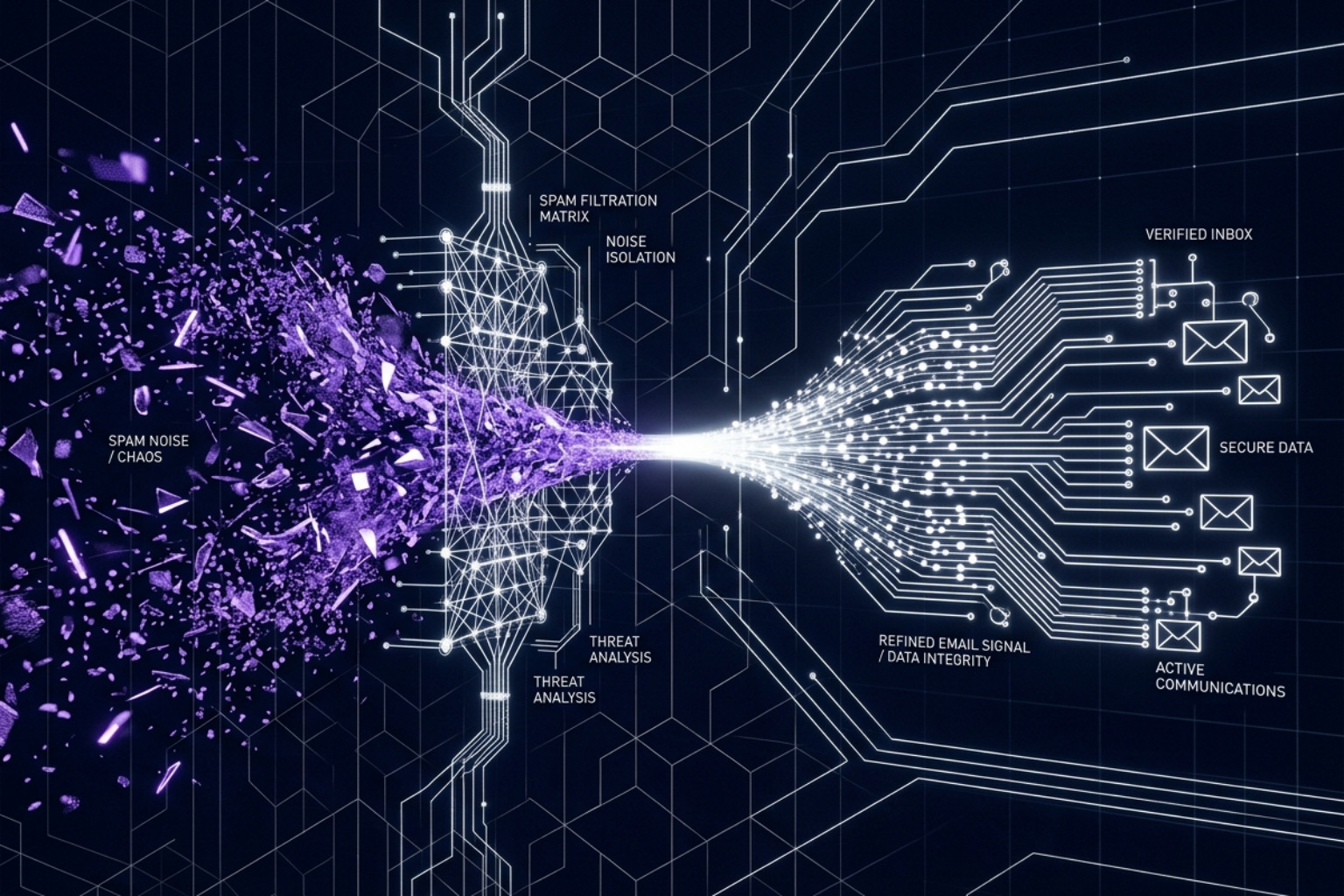
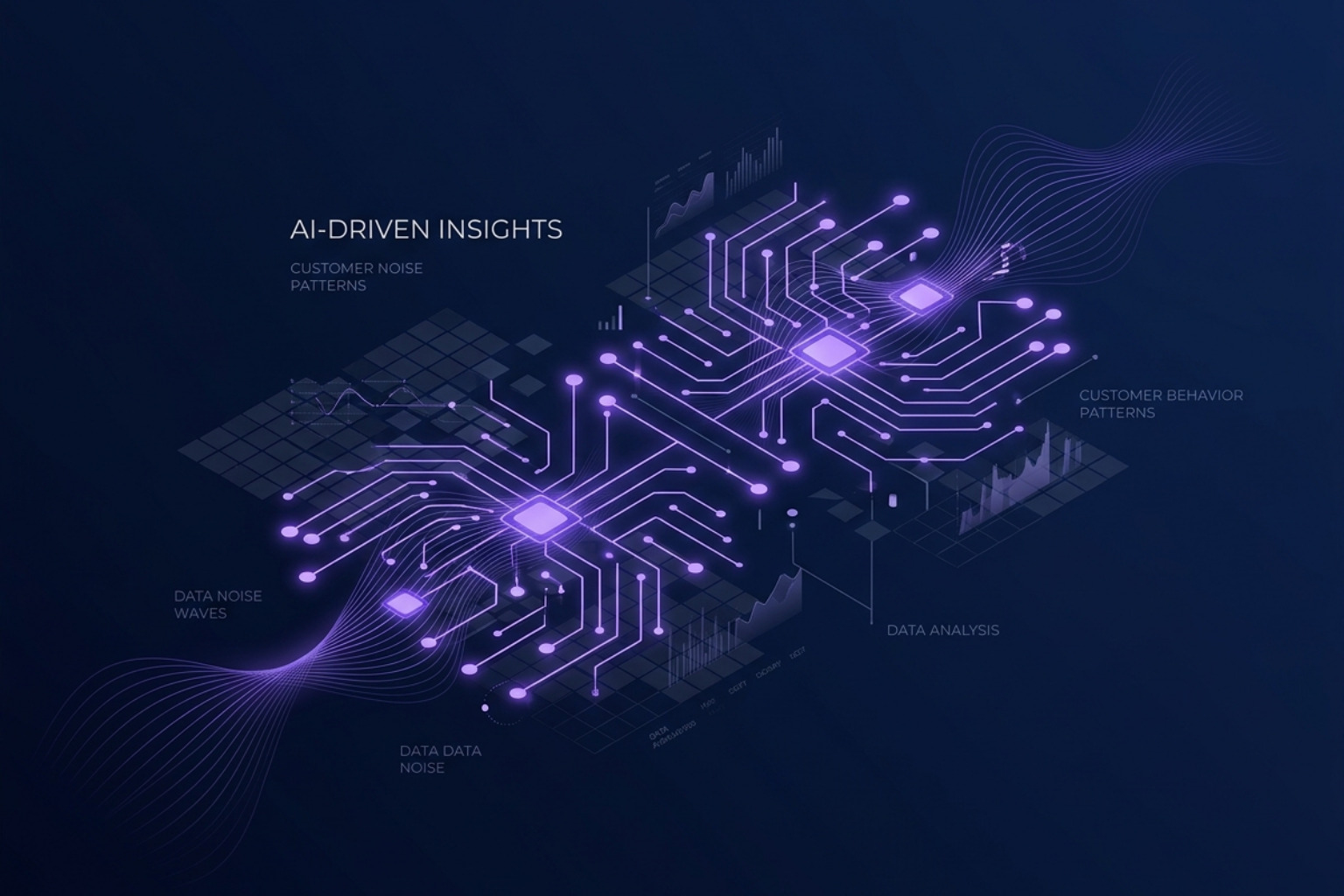
At its core, AI for customer insights is about turning "noise" into "signal." In the past, we relied on What is Descriptive Analytics to tell us what happened yesterday. While useful, descriptive analytics is like looking in the rearview mirror. AI allows us to look through the windshield.
By leveraging machine learning (ML) and Natural Language Processing (NLP), AI can "read" thousands of open-ended survey responses or "listen" to thousands of hours of call center audio in minutes. This is critical because, as Statista and other researchers note, the volume of global data is exploding. We are moving toward a world where 180 zettabytes of data will exist by 2025. Humans simply cannot process this manually.
Modern brands often suffer from "data silos"—where the social media team knows one thing, the support team knows another, and the sales team has a third perspective. AI acts as a central nervous system, pulling these disparate threads together. Platforms like Customer Experience Insights | Google Cloud use large language models (LLMs) to automatically create taxonomies of what is actually driving customer conversations, uncovering the "why" behind the "what."
In this era of information explosion, being consumer-centric isn't just a buzzword; it's a survival mechanism. If we aren't using AI to synthesize these millions of touchpoints, we are essentially guessing.

The Shift from Intuition to AI for Customer Insights
For decades, the "Creative Director's gut" or the "CMO's intuition" ruled the boardroom. While human experience is invaluable, intuition is notoriously bad at predicting complex behavioral patterns across diverse global markets.
AI shifts the focus from reactive to proactive. In the traditional AIDA model (Awareness, Interest, Desire, Action), we used to track how many people moved from one stage to the next after the fact. With AI-driven Marketing Insights, we can now use prescriptive analytics to determine exactly what content or offer will nudge a specific customer from "Interest" to "Action" in real-time.
Instead of assuming we know what our audience wants, we can use AI to identify emerging market shifts before they become mainstream trends. This allows us to move from simply describing the market to actually shaping our brand's place within it.
Core Benefits of Using AI in Market Research and Analytics
The most immediate benefit of AI is efficiency. Research shows that AI can save professionals up to 3.6 hours per week through automation. That is roughly 23 days of vacation time every year. For a marketing team, that’s 23 days spent on strategy and creative execution instead of cleaning Excel sheets.
But the benefits go far beyond just saving time. When we integrate AI into our Marketing Analytics, we gain:
- Unprecedented Scalability: Tools like Amplitude AI can track billions of data points across a user’s journey, flagging friction points that a human analyst would never find.
- Increased ROI: Organizations using AI for customer analytics have seen profit ROI growth of 10–30%. By optimizing marketing spend based on predictive data rather than historical averages, we stop wasting money on segments that won't convert.
- Real-Time Agility: Traditional market research is a snapshot in time. AI provides a live feed. If a product launch starts to veer off track, sentiment analysis can catch the negative buzz in hours, not weeks.
- Enhanced Customer Lifetime Value (CLV): AI allows us to shift our focus from "product-line profitability" to "customer profitability." By understanding the long-term value of different segments, we can prioritize the relationships that actually drive the bottom line.

Enhancing Personalization through AI for Customer Insights
Personalization is no longer just about putting a first name in an email. It’s about hyper-personalization—predicting exactly what a customer needs at a specific moment.
With a 92% adoption rate among high-growth businesses, AI-driven personalization uses first-party data and purchase history to create dynamic segments. Instead of static buckets like "Millennial Women," AI creates fluid groups based on real-time behavior.
Using Brand Measurement tools, we can see how these personalized experiences actually move the needle on brand equity. For example, brands like Netflix use AI to not only recommend movies but to change the actual "thumbnail" art you see based on your past preferences. If you like romance, you see the couple; if you like action, you see the explosion. That is the level of tailored experience customers now expect.
Key Applications: From Sentiment Analysis to Predictive Forecasting
To understand the leap we’ve taken, let’s look at how the workflow has changed:
| Feature | Traditional Research | AI-Driven Research |
|---|---|---|
| Data Collection | Manual surveys, focus groups | Automated scraping, IoT, real-time API feeds |
| Analysis Time | Weeks or months | Seconds or minutes |
| Sentiment | Coded by hand (prone to bias) | Sentiment Analysis via NLP |
| Sample Size | Hundreds or thousands | Millions of real-time interactions |
| Outcome | Static PDF report | Live, interactive dashboard |
One of the most powerful applications is Social Media Reputation Monitoring. AI doesn't just count mentions; it understands sarcasm, irony, and cultural nuance. This allows brands to detect a PR crisis or a viral opportunity before the "human" internet even realizes it's happening.
In the customer support world, Forethought Discover | AI Customer Analytics can analyze historical ticket data to find "knowledge gaps"—topics your customers are asking about that your website doesn't answer.
Meanwhile, platforms like NEXT AI – Customer Intelligence Platform act as a "Customer OS," turning messy feedback from calls, tickets, and reviews into specific themes and quotes that product teams can act on immediately.
Predictive Analytics and Forecasting Behavior
Predictive analytics is the "crystal ball" of modern marketing. By analyzing past behaviors, AI can forecast future purchase intent with startling accuracy.
This is vital for:
- Identifying Market Gaps: Finding what customers are looking for but can't find.
- Churn Prediction: Spotting the "digital body language" of a customer about to leave and triggering a retention offer automatically.
- Demand Forecasting: Ensuring you have the right inventory in the right place before the trend peaks.
We often use these insights to build Competitive Intelligence Reports, allowing us to see not just what we are doing, but how our competitors are failing to meet customer needs. This kind of scenario planning turns marketing from a defensive game into an offensive one.
Choosing the Right AI Tools for Your Business Goals
The MarTech landscape is crowded. Choosing the right tool requires looking past the "AI" label and examining the data foundation.
If your goal is deep consumer research, GWI Spark is a standout because it uses proprietary data from nearly 1 million real individuals across 50 markets. It’s not just "scraping the web"; it’s talking to real people.
For brands focused on the "how" of the user experience, Zappi or Quantilope offer automated survey platforms that can validate an ad concept in hours. If you are more focused on the "voice of the customer" in your call center, Generative AI Insights - AI Driven Insights - CX Insights | Five9 provides no-code tools to summarize thousands of calls into actionable trends.
When evaluating tools, consider:
- Data Accuracy: Where is the data coming from? Is it "garbage in"?
- Integration: Does it talk to your CRM and Slack?
- Scalability: Can it handle your data volume as you grow?
- User Interface: Can your marketing team use it, or do you need a PhD in data science?
Overcoming Limitations: Bias, Nuance, and the Human Element
We must be honest: AI is not a magic wand. It has significant limitations, the most dangerous of which is data bias. If your training data is biased, your insights will be biased. If you only analyze data from one demographic, your AI will scale those stereotypes.
There is also the issue of "contextual nuance." An AI might see a customer using a "rage click" and assume they hate the product, when in reality, they might just have a slow internet connection. This is why "garbage in, garbage out" remains the golden rule of computer science.
Ethical AI usage and GDPR compliance are non-negotiable. As we centralize more customer data, the responsibility to protect that data grows.
The most successful brands use a hybrid approach. AI does the heavy lifting—the "grunt work" of processing millions of lines of text—while human experts provide the creative strategy and strategic thinking. AI can tell you what is happening, but humans are still better at deciding what to do about it in a way that builds long-term brand equity.
Frequently Asked Questions about AI for Customer Insights
How does AI for customer insights improve hyper-personalization?
AI moves beyond basic demographics to understand individual intent. By tracking behavioral triggers—like how long a user hovers over a product or what they search for in a help center—AI can serve real-time recommendations and curate content that feels like it was made specifically for that person. It maps the customer journey in a way that allows for "anticipatory engagement."
Can AI for customer insights replace traditional human researchers?
No. Think of AI as a supporting act. While it offers massive efficiency gains and can handle the scale of modern data, it lacks human empathy and the ability to understand deep cultural context. A human researcher is still needed for strategic oversight and to ensure that the "insights" actually align with the brand's long-term vision.
How do businesses ensure data accuracy when using AI tools?
The key is using proprietary sources and rigorous data cleaning. Relying on tools that use high-quality, verified panels (like GWI) is safer than relying on unverified web scraping. Furthermore, implementing a layer of human verification and strong data governance ensures that the AI’s conclusions are checked against reality.
Conclusion: The Future of AI-Driven Strategy
The era of "customer intuition" is giving way to the era of the Customer OS. We are moving toward a future of Agentic AI, where AI doesn't just provide a report but actually takes the next step—automatically adjusting a campaign, updating a segment, or triggering a customer recovery sequence.
For senior marketers, this shift is about more than just tools; it's about the evolution of the CMO role. The job is moving from "managing campaigns" to "managing intelligent systems."
At The Brand Algorithm, we believe that the brands that win won't be the ones with the biggest data sets, but the ones with the best "signal detection." By using AI to clear the noise, we can focus on what really matters: building brand equity and consumer trust.
The future of research isn't a static PDF. It's a real-time, living breathing understanding of your customer.
Step into the future of consumer research and join a community of experts navigating this transformation together.