The Art of Artificial Intelligence Integration
There's a meaningful difference between using AI as a standalone tool and integrating it into your workflows. The integrated approach boosts efficiency 60–80% and cuts costs 20–60%.

What Artificial Intelligence Integration Actually Means
Artificial intelligence integration is the process of embedding AI capabilities directly into your existing systems, workflows, and applications — so that AI becomes part of how work gets done, not a separate tool you switch to.
In plain terms:
- You don't build AI from scratch
- You connect AI models (via APIs, platforms, or embedded services) to the software you already use
- The result: your CRM scores leads automatically, your support desk drafts replies, your finance system processes invoices — all without manual steps
The short answer: AI integration turns static business systems into adaptive ones that learn, automate, and improve over time — without requiring you to replace your entire tech stack.
Most senior marketers and founders are already using AI. They have ChatGPT tabs open. They've run pilots. But there's a meaningful difference between using AI as a standalone tool and integrating it into the systems where real business decisions happen.
That gap is closing fast. In 2026, the majority of AI projects are not greenfield AI products — they're AI features added to existing software. The businesses pulling ahead aren't the ones experimenting with AI. They're the ones who've made it operational.
This guide is your practical framework for doing exactly that.
I'm Florian Radke, brand strategist, fractional CMO, and founder of The Brand Algorithm — I've spent 25 years building brands at the frontier of technology, and artificial intelligence integration has become one of the most consequential strategic levers I work on with founders and marketing leaders today. Let's get into what it actually takes to do it right.
Defining Artificial Intelligence Integration in 2026
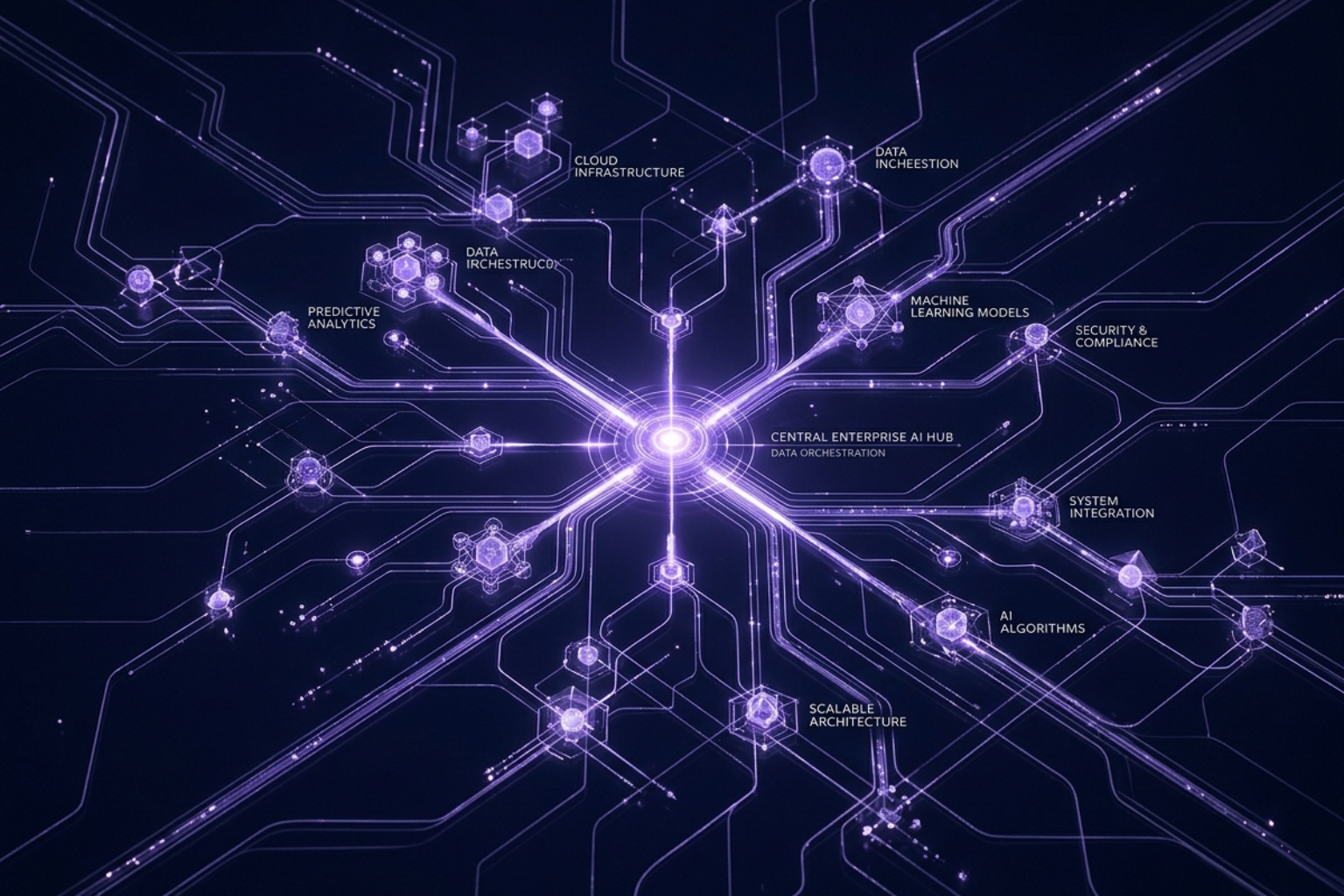
In the early 2020s, AI was a novelty. Today, in May 2026, it is the plumbing of the modern enterprise. Artificial intelligence integration differs fundamentally from building AI from scratch. Building requires a team of data scientists and millions in R&D. Integration, however, focuses on interoperability—making individual software components talk to one another to create broader, more capable systems.
As we navigate our AI Transformation Roadmap, we see a move away from "solution islands"—isolated tools that don't share data. Effective integration requires aligning AI models with your business architecture. According to Generative AI Integration: Factors to Consider | IBM, this process involves embedding models directly into workflows like ERPs or CRMs via middleware or LLM orchestration layers. This allows legacy systems to become adaptive, learning from new data without a total system overhaul.
The Shift from Novelty to Core Operation
We’ve moved past the "cool demo" phase. Integration is now about utility and daily operations. Platforms like Zapier have democratized this, allowing us to bridge the gap between a lead coming in and a personalized response going out.
The impact is measurable: businesses successfully using AI automation are cutting manual work by 60–80%. For us at The Brand Algorithm, this isn't just about efficiency; it’s about freeing up your creative team to focus on brand differentiation—the only moat that matters when content production becomes commoditized.
Agentic AI vs. Traditional Automation
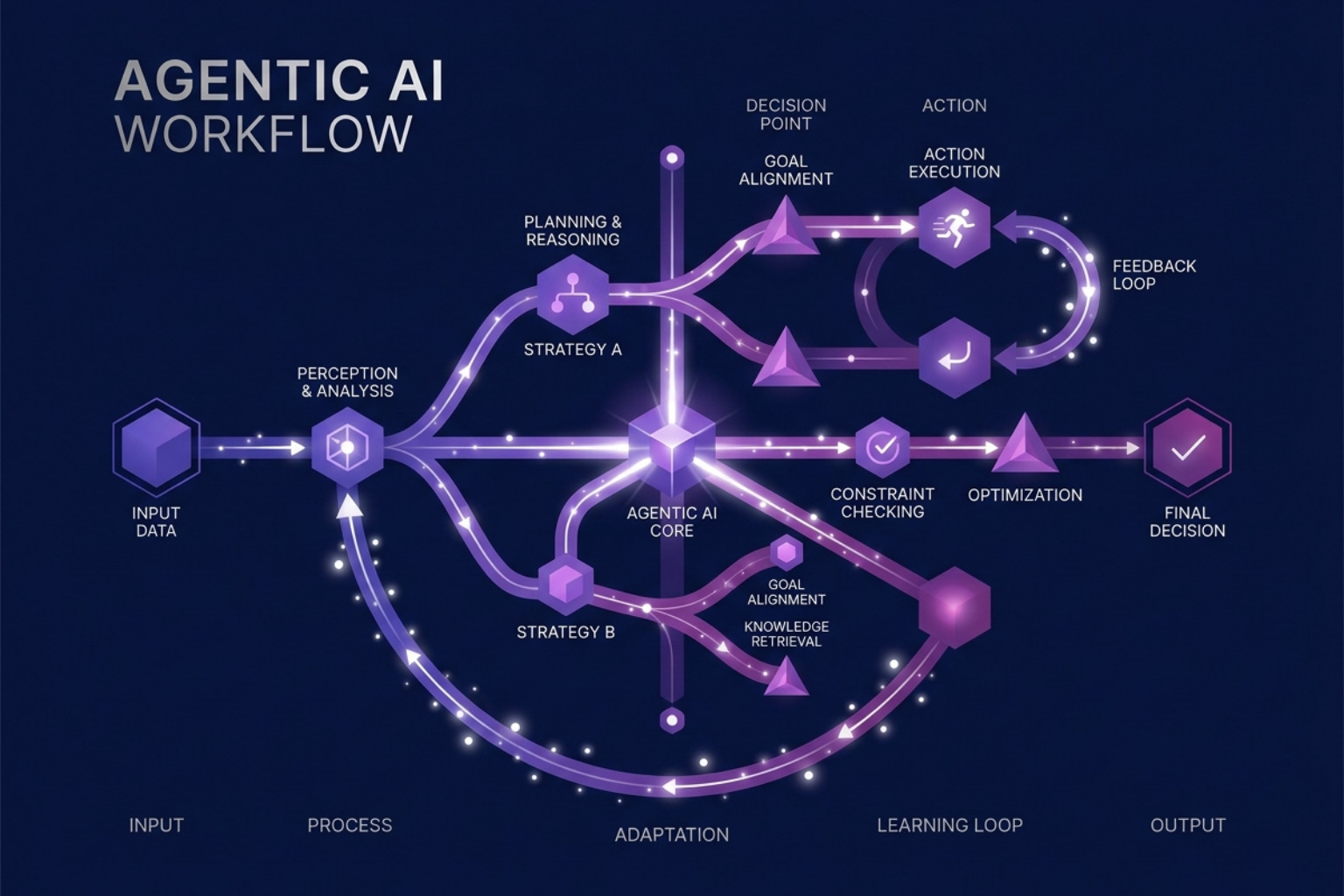
The most significant shift in 2026 is the rise of agentic AI. Traditional automation follows a rigid "if-this-then-that" logic. Agentic AI, however, uses reasoning to execute tasks. It doesn't just move data; it makes decisions.
In systems like Oracle Integration, agentic capabilities allow for real-time intelligence where the AI can handle complex scenarios autonomously while keeping a "human-in-the-loop" for high-stakes approvals. This transforms business processes from static sequences into creative, evolving workflows.
Strategic Framework and Technical Architectures
To make artificial intelligence integration production-ready, we need to look under the hood at the "technical plumbing." Most organizations choose between two primary paths: API-based integration or custom model training.
| Feature | API-Based Integration | Custom Model Training |
|---|---|---|
| Speed to Market | Days to Weeks | Months to Years |
| Data Requirement | Low (uses pre-trained context) | High (requires proprietary datasets) |
| Maintenance | Managed by provider | High internal overhead |
| Strategic Moat | Lower (competitors use same APIs) | Higher (proprietary intelligence) |
| Best Use Case | Content, Support, Coding | Specialized Scientific or Legal |
When we look at our Marketing AI Tools Evaluated, we prioritize patterns like Retrieval-Augmented Generation (RAG). RAG allows your AI to "read" your company’s specific brand guidelines or product manuals before answering, ensuring the output is grounded in your truth, not a generic hallucination.
Production-Ready Integration Patterns
Building a prototype is easy; scaling it is hard. To stay competitive in 2026, we utilize several advanced engineering patterns:
- Semantic Caching: We don't need to ask the LLM the same question twice. By caching similar queries, we reduce API costs by 20–60%.
- Streaming Responses: Users hate waiting. Implementing Server-Sent Events (SSE) allows the AI to "type" its response in real-time, which significantly improves user retention.
- LLM Abstraction Layers: We never tie ourselves to a single provider. An abstraction layer allows us to swap between OpenAI, Anthropic, or open-source models without rewriting our entire AI in Martech stack.
- Zero-Copy Data Access: Modern integrations, like those seen in Salesforce and Google Cloud, allow agents to act on data without actually moving or duplicating it, maintaining security and reducing fragmentation.
Future Trends in Artificial Intelligence Integration
We are entering the era of multimodal AI—where integrations handle text, voice, video, and code simultaneously. The battleground has shifted from "who has the best model" to "who has the best distribution." Embedded intelligence is becoming the norm. Whether it’s Google Lakehouse or Salesforce Agentforce, the value lies in how deeply the AI is woven into the surface where work actually happens.
Measuring Impact, Governance, and Departmental Transformation
As leaders, we must justify the investment. In 2026, Global Business Services (GBS) workloads have risen by 15% while resources have stayed flat. AI integration is the only way to close that gap. The results across industries are staggering:
- Healthcare: Nurses write notes 85% faster using Epic’s integrated AI.
- HR: Resume screening time has been slashed by 50-70%.
- Finance: Integration has automated 80-90% of manual tasks like invoice processing.
However, with great power comes the need for rigorous governance. Whether you are following AI Strategy for CMO principles or managing critical infrastructure, security is non-negotiable. This includes HIPAA compliance in healthcare and strict OT (Operational Technology) security principles to prevent AI from causing physical system failures in manufacturing.
The Cost and ROI of Artificial Intelligence Integration
Integration isn't "free," but it is significantly cheaper than building. Development costs typically range from $20,000 to $150,000 depending on complexity. Beyond the initial build, we must account for:
- API Fees: Token usage can add up quickly.
- Maintenance: Models drift and prompts need versioning.
- Infrastructure: Even "serverless" integrations require logging and monitoring.
We measure success through AI Campaign Measurement—tracking not just "time saved," but the quality of the output and the impact on brand trust.
Departmental AI Evolution
We’ve noticed a surprising trend: B2B companies are currently leading B2C in AI integration (54% vs 15.4%). This is because B2B relies heavily on unstructured data—call recordings, long-form emails, and prospect websites.
Using AI for Customer Insights, sales teams are now enriching leads by scraping prospect data in real-time, while platforms like IBM watsonx allow HR departments to use small language models (SLMs) to anonymize data before using larger models for sentiment analysis. This "multi-model" approach is the hallmark of a mature integration strategy.
Your 90-Day AI Integration Checklist
Moving from theory to production requires a structured timeline. Use this phased checklist to avoid the most common integration failures — scope creep, data silo persistence, and governance gaps — that derail even well-funded AI initiatives.
Days 1–30: Foundation and Audit. Map every data source, API endpoint, and manual handoff in your current marketing stack. Identify the three highest-friction workflows — these are your integration candidates. Establish baseline metrics for each: processing time, error rate, and cost per action. Document your data governance requirements before writing a single line of integration code.
Days 31–60: Pilot Integration. Select one workflow from your shortlist and build a minimum viable integration. Use an API-first approach: connect your CRM to your content platform through a middleware layer (Zapier for speed, a custom connector for control). Run the pilot in shadow mode alongside your existing process for two weeks. Compare outputs before cutting over.
Days 61–90: Scale and Govern. Roll out integrations for your remaining priority workflows. Implement monitoring dashboards that track API call volumes, latency, and error rates. Establish a quarterly integration audit cycle. Document tribal knowledge — which team member knows which integration — into a shared runbook. Set up alerting for integration failures before they cascade downstream.
The organizations that win with AI integration are not the ones with the largest budgets. They are the ones that treat integration as an ongoing operational discipline, not a one-time project. Start with one workflow, prove the ROI, and let the results fund the next phase.
Sources & Further Reading
- LinkedIn B2B Marketing Blog
- Forrester Research
- Content Marketing Institute Research
- HBR Marketing Research
Frequently Asked Questions about Artificial Intelligence Integration
What is the difference between using AI and AI integration?
"Using AI" is a manual, often disconnected act—like copy-pasting text into a chatbot. Artificial intelligence integration is a structural change. It’s when the AI is built into your CRM, your email server, or your project management tool, allowing data to flow and tasks to be completed automatically within your existing environment.
How do businesses mitigate the risk of AI hallucinations in production?
We use a "Human-in-the-loop" (HITL) architecture for high-stakes tasks. Additionally, technical safeguards like RAG (Retrieval-Augmented Generation) ground the AI in proprietary data, and "prompt versioning" allows us to test and refine instructions before they hit production. If a proof of concept shows accuracy below 80%, we don't deploy until the data or the model is refined.
What are the primary security risks when integrating AI into critical infrastructure?
The risks include data privacy breaches (sending sensitive info to external APIs), model bias, and vendor lock-in. In critical sectors like OT or healthcare, the risk of "prompt injection"—where a malicious actor tricks the AI into bypassing security protocols—is a major focus for governance teams.
Conclusion: Brand as the Moat in an Integrated World
At The Brand Algorithm, we believe that as artificial intelligence integration becomes standard, the "tactical" side of business will become a level playing field. If everyone has a perfectly integrated, AI-driven marketing engine, how do you win?
You win through brand.
AI integration is a strategic force multiplier, but it is not a substitute for a distinctive, defensible brand strategy. As you navigate this transformation, use AI to handle the "how" so that you can obsess over the "why."
Whether you are a founder or a marketing leader, your goal is to use these tools to build deeper trust and cultural relevance. If you're ready to move beyond generic content and build a high-performance, AI-integrated brand, we are here to help you navigate that journey.
Explore our AI Strategy for CMO for more on leading this change.