AI in martech is the upgrade your strategy needs


Why AI in MarTech Is Now a Strategic Imperative
AI in martech is the convergence of artificial intelligence and marketing technology — and in 2026, it's the difference between brands that grow and brands that fall behind.
Here's what it means in practice:
- What it is: AI embedded into your marketing stack to automate workflows, personalize at scale, and drive faster decisions
- Why it matters: 94% of businesses already use some form of AI in marketing, and advanced adopters report 60% higher revenue growth than peers
- What's changed: AI has moved from standalone chatbots and content tools to being woven into CRMs, CDPs, ad platforms, and campaign automation
- The core opportunity: Real-time personalization, predictive analytics, and agentic workflows that execute multi-step marketing tasks autonomously
- The core risk: Tool sprawl, ungovernered data, and unsanctioned AI usage that creates legal and operational liability
If you're a senior marketer, this isn't about whether to adopt AI. It's about how to build a stack that creates durable competitive advantage — not just operational noise.
The MarTech landscape now exceeds 14,000 products and is valued at an estimated $670 billion. Most organizations aren't short on tools. They're short on strategy.
That's what this guide is for.
I'm Florian Radke — brand strategist, fractional CMO, and founder of The Brand Algorithm, with 25 years building brands at the frontier of technology, including AI-driven content engines and immersive digital campaigns for global brands. I've written this guide specifically for senior marketers who want a clear, strategic framework for AI in martech — not another tool roundup.
The 2026 AI in martech stack: Moving beyond standalone assistants
As we navigate through April 2026, the era of the "AI chatbot" as a novelty is long gone. We have moved from a period of experimentation to a period of deep architectural integration. The modern marketing technology stack is no longer a collection of disconnected silos; it is a living, breathing ecosystem powered by four core technologies:
- Machine Learning (ML): The predictive engine that identifies patterns in customer behavior to forecast future actions.
- Natural Language Processing (NLP): The bridge that allows systems to understand, interpret, and generate human language across every customer touchpoint.
- Computer Vision: The visual intelligence layer that analyzes imagery and video to enhance eCommerce search and brand consistency.
- Generative AI: The creative accelerator that adapts approved brand assets for localized, high-performance campaigns.
Building a 2026 AI Marketing Tech Stack requires a shift from buying "features" to building "workflows." In the past, we bought tools to solve single problems. Today, we architect stacks to manage the entire revenue lifecycle.

From standalone tools to embedded intelligence
In 2024, many of us were using standalone assistants like ChatGPT or Claude as external "helpers." By 2026, the script has flipped. Research shows that 87.5% of marketing departments now use standalone AI assistants, but the real power lies in embedded intelligence.
Instead of copying data into an AI tool, the AI now lives inside your SaaS incumbents. Whether it's your CRM predicting which lead is most likely to close or your email platform optimizing send times based on individual subscriber habits, AI is becoming the "invisible hand" of marketing operations. This shift toward deeper embedding of AI allows for seamless workflow automation where the system doesn't just suggest an action—it prepares the execution.
Solving the "SaaS Bloom" and integration debt
With over 14,000 products in the marketplace, most mid-market enterprises are drowning in what we call "SaaS Bloom"—a chaotic overgrowth of disconnected tools. This fragmentation creates "integration debt," a hidden tax on your EBITDA that slows down decision-making and dilutes your brand voice.
To win, we must move toward a bidirectional data flow. Your AI shouldn't just live in one tool; it needs access to a unified data layer to be effective. When your attribution data talks to your ad platform, and your CRM talks to your content engine, you stop playing "tool whack-a-mole" and start building a strategic AI transformation roadmap.
Strategic benefits: Personalization at scale and predictive growth
The primary reason to lean into ai in martech isn't just to save time—it's to unlock growth that was previously impossible. Traditional automation was rigid; it followed "if-this-then-that" rules that often felt robotic to the consumer. AI-driven orchestration, however, is fluid.
| Feature | Traditional Automation | AI-Driven Orchestration (2026) |
|---|---|---|
| Logic | Fixed, rule-based sequences | Dynamic, adaptive algorithms |
| Data Usage | Structured data only | Structured + Unstructured (calls, emails, video) |
| Customer View | Snapshot of past behavior | Real-time intent and predictive forecasting |
| Scale | Segment-based (1 to many) | Individualized (1 to 1) at scale |
| Optimization | Manual A/B testing | Autonomous, real-time adjustments |
The foundation of this shift is harnessing first-party data. When third-party cookies have crumbled, your proprietary data is your only defensible moat.
Personalization at scale: The core value of AI in martech
We know that 71% of consumers expect personalized interactions, and 76% get frustrated when they don't receive them. But how do you personalize for a million customers? You look at the pioneers.
Amazon’s recommendation engine is famously responsible for roughly 35% of their revenue. Starbucks uses "Deep Brew" to personalize offers based on everything from loyalty history to local weather patterns. These aren't just "cool features"; they are core revenue drivers. By using ai in martech, you can move beyond basic "First Name" tags to predicting customer behavior and delivering the right message at the exact moment of intent.
Predictive analytics for revenue coordination
Marketing is no longer a "spend and pray" department. With AI, we can move to predictive acquisition. This involves:
- Lead Scoring: Identifying which prospects are truly "in-market" based on dark funnel signals.
- Churn Prediction: Flagging at-risk customers 60 days before they even think about canceling.
- Lifetime Value (LTV): Allocating your budget toward the customers who will deliver the highest long-term ROI.
This level of AI strategy for the CMO transforms marketing from a discretionary expense into a predictable revenue engine.
Navigating the risks: Governance, privacy, and the "Dark Stack"
With great power comes great liability. As we integrate ai in martech, we must address the "Dark Stack"—the collection of unsanctioned AI tools your team is likely using without your knowledge.

The risks are real: algorithmic bias can alienate customer segments, and poor data handling can lead to massive fines under the EU AI Act or local privacy laws. Evolution in the martech stack is now as much about privacy and governance as it is about performance.
Eliminating Shadow AI and un-auditable debt
Research indicates that in many $200M+ enterprises, over 80% of employees are using unsanctioned AI tools. This "Shadow AI" creates un-auditable technical debt and puts your intellectual property at risk.
To counter this, we implement "Zero Data Retention" (ZDR) policies and ensure a "Human-in-the-loop" gate for all customer-facing content. You cannot copyright AI-generated content without significant human transformation, so maintaining IP sovereignty is essential for protecting your brand's value.
First-party data as a defensible moat
If AI is the engine, first-party data is the fuel. Leading brands are moving away from "data as a goal" to "data as a means." By building consent-led frameworks and utilizing Customer Data Platforms (CDPs) for identity resolution, you create a governance strategy that respects the consumer while powering high-performance AI models.
The future of marketing: Agentic workflows and GEO
As we look toward the remainder of 2026 and beyond, the most exciting shift is the move from "Generative AI" (which creates things) to "Agentic AI" (which does things).
Agentic workflows: The next frontier for AI in martech
Agentic workflows involve AI "agents" that can pursue defined business goals with high autonomy. Imagine an autonomous SDR that doesn't just send emails but researches prospects, handles objections, and schedules meetings without human intervention. Or a pricing agent that monitors competitor moves and adjusts your eCommerce margins in real-time.
These agents require "Handshake Protocols"—clear rules for when an AI should hand a task back to a human. This is the core of the 2026 AI MarTech Playbook, where we focus on evaluating tools based on their ability to execute multi-step workflows.
Generative Engine Optimization (GEO) and brand authority
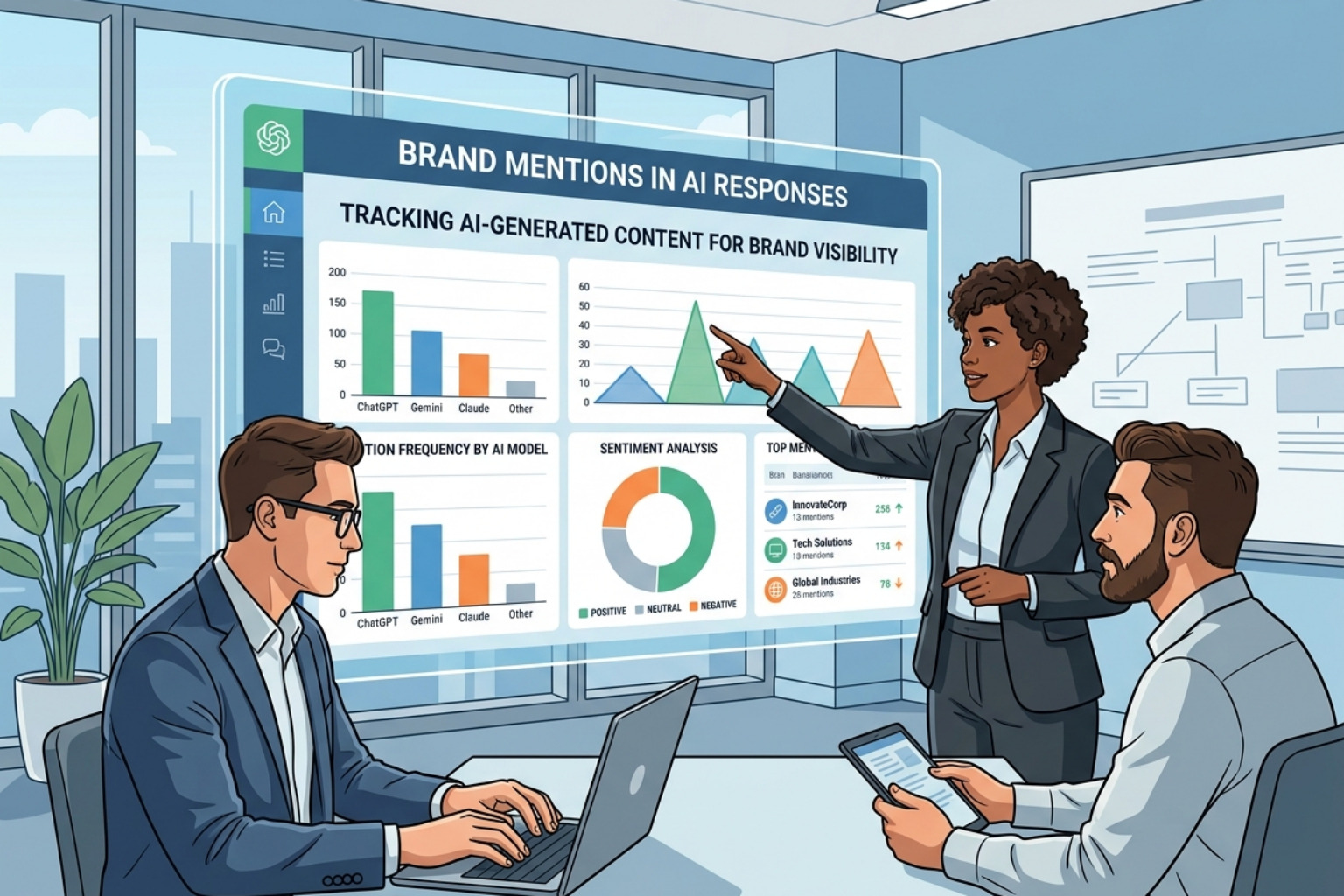
The way people find brands is changing. With the rise of "Zero-Click Search" and AI answer engines, traditional SEO is being replaced by Generative Engine Optimization (GEO).
The goal is no longer just to rank for "blue links" on a search page. The goal is to be the "Consensus Answer" that an AI provides when a user asks a question. This requires a strategic content strategy focused on trust share, institutional validation, and structured data. If the AI doesn't cite you, in the eyes of the future consumer, you don't exist.
Frequently Asked Questions about AI in MarTech
How does AI in MarTech differ from traditional marketing automation?
Traditional automation follows rigid, "if-this-then-that" rules, whereas AI adapts in real-time using machine learning and unstructured data to optimize outcomes without manual intervention. While traditional tools expedite processes, AI reimagines them by learning from every interaction.
What is the role of first-party data in AI-driven marketing?
First-party data is the fuel for AI; it provides the proprietary context needed to train models that deliver accurate personalization and predictive insights while maintaining privacy compliance. Without your own data, your AI outputs will be generic and easily replicated by competitors.
What are the biggest risks of implementing AI in a marketing stack?
The primary risks include "SaaS Bloom" (tool sprawl), data privacy violations, algorithmic bias, and the creation of un-auditable technical debt through unsanctioned "Shadow AI" usage. Additionally, over-reliance on AI without human oversight can lead to "brand dilution" where your voice becomes indistinguishable from the rest of the market.
Conclusion
At The Brand Algorithm, we believe that in the age of AI, brand is the moat. As ai in martech commoditizes the "how" of marketing—the content production, the media buying, the data sorting—the only thing that remains defensible is a distinctive, trusted brand.
The upgrade your strategy needs isn't just a new piece of software. It is a fundamental shift in how you use technology to amplify your unique brand voice. By building an integrated, governed, and agentic stack, you don't just increase efficiency; you expand your EBITDA and secure your company's valuation.
Now is the time to stop running disconnected AI pilots and start building a future-proof marketing technology strategy. Let's make sure your brand is the one the algorithms choose to trust.