The Smart Consultant's Guide to AI Marketing Tactics


Why AI Tactics Are Now the Core Skill for Marketing Consultants
Marketing consultant AI tactics are the frameworks, workflows, and tools that help marketing professionals use artificial intelligence to drive measurable client results — faster, smarter, and at greater scale than traditional methods allow.
Here are the core tactics, at a glance:
| Tactic | What It Does |
|---|---|
| AI-readiness audit | Identifies data gaps and tech stack weaknesses before any AI rollout |
| Funnel-mapped AI use cases | Assigns the right AI tools to TOFU, MOFU, and BOFU stages |
| Human-AI workflow design | Keeps brand voice intact while automating repetitive tasks |
| Prompt engineering | Extracts high-quality outputs from AI using structured frameworks |
| Agentic AI integration | Delegates end-to-end campaign tasks to autonomous AI systems |
| C-suite alignment | Connects AI initiatives to revenue, ROI, and operating model goals |
The numbers are hard to ignore. A 2018 McKinsey analysis of over 400 advanced use cases identified marketing as the single domain where AI would contribute the greatest value across all business functions. Fast forward to today, and 88% of marketers say they use AI daily — with 93% reporting new AI features added to their tech stack in the past year alone.
But adoption and strategy are very different things.
Most marketing teams are adding AI tools without a coherent plan. They're chasing features, not outcomes. And the gap between consultants who have a structured AI practice and those who are just experimenting is widening fast.
This guide is for practitioners who want to be on the right side of that gap — whether you're advising a Fortune 500 CMO, running a boutique agency, or building an independent consulting practice. It covers the foundations, the funnel-specific tactics, the workflow design, and the emerging agentic systems that are about to reshape how marketing work gets done entirely.
Core Foundations of Marketing Consultant AI Tactics
Before we can deploy a single "agent" or write a high-performance prompt, we must address the structural integrity of the marketing operation. In 2026, the most successful Marketing consultant AI tactics prioritize integration over pure innovation. Research shows that tools connecting seamlessly with existing systems deliver 2.3x better ROI than standalone "shiny objects."
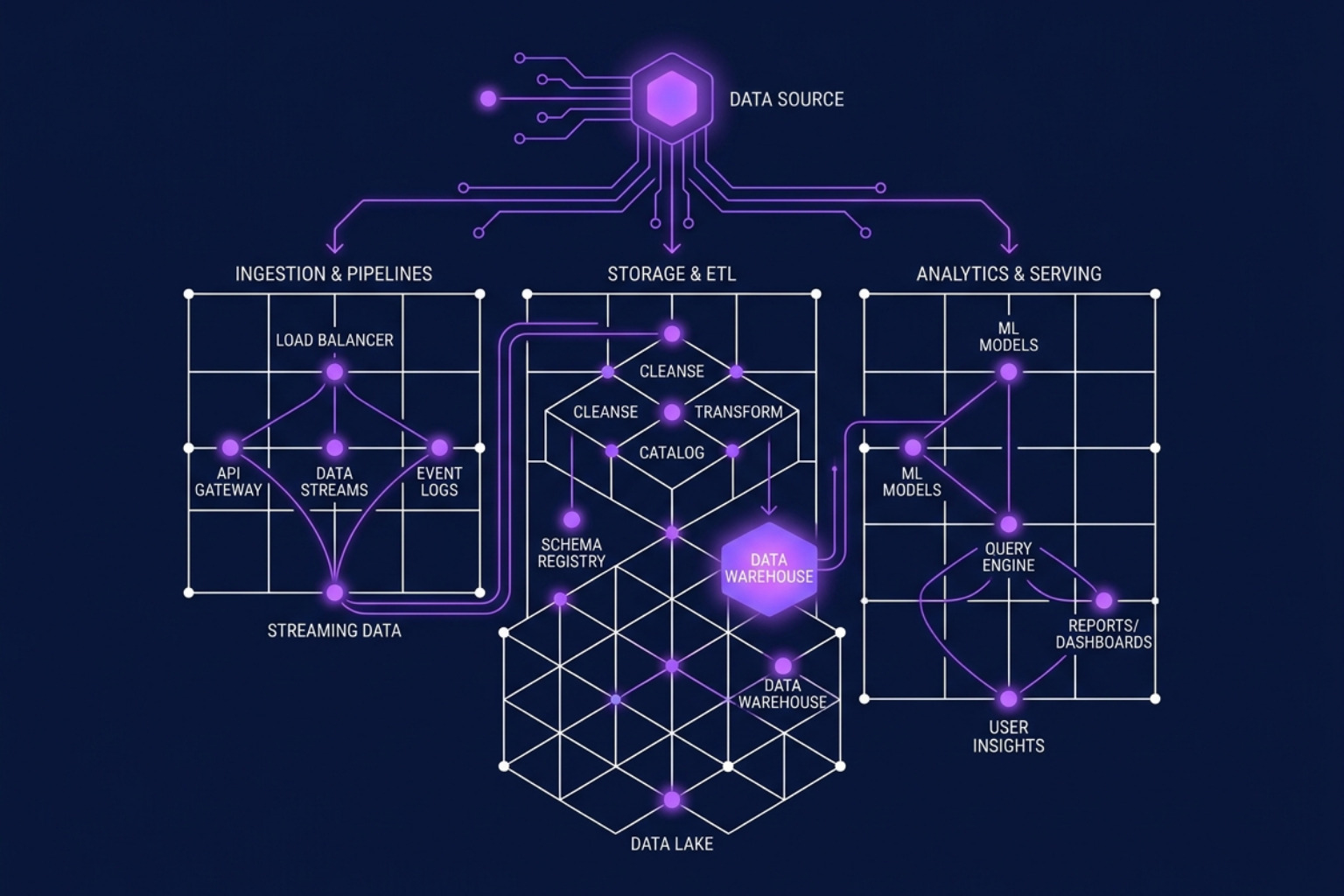
The foundation of any AI strategy rests on three pillars: data infrastructure, structured data, and Explainable AI (XAI). Without these, your AI is a "black box" that clients won't trust. We recommend starting with a Customer Data Platform (CDP) to unify profiles. In fact, 93% of organizations using a CDP report a reduction in Customer Acquisition Cost (CAC).
To help you navigate the shift, consider this comparison:
| Feature | Traditional Marketing Stack | AI-Driven Marketing Stack |
|---|---|---|
| Data Flow | Siloed (CRM, Email, Web separate) | Unified via CDP and real-time APIs |
| Decision Making | Manual, based on monthly reports | Automated, based on predictive signals |
| Content | Static, one-to-many | Dynamic, hyper-personalized at scale |
| Optimization | Reactive (A/B testing) | Proactive (Algorithmic recommendations) |
For a deeper dive into the high-level planning required for this shift, see our AI Marketing Strategy 2026: Complete Planning Guide.
Conducting an AI-Readiness Audit for Clients
As consultants, our first job is to stop clients from building on sand. An AI-readiness audit is the non-negotiable first step. We look for data silos where valuable customer insights are trapped and evaluate API connectivity.
If a client's tech stack can't "talk" to an LLM or a predictive engine, the AI will be starved of context. We prioritize first-party data because third-party cookies are a relic of the past. For a breakdown of which platforms are actually worth the investment, check out our Marketing AI Tools Evaluated resource.
Aligning Marketing Consultant AI Tactics with C-Suite Priorities
The CMO is no longer just the "head of ads"; they are a driver of enterprise value. To win C-suite approval, Marketing consultant AI tactics must speak the language of the CEO and CFO: revenue growth and operating model reinvention.
While marketers focus on personalization, CEOs often care more about how AI can scale the business without a linear increase in headcount. Consultants should frame AI not just as a way to make better pictures, but as a way to fundamentally redesign workflows. This strategic alignment is the core of an effective AI Strategy for CMOs.
Mapping AI Use Cases Across the Marketing Funnel
To avoid "tool fatigue," we map AI applications directly to the stages of the customer journey. This ensures that every piece of tech has a job to do.

TOFU and MOFU Marketing Consultant AI Tactics
At the Top of the Funnel (TOFU), AI is a research powerhouse. Instead of manual keyword research, we use AI to extract customer pain points from Reddit, forums, and reviews. This is "Voice of Customer" research on steroids.
In the Middle of the Funnel (MOFU), the focus shifts to lead qualification and automated nurturing. Predictive lead scoring can increase conversion rates by 25% by identifying which prospects are actually ready to buy. We use AI-Driven Content Creation to generate the specific whitepapers and case studies these high-intent leads need.
For consultants looking to offer these as a service, exploring AI Content Strategy Services can help differentiate your firm. Furthermore, Consulting Email Marketing now relies on predictive send-time optimization to ensure your insights hit the inbox when the client is most likely to engage.
BOFU and Retention: Personalization at Scale
At the Bottom of the Funnel (BOFU), AI takes over the "closing" and "keeping." Algorithmic recommendations—which drive 35% of Amazon's sales and 75% of Netflix viewing—are now accessible to mid-market brands.
We use AI for churn prediction, flagging at-risk customers before they leave, and dynamic pricing to maximize margin. This is where Generative AI for Marketing moves from "fun experiment" to "revenue engine."
Designing High-Performance Human-AI Workflows
One of the biggest pitfalls we see is "over-automation." If you let the AI write everything without a human in the loop, your brand will start to sound like every other generic bot on the internet.
We use the "Centaur Chess" analogy: the best results come from a human and an AI working together, outperforming either one alone. In this model, the AI handles the data crunching and the first drafts, while the human provides the strategic "so what?" and the emotional resonance. This balance is critical for maintaining Generative AI Branding that feels authentic.
Advanced Prompt Engineering for Consultants
Prompting is the new coding. As a consultant, your ability to "talk" to the machine determines the quality of your output. We recommend the COSTAR framework to our clients:
- Context: Give the AI the background (e.g., "You are a brand strategist for a B2B SaaS company").
- Objective: State the goal clearly ("Write a LinkedIn post about our new feature").
- Style: Define the writing style ("Analytical but accessible").
- Tone: Set the mood ("Confident and forward-looking").
- Audience: Who are we talking to? ("Series A Founders").
- Response: What format do you want? ("A 200-word post with 3 bullet points").
By embedding brand voice pillars into these prompts, you ensure that the AI-generated content still reflects the core identity found in an AI Brand Strategy Complete Guide.
The Rise of Agentic AI and Future-Proofing Services
The next frontier is Agentic AI. Unlike standard chatbots, agents are autonomous. They don't just "chat"; they do. An agentic system can take a high-level goal—like "Launch a webinar campaign"—and then break it down into tasks: researching the audience, drafting the emails, setting up the landing page, and optimizing the ad spend.
Experts predict that Agentic AI will handle more than one-fifth (20%) of marketing's total workload within the next two to three years. This shift requires consultants to move from being "doers" to being "orchestrators" of these systems.
3 Key Takeaways for Agentic AI Implementation
- Structure Data for Machines: AI agents can't read "messy" websites. Use structured data and clean APIs so agents can navigate your client's information.
- Build First-Line Agents: Start with narrow tasks, like a lead qualification agent or a customer service assistant, before moving to full campaign orchestration.
- Monitor and Optimize: Treat AI agents like a new marketing channel. They need constant auditing to ensure they aren't "hallucinating" or drifting from the brand voice.
This evolution will also change how we think about search. Generative Engine Optimization (GEO) is replacing traditional SEO as people turn to ChatGPT and Perplexity for answers. For those managing paid media, Google Ads AI is already automating bidding and creative, making strategic oversight more important than ever.
As these systems mature, the nature of AI Marketing Jobs will shift toward high-value strategy and partnership management.
Frequently Asked Questions about AI Marketing Tactics
What are the most common pitfalls in AI marketing implementation?
The biggest failure we see is "Shiny Object Syndrome"—buying tools before having a strategy. Other major pitfalls include:
- Poor Data Quality: If the data is "dirty," the AI's insights will be useless. 69% of companies say poor data quality limits their AI success.
- Lack of Human Oversight: Publishing raw AI content without editing leads to "soulless" brand experiences.
- Integration Complexity: Standalone tools that don't sync with the CRM create data silos.
How do real-world brands like Nike and Netflix use AI?
- Nike: Uses AI to personalize product recommendations and design custom sneakers based on user data.
- Coca-Cola: Launched generative AI campaigns that allow consumers to create their own digital art using iconic brand assets.
- Netflix: Their recommendation engine influences 75% of what users watch, using deep learning to predict preferences.
- Amazon: Uses predictive analytics for "anticipatory shipping," moving products to warehouses closer to customers before they even click "buy."
What metrics should consultants use to measure AI ROI?
Don't just track "efficiency." Look for business-critical KPIs:
- CAC Reduction: Are we acquiring customers more cheaply through AI optimization?
- LTV Increase: Does AI-driven personalization keep customers longer?
- Conversion Rate Lift: Are predictive lead scoring and chatbots moving the needle?
- Content Performance Delta: Is AI-assisted content outperforming manual content in search and engagement?
Conclusion
At The Brand Algorithm, we believe that the "Great AI Reset" is a once-in-a-generation opportunity for marketing consultants. The goal isn't just to do things faster; it's to do things that were previously impossible.
By mastering these Marketing consultant AI tactics, you move from being a vendor to a strategic partner who helps clients navigate the complex intersection of brand equity, consumer trust, and machine intelligence. The future of marketing is human-led, but AI-empowered.
Stay ahead of the curve by joining our community of practitioners. Sign up for the newsletter to receive 3–4 deep-dive analyses per week on how AI is reshaping the craft of marketing.