Why a Falling Cost per Click Can Mean a Shrinking Pipeline
A falling cost per click can hide a shrinking pipeline. Here's why blended CPC misleads, what to report instead, and the few cases where CPC still tells you something useful.

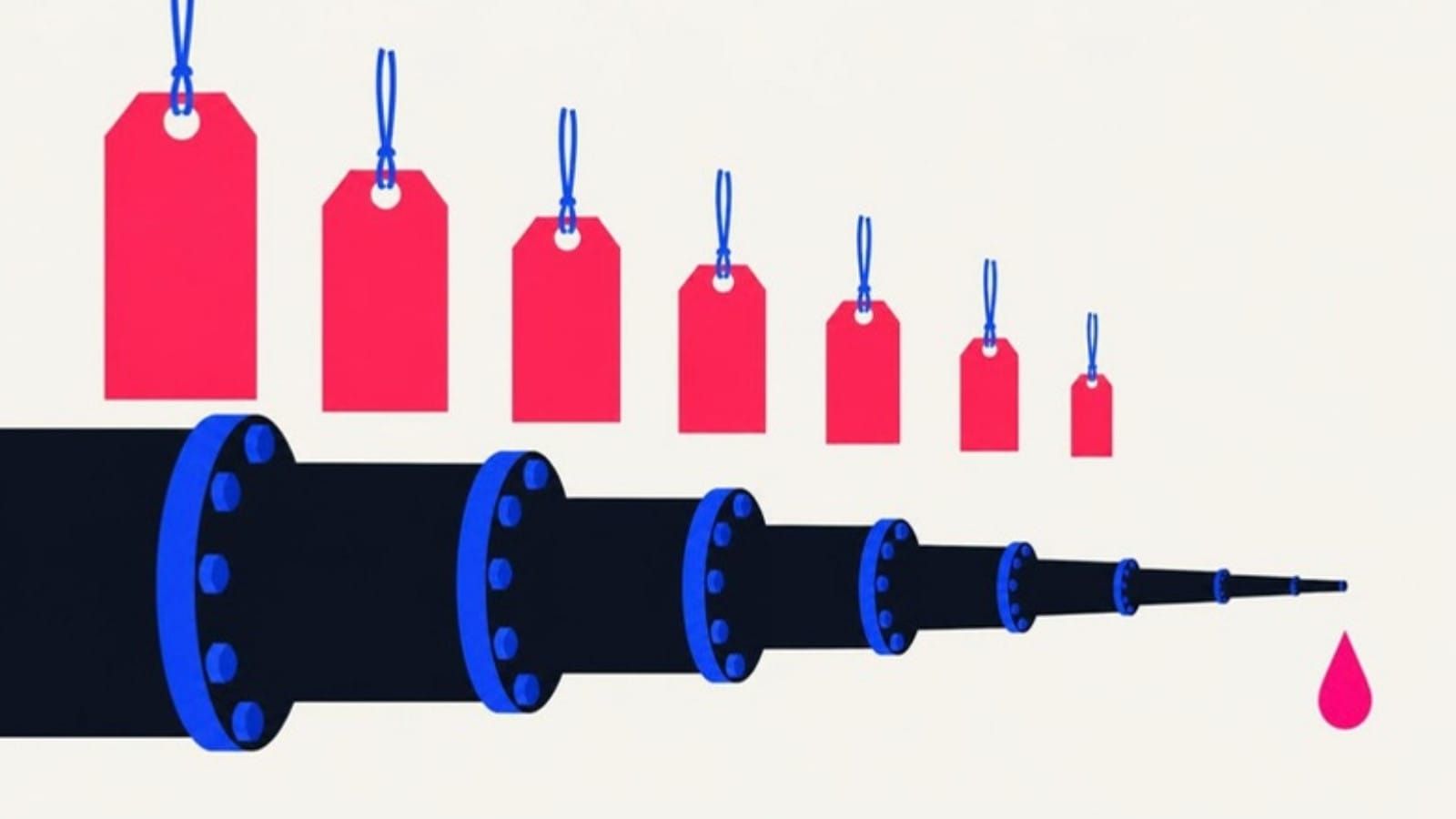
The Metric Everyone Optimizes and Almost Nobody Questions
Cost per click is the most reported metric in paid media. It is on every dashboard, in every weekly report, in every agency QBR deck. And for most marketers, it is actively misleading them into bad decisions.
I am not saying CPC is useless. I am saying it is a blunt instrument being used for surgery. The way most marketing teams calculate, report, and optimize CPC conceals more than it reveals, and the concealment costs real money. A team can celebrate a lower CPC while its cost per qualified opportunity climbs. That is a strategic misread driven by worshipping the wrong number.
Let me show you exactly how the standard CPC formula lies, what to measure instead, and the narrow circumstances where CPC actually tells you something useful.
How CPC Misleads: The Three Structural Problems
Problem 1: Averaging Across Intent Tiers
The standard CPC formula is Total Spend ÷ Total Clicks. Simple, clean, and dangerously reductive.
Consider a B2B SaaS campaign running three ad groups:
- High-intent keywords ("enterprise project management software pricing"): CPC of $45, conversion rate of 8%
- Mid-intent keywords ("best project management tools 2026"): CPC of $22, conversion rate of 2.5%
- Low-intent keywords ("project management tips"): CPC of $6, conversion rate of 0.3%
Blended CPC across the campaign: $18.50. Looks reasonable. But that number tells you nothing about whether your spend allocation is correct. If you shift budget from high-intent ($45 CPC) to low-intent ($6 CPC) to "improve" your blended CPC, you will report a beautiful metric to your CMO while cratering your pipeline.
The pattern is common. The agency optimizes toward CPC because it is the KPI in the contract. CPC drops. Pipeline dries up weeks later. Everyone is confused because the "numbers looked great."
Problem 2: Ignoring Quality Score Mechanics
On Google Ads, you pay the least needed to clear Google's Ad Rank thresholds and beat the Ad Rank of the advertiser just below you. Ad Rank weighs ad quality (expected click-through rate, ad relevance and landing page experience) alongside your bid, so two advertisers bidding on identical keywords can pay very different CPCs.
The implication: a high CPC might indicate poor ad relevance and landing page experience, or it might indicate that you are competing in a high-value auction where even a good Quality Score produces expensive clicks. Without decomposing CPC into its quality and competition components, you cannot diagnose the problem correctly.
Teams often respond to high CPCs by changing their bid strategy when the actual problem is their landing page experience score. They are treating a relevance problem with a budget lever. It rarely works.
Problem 3: Conflating Search and Display
A click from a Google Search ad and a click from a Display Network placement are fundamentally different user actions. The search click represents active intent: someone typed a query and chose your ad. The display click might represent genuine interest or it might represent a fat thumb on a mobile game interstitial.
Yet most dashboard reporting blends these into a single CPC figure. Display clicks are cheap, and search clicks in competitive B2B categories are expensive. Mix them and your CPC looks moderate while concealing that your display spend is generating near-zero pipeline value and your search spend is actually quite efficient on a per-conversion basis.
Separate them. Always. If your reporting tool cannot segment CPC by network, campaign type, and intent tier simultaneously, it is not a reporting tool. It is a vanity mirror.
The Metrics That Tell the Truth
Cost Per Qualified Click (CPQC)
Not all clicks deserve to be counted equally. A "qualified click" is one that meets minimum engagement thresholds: time on site above 30 seconds, visited more than one page, or triggered a behavioral signal indicating genuine evaluation (scrolled 75%+ of a pricing page, for example).
Formula: Total Spend ÷ Clicks Meeting Qualification Criteria
CPQC is always higher than raw CPC because it filters out the accidental clicks, the bots, and the immediate bounces. But it correlates far more strongly with downstream outcomes. A campaign with a $60 CPQC that converts qualified visitors at 12% is dramatically more efficient than a campaign with a $15 CPC that converts at 1.5%, even though the CPC dashboard makes the second campaign look four times cheaper.
Cost Per Pipeline Dollar (CPPD)
This is the metric your CFO actually cares about, even if they have never heard the term.
Formula: Total Spend ÷ Total Pipeline Value Generated
Lower is better: it tells you what you spend to create each dollar of pipeline.
CPPD forces you to connect ad spend to revenue potential. It requires CRM integration and proper attribution, which is exactly why most teams avoid it. The measurement is harder. It is also the only measurement that matters to the business.
The Worked Example: Same Campaign, Two Stories
Here is an illustrative campaign that shows how the same data tells opposite stories depending on which metrics you report.
Campaign (illustrative): Enterprise software, one quarter, $150,000 spend
The CPC Story (what the agency presents):
- Total clicks: 12,500
- Average CPC: $12.00
- CPC trend: Down 22% quarter-over-quarter
- Assessment: "Campaign efficiency improving significantly"
The Pipeline Story (what actually happened):
- Qualified clicks (30+ seconds, multi-page): 3,100 (24.8% of total)
- CPQC: $48.39
- Demo requests from paid: 62
- Cost per demo: $2,419
- Pipeline generated: $1.2M
- CPPD: $0.125 (spending $1 for $8 of pipeline)
- Quarter-over-quarter pipeline: Down 15%
The CPC improved because the team shifted budget toward cheaper, lower-intent keywords and added display network targeting. Clicks got cheaper. Pipeline got worse. The CPC celebration was premature. And expensive.
The correct diagnosis: This campaign needs higher CPCs, not lower. It needs to concentrate spend on the expensive, high-intent keywords that actually generate demos. Paying $45 per click for a keyword that converts at 8% is radically more efficient than paying $6 per click for a keyword that converts at 0.3%.
$45 ÷ 8% = $562.50 per conversion.
$6 ÷ 0.3% = $2,000 per conversion.
The cheap clicks are expensive. The expensive clicks are cheap. CPC hides this inversion completely.
When CPC Actually Works
I am not arguing that CPC should be abolished. It has legitimate uses. They are just narrower than most marketers assume:
1. Within a single keyword, tracking auction dynamics over time. If the CPC for one specific high-intent keyword rises 40% in a quarter, that tells you competition is intensifying for that term. Useful signal. But only for that keyword. Do not average it with others.
2. Comparing identical ad creative variations. In an A/B test where keyword, audience, and bidding strategy are held constant, CPC differences between ad variants reflect Quality Score and relevance differences. Lower CPC = better ad-to-audience match. Valid use.
3. Budget forecasting for mature campaigns. Once you have established stable conversion rates for a campaign, CPC × expected volume gives you a reasonable spend forecast. But this assumes the conversion rate stability that most campaigns lack.
4. E-commerce with direct, same-session conversion. If someone clicks your shopping ad and buys in the same session, CPC directly connects to ROAS without the attribution complexity of longer B2B cycles. For single-SKU direct response, CPC correlates reasonably well with efficiency.
In every other case (which covers the majority of B2B marketing and considered-purchase B2C), CPC is a vanity metric masquerading as a performance indicator.
How to Fix Your Reporting
The practical steps to move beyond CPC-driven decision making:
Step 1: Segment ruthlessly. Never report a blended CPC. Always break it by network (Search vs. Display vs. Video), intent tier (branded vs. non-branded vs. competitor), and funnel stage. If your dashboard shows one CPC number for a campaign, redesign the dashboard.
Step 2: Define "qualified click" for your business. Work with your analytics team to establish engagement thresholds that correlate with downstream conversion. Set these as a filter in your reporting. CPQC becomes your new efficiency metric.
Step 3: Build the CRM bridge. Connect ad platform data to CRM pipeline data. This is not optional for B2B marketers. Without it, you are optimizing media metrics that may have zero correlation to business outcomes. The integration is painful to build and worth every hour invested.
Step 4: Change the agency contract. If your agency is incentivized on CPC or even CPA without quality qualification, they will optimize toward volume at the expense of value. Restructure incentives around pipeline contribution or qualified lead cost. Watch how fast their keyword strategy changes.
Step 5: Educate the C-suite. Your CEO probably asks about CPC because it is the metric they have always heard. Retrain them. Present the dual-story format I showed above: show how the same data tells different stories. Once an executive sees the inversion between cheap clicks and expensive pipeline, they never go back to asking about CPC alone.
Why CPC Persists
The reason CPC persists as the dominant paid media metric is not because it is useful. It is because it is easy. Easy to calculate, easy to report, easy to show "improvement" on. Every other metric I have described requires harder work: CRM integration, engagement tracking, pipeline attribution, longer measurement windows.
Marketing teams that default to easy measurement get easy-to-game results. If your paid media strategy is driven by CPC optimization, you are not managing performance. You are managing optics. And the difference shows up in pipeline, usually a few weeks after the CPC dashboard started celebrating.
Kill the blended CPC report. Build the pipeline bridge. Measure what matters to the business, not what is easiest to screenshot in a Slack channel. Your CFO will notice the difference even if they cannot articulate why.