The Best Marketing Movies, Chosen by Someone Who Did the Job
The best movies about marketing, judged on one thing: how truthfully they show the work. Ten films, two series, and the ones that did not make the cut.


Every list of marketing movies reads the same way. A plot summary, then a paragraph that begins "the lesson for marketers is." I have read a dozen of them while deciding whether to write this one. None of the authors says whether the film is true.
That is the only question I care about. I have spent 25 years building and selling brands, first in Berlin agencies, then in Silicon Valley companies and boardrooms on both sides of the Atlantic. When I watch a film about my job, I am not looking for lessons. I am checking whether the people on screen are doing the work the way it is actually done.
Here is my finding, and it surprised me when I wrote it down: Hollywood gets marketing mostly right. The film industry and the marketing industry are so closely knit that the writers do not have to guess. They know how a pitch goes, how a launch feels, how a client meeting turns.
What Hollywood invents is the hero. In the movies, one brilliant person has the idea, sells it, and takes the credit. In real life a campaign comes out of a room with a strategist, a storyteller, a planner, a designer, a client and a great deal of ego. Nobody is the hero of everything. The films get the craft right and the organization wrong. Keep that in mind and you can learn more from a good film than from most marketing books.
This is not a ranking. The ten films below each tell a different story, and I did not want to pretend that a documentary about product placement competes with a drama about a fast-food franchise. They run alphabetically, with one exception: my favorite goes first. Two television series follow as honorable mentions, then the films I cut and why.
If You Only Watch Five
BlackBerry, for how a complex product gets sold to people who do not understand it. Thank You for Smoking, for the technique of reframing an argument. The Founder, for what a brand actually is. Pepsi, Where's My Jet?, for what happens when marketing forgets it has consequences. Air, for the internal sale, the part of the job nobody puts in a case study.
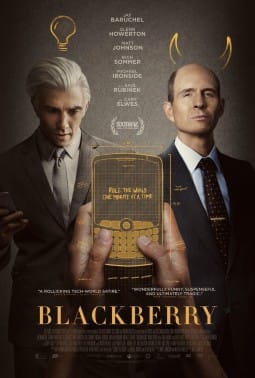
BlackBerry (2023)
Directed by Matt Johnson. Loosely based on "Losing the Signal" by Jacquie McNish and Sean Silcoff.
This is my favorite marketing film, and it is not about a marketer. It is about two engineers in Waterloo, Ontario, and the salesman who turns their device into a company.
What it gets right: the story of a technology, told to people who cannot follow the technology. The film's best stretch is the pitch to Bell Atlantic, where a product that was easy to explain to engineers has to be explained to a carrier. The device gets rebranded in the room. The executives do not buy the engineering. They buy a story about what it would feel like to carry one. That is the job. Complex technology gets sold through emotional storytelling, or it does not get sold at all.
What it gets wrong: the film is a drama, not a documentary, and the book it is drawn from is far more measured. The second half, the Pittsburgh Penguins bid, the stock-option scandal, the Storm shipped from China full of bugs, is compressed and sharpened for effect. It also lets you believe the fall came from one man's distraction, when the iPhone would have done the damage regardless.
Who should watch it: anyone selling something that takes an engineer to explain. That is most of B2B.
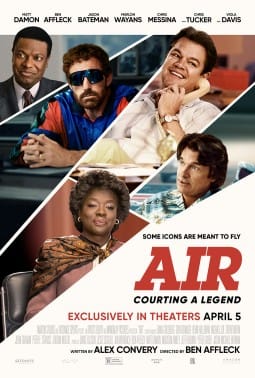
Air (2023)
Directed by Ben Affleck. Written by Alex Convery.
Nike, 1984, and the signing of a rookie named Michael Jordan.
What it gets right: the internal sale. The part of the film that rang true to me is not the pitch to the Jordan family. It is the fight inside the building: winning support for a risky bet while colleagues defend their budgets and their jobs. Every marketer who has tried to move a company toward something new knows that meeting. The film spends more time there than on the shoe, and that is the correct choice.
What it gets wrong: it turns collective work into one person's triumph. The real sequence was messier and more crowded. Sonny Vaccaro did not show up on the Jordan doorstep, the family's agent David Falk was a driving force toward Nike rather than an obstacle, and the scene where Deloris Jordan demands a percentage of every shoe is a screenwriter's invention, by the accounts of people who were there. The percentage itself was real; the moment was not. The film needed one hero, so it built one.
Who should watch it: anyone who has to sell an idea upward before they get to sell it outward.
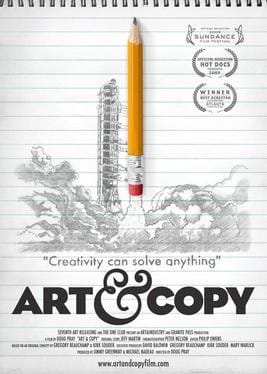
Art & Copy (2009)
Directed by Doug Pray. Premiered at Sundance.
The one film on this list with real advertising people in it: Hal Riney, Lee Clow, Dan Wieden, Mary Wells Lawrence, George Lois, Phyllis K. Robinson and others, talking about Just Do It, Got Milk, I Love New York and Think Different.
What it gets right: the conviction. When these people describe how a campaign came to be, you believe that they believed it, and that belief is the raw material of the work. The film shows advertising's possibilities better than anything else ever filmed.
What it gets wrong: it is the industry's flattering self-portrait. The campaigns in it are the ones that worked, assembled by the people who made them, with no client in the room and no failures in the reel. Treat it as evidence of what advertising can do, not as a representative working day. The working day is a lot of meetings in which nothing like Just Do It happens.
Who should watch it: people who want to understand why anyone goes into advertising, and then watch something else to understand why some of them leave.
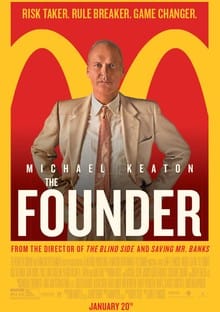
The Founder (2016)
Directed by John Lee Hancock. Written by Robert Siegel.
Ray Kroc meets the McDonald brothers in San Bernardino in 1954, and the rest is a brand.
What it gets right: what a brand is. A recognizable name and a consistent experience, multiplied through franchising. The film understands that the brothers invented the system and Kroc invented the business. Harry Sonneborn's advice, that the real money is in owning the land under every restaurant, gives Kroc control over the franchisees, which is to say control over the consistency, which is to say control over the brand. Then Kroc takes the brothers' founding story and tells it as his own, because whoever owns the origin story owns the brand.
The ending is accurate and ugly. The brothers sold for $2.7 million and a handshake promise of a share of future profits. The handshake was never honored.
What it gets wrong: not much. The film is the rare case where the most cynical reading is also the documented one.
Who should watch it: anyone who thinks a brand is a logo. It is a name, a repeatable experience, the assets people recognize, and whoever controls the story.
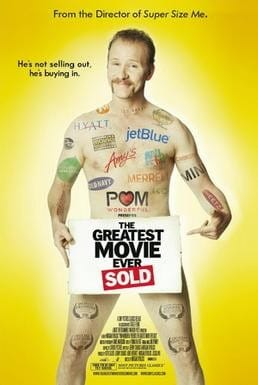
The Greatest Movie Ever Sold (2011)
Directed by Morgan Spurlock. Full title: "POM Wonderful Presents: The Greatest Movie Ever Sold."
A documentary about product placement, funded entirely by product placement. Spurlock raised the budget from sponsors and filmed himself doing it.
What it gets right: the stunt produces real insight. The negotiations over sponsorship and creative control are the most honest footage of brand-side marketing I know of, because the brands forgot the camera was on. POM paid a million dollars for its name above the title, with the full amount tied to box office and media impressions. That is how it works.
What it gets wrong: nothing, but it contains a contradiction that is more useful than most films' plots. The sponsors received their publicity from a film questioning advertising's influence, and they knew it, and they paid anyway. Everyone in marketing should sit with that for a minute.
Who should watch it: anyone who has ever written a sponsorship contract, and anyone about to.
Moneyball (2011)
Directed by Bennett Miller. Written by Steven Zaillian and Aaron Sorkin, from Michael Lewis's book.
A baseball film. I keep it on a marketing list for two reasons.
What it gets right: resource allocation. Billy Beane's problem in 2002 is a marketer's problem. He has less money than his competitors, so he has to find undervalued opportunities and choose metrics that connect to results instead of the metrics everyone else is comfortable with. The second thing it gets right is the room. Beane's fight to get his own scouts and his own manager behind the new approach is the same internal selling that changing a marketing strategy requires. The data does not win the argument. Beane does, slowly, by removing the people who will not be convinced.
What it gets wrong: the film's analyst, Peter Brand, is a composite. The real Paul DePodesta asked to have his name removed because the script no longer resembled him. And the 20-game winning streak is real, but the season ended the way it always did for Oakland, without a championship. The film is honest about that, in its last minutes.
Who should watch it: every marketer who has ever been told to do more with less.
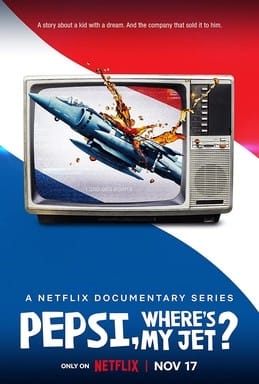
Pepsi, Where's My Jet? (2022)
Directed by Andrew Renzi. Four episodes, Netflix.
In 1996 a Pepsi commercial showed a Harrier jet for 7,000,000 Pepsi Points. A 21-year-old business student named John Leonard noticed that points could be bought for ten cents each, raised $700,000 from investors, and sent Pepsi a check.
What it gets right: consequences. Most people think marketing is the department where you can say whatever you want and do whatever you want. The opposite is true. Marketing decisions have legal consequences and financial consequences, and they land on real people. Pepsi won the case, in 1999, when a federal judge ruled that no reasonable person could believe the ad was a real offer. Pepsi also spent years in court and became a case study taught to every law student in America. That is a consequence.
What it gets wrong: the series is on Leonard's side, which is fine for television but makes the lesson too easy. The question I ask of every piece of marketing is whether the thinking behind it would survive being printed on the front page of the New York Times. Did you make it because you believed in the product and wanted to connect it with the right people, or because you took a shortcut? The Pepsi team was not being shady. They were being careless, and carelessness in marketing costs the same as malice.
Who should watch it: anyone who signs off on a promotion.
Steve Jobs (2015)
Directed by Danny Boyle. Written by Aaron Sorkin, from Walter Isaacson's biography.
Three product launches, 1984, 1988 and 1998, each filmed in the minutes before Jobs walks on stage.
What it gets right: it makes the launches about persuasion, control and credit. Nothing in the film is about the product. It is about who gets to tell the story of the product, who is allowed on stage, and who is written out. Kate Winslet's Joanna Hoffman, the marketing executive who spends the whole film managing the man rather than the message, is the most accurate marketer in any film on this list.
What it gets wrong: the structure. Three backstage arguments is a play, not a life, and the real people have said as much. It does not matter for our purposes. The conflicts are the point.
A note on the other one. I cut the 2013 film "Jobs" from this list. It is a conventional career chronology. The Boyle film understands that a launch is a persuasion event and the Kutcher film does not.
Who should watch it: anyone who presents, which is everyone.
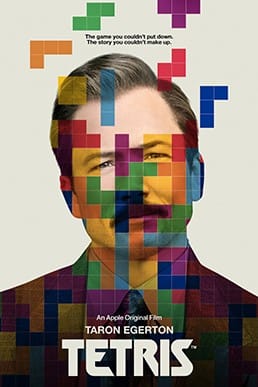
Tetris (2023)
Directed by Jon S. Baird. Written by Noah Pink.
Henk Rogers goes to Moscow in 1989 to secure the rights to a game nobody can quite prove they own.
What it gets right: licensing is marketing. It is the part of marketing most people never see, and it has become bigger, not smaller, now that every historic brand is available for a deal. The film shows what a license actually is, which is a definition of rights, platform by platform, written down by whoever is paying closest attention. The Soviet agency ELORG does not have a marketing department. It has a man who reads contracts, and he ends up controlling the most valuable game of the decade.
What it gets wrong: the car chase at the end never happened, the interpreter was not a KGB agent, and Rogers himself has said the film is not history. The business story underneath, Nintendo's $5 million for console and handheld rights, the Game Boy launch, the Maxwell deal that missed its deadline, is close enough to the record to learn from.
Who should watch it: brand managers who think licensing is a line item.
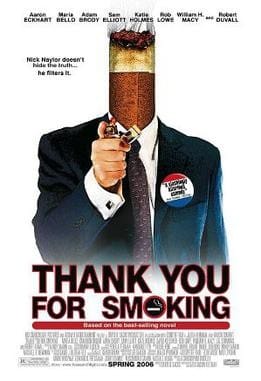
Thank You for Smoking (2005)
Directed by Jason Reitman, from Christopher Buckley's novel.
Nick Naylor, chief spokesman for Big Tobacco, is the best talker in American film.
What it gets right: the technique. The scene is on the pier with his son. Nick says vanilla is the best ice cream, the boy says chocolate, and Nick changes the question from which flavor is better to whether anyone has the right to decide for you. The boy points out that Nick never proved vanilla was best, and Nick says he did not have to. He only had to show the boy was wrong. "I'm not after you. I'm after them," he says, pointing at the crowd. Every marketer has done that, for a better product and a worse argument than Nick's.
What it gets wrong: the opponents. In the film, everyone Nick argues with leaves themselves open to his reframing, every time. Real opponents do not. Real journalists, regulators and customers have heard the trick before. The film is a cartoon about a real technique, which is why it works as a comedy and why you should not try it in a Senate hearing.
Who should watch it: anyone who argues for a living, which includes every marketer who has ever defended a campaign.
Two Series That Belong on This List
Halt and Catch Fire (2014 to 2017)
A series about the personal computer business in the 1980s, and not about marketing at all. I include it for one scene. In the first episode, "I/O," Joe MacMillan recruits the engineer Gordon Clark by quoting an article Gordon wrote years earlier for BYTE. The job is beside the point. Joe sells Gordon the chance to become the engineer Gordon once wanted to be. He makes the pitch personal before he makes the technical case. That is the best piece of marketing in the series, and it is aimed at an audience of one.
Mad Men (2007 to 2015)
Mad Men is on every list, usually first. It is the series that made my profession look glamorous, and it is over the top. Agency life may have looked like this once. The part that does not happen is the single brilliant creative who is the hero of every pitch. Campaigns come out of a team with different backgrounds, some from strategy, some from storytelling, and the team builds the thing together. What Mad Men gets right is the ego. There is a lot of it in marketing, and the series is honest about how much of the work is managing it. It also gets the client right: the person across the table who did not ask for brilliance and will not pay for it.
Why the Sales Movies Are Not Here
Glengarry Glen Ross and The Wolf of Wall Street appear on nearly every list of marketing movies. They are not marketing movies. They are sales movies, and the fact that American lists cannot tell the difference says something about American marketing.
I started in Europe and have spent most of my career in the United States, and the difference I keep seeing is this. In the US, marketing is hustle. It is about the sale, the number, the quarter. A car commercial here shows a few seconds of beauty and then cuts to the offer, the financing and the savings. In Germany, a car commercial is a BMW on a coastline and a tagline that paints the picture. That is the whole ad. Boil it down and the US does performance marketing and Europe does brand marketing. US marketers are hustlers. European marketers are storytellers.
I have sat in boardrooms on both continents and the presentations are different from the first slide. I will not name the companies or the people. I will say that it is not an accident that so many premium brands come out of Europe. When the story and the brand matter more than this quarter's units, you get brands that last.
The Wolf of Wall Street is a film about hustle culture, and it is accurate about that. It belongs on a list of sales movies. Glengarry Glen Ross is the same, with better dialogue. Neither has a brand in it. Both show what selling looks like when marketing is missing.
Films I Cut, and Why
The Social Network (2010) is on every list of marketing movies, and I do not think it is one. It is a film about greed and ego: people lying to and deceiving each other over a product that happened to work. There is no marketing in it. There is a lucky shot and a lawsuit.
The Joneses (2009) has the strongest premise on this page, a fake family planted in a suburb to sell a lifestyle, and the weakest execution. The characters and the story never develop into anything the premise deserves. Fine, but it did not make the cut.
Jobs (2013) is covered above. The 2015 film makes it unnecessary.
A Different Question
People who search for marketing movies sometimes mean something else: which movie had the best marketing. That is a question about film marketing, and it has its own answers, most of them from the last few years. It will probably get a write-up here at some point. Sign up for the email list and you will see it when it does.
Where to Start
Watch BlackBerry first. Then watch Thank You for Smoking and notice how often you use the pier trick in your next meeting. When you find a film that shows the work truthfully and is not on this list, tell me.
If you want more of this, the newsletter is free: sign up here.