Stop Being a Spammer with the Best Email Spam Checker


The Best Email Spam Checkers at a Glance
The best email spam checker tools available right now are:
- Mail-Tester - Best overall free spam score checker
- MailGenius - Best for actionable deliverability diagnostics
- Spamoose - Best AI-powered analysis with triple-layer detection
- CopyChecker - Best for cold email and spam word removal
- Unspam - Best for inbox placement + AI heatmap testing
- IsThisSpam - Best for phishing and scam detection
- Spamwise - Best for ongoing inbox protection
Email marketing still delivers one of the highest returns of any channel — roughly $42 for every $1 spent. But that ROI disappears the moment your email lands in spam.
And that's happening more than most marketers realize.
Spam filters have gotten smarter. Gmail, Outlook, and Yahoo all use internal rules that go far beyond flagging obvious junk. They're evaluating your sender reputation, your authentication setup, your content, and how recipients have engaged with you in the past. A single misstep — a missing DKIM record, a subject line full of urgency triggers, a domain on a blacklist — can silently kill an entire campaign.
Here's the uncomfortable truth from Reddit's email marketing community: you can get a perfect spam score and still have half your list never see your email. Content analysis and actual inbox placement are not the same thing.
That's exactly why choosing the right spam checker matters. Some tools only scan your copy for trigger words. Others test authentication protocols, check blacklists, simulate inbox placement across major providers, and even use AI to flag issues you'd never catch manually.
This guide breaks down the best options — free and paid, simple and sophisticated — so you can find the one that fits how you actually work.
Why You Need the Best Email Spam Checker in 2026
In the current landscape, email isn't just a communication tool; it's a primary vector for cyber threats. Research shows that a staggering 94% of malware is delivered via email, and approximately 3.4 billion phishing emails are sent every single day. Since 2020, over 15 billion exposed credentials have surfaced in data breaches.
Because of these threats, Inbox Service Providers (ISPs) like Google and Microsoft have built "fortress" filters. If your marketing email looks even slightly like a threat, it’s gone. This is where an Email Strategy becomes vital. You aren't just fighting for attention; you're fighting for entry.
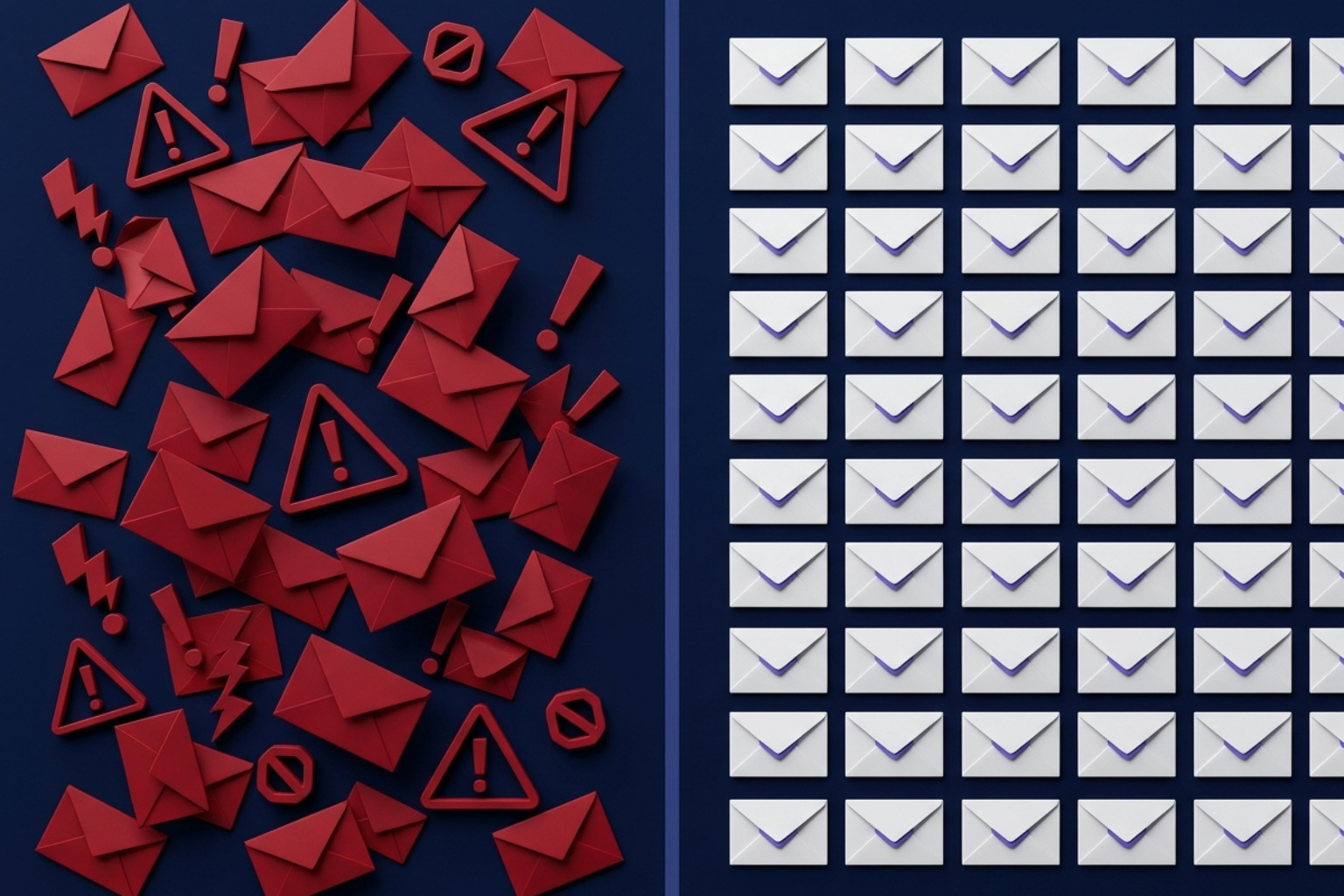
Using the best email spam checker is essential for three main reasons:
- Protecting ROI: You cannot get a $42 return on a $1 investment if your message is sitting in a folder no one checks.
- Maintaining Sender Reputation: Every time your email is flagged as spam or bounces, your "Sender Score" drops. Once it hits a certain floor, even your legitimate transactional emails (like password resets) might get blocked.
- Authentication Compliance: Modern filters demand proof that you are who you say you are. Without proper SPF, DKIM, and DMARC checks, you're essentially an unverified visitor trying to enter a high-security building.
Top Free and AI-Powered Tools for Every Marketer
Choosing a tool depends on whether you need a quick content scan or a deep technical audit. Below is a comparison of the heavy hitters we’ve analyzed.
| Feature | Mail-Tester | MailGenius | Spamoose |
|---|---|---|---|
| Primary Use | Quick Spam Score | Deliverability Audit | AI Content Analysis |
| AI Integration | Low | Medium | High (GPT-o3) |
| Technical Checks | SPF/DKIM/Blacklists | Comprehensive DNS/BIMI | Contextual Intent |
| Ease of Use | Extremely Simple | Detailed/Actionable | Retro Terminal UI |
Mail-Tester and MailGenius: The Industry Standards
For years, Mail Tester – Free Email Deliverability & Spam Checker | MailGenius has been the go-to for marketers who want a "no-nonsense" result. These tools work on a simple premise: they give you a unique, temporary email address. You send your draft to that address, and within seconds, they generate a report.
Mail-Tester is famous for its "SpamAssassin" integration. It looks at your email through the eyes of the world’s most widely used open-source spam filter. It checks if your IP is blacklisted, if your HTML code is "broken" (which filters hate), and if your authentication is set up correctly. It even offers multilingual support, making it a favorite for global brands testing campaigns in different languages.
MailGenius takes this a step further by providing highly actionable steps. Instead of just saying "Your DKIM is missing," it explains how to fix it. It also checks for "broken code" and domain suffix recognition—noting that certain suffixes like .xyz can inherently hurt your deliverability compared to a classic .com.
Spamoose and CopyChecker: The Best Email Spam Checker for AI Analysis
The "old school" way of checking for spam was looking for a list of "bad words" like "FREE" or "WINNER." But modern AI filters understand context. That’s where tools like Spamoose - Instant Email Spam Score Checker & Spam Detection Web App and CopyChecker - AI Email Spam Checker & Spam Detection Tool shine.
Spamoose uses a "triple-layer" detection system. It combines GPT-o3 AI (30% weight), Naive Bayes classification (40%), and traditional regex heuristics (20%). This means it doesn't just look for keywords; it thinks like a human (or a hacker) to see if the intent of the email feels "phishy." It even features a cool retro terminal interface that makes the technical drudgery of QA feel a bit more engaging.
CopyChecker is a "zero-code" savior for cold emailers. It focuses heavily on "spam trigger words" but categorizes them into themes like "Urgency," "Shady," or "Overpromise." Users have reported boosting their inbox placement by roughly 30% simply by swapping out flagged phrases for AI-suggested alternatives.
Unspam and IsThisSpam: Comprehensive Security Checks
If you want to go beyond the text, Check If an Email is Spam - AI-Powered Spam Email Detection and Unspam offer features that feel like a full laboratory for your emails.
Unspam provides an AI eye-tracking heatmap. This doesn't just tell you if the email will arrive; it predicts where your subscribers will look once they open it. It also checks for accessibility issues and monitors blacklists in real-time.
On the security side, Free Scam & Spam Detector: Check Emails & Texts Instantly. is an excellent tool for verifying suspicious content. It offers "SuperScan" sessions that provide expanded context and risk scoring, which is particularly useful for protecting your team from incoming phishing attempts.
Technical Essentials: SPF, DKIM, and DMARC Explained
You can write the most beautiful, non-spammy email in history, but if your technical "passport" isn't in order, you’re going to the junk folder. When we provide Consulting Email Marketing services, the first thing we audit is the DNS configuration.
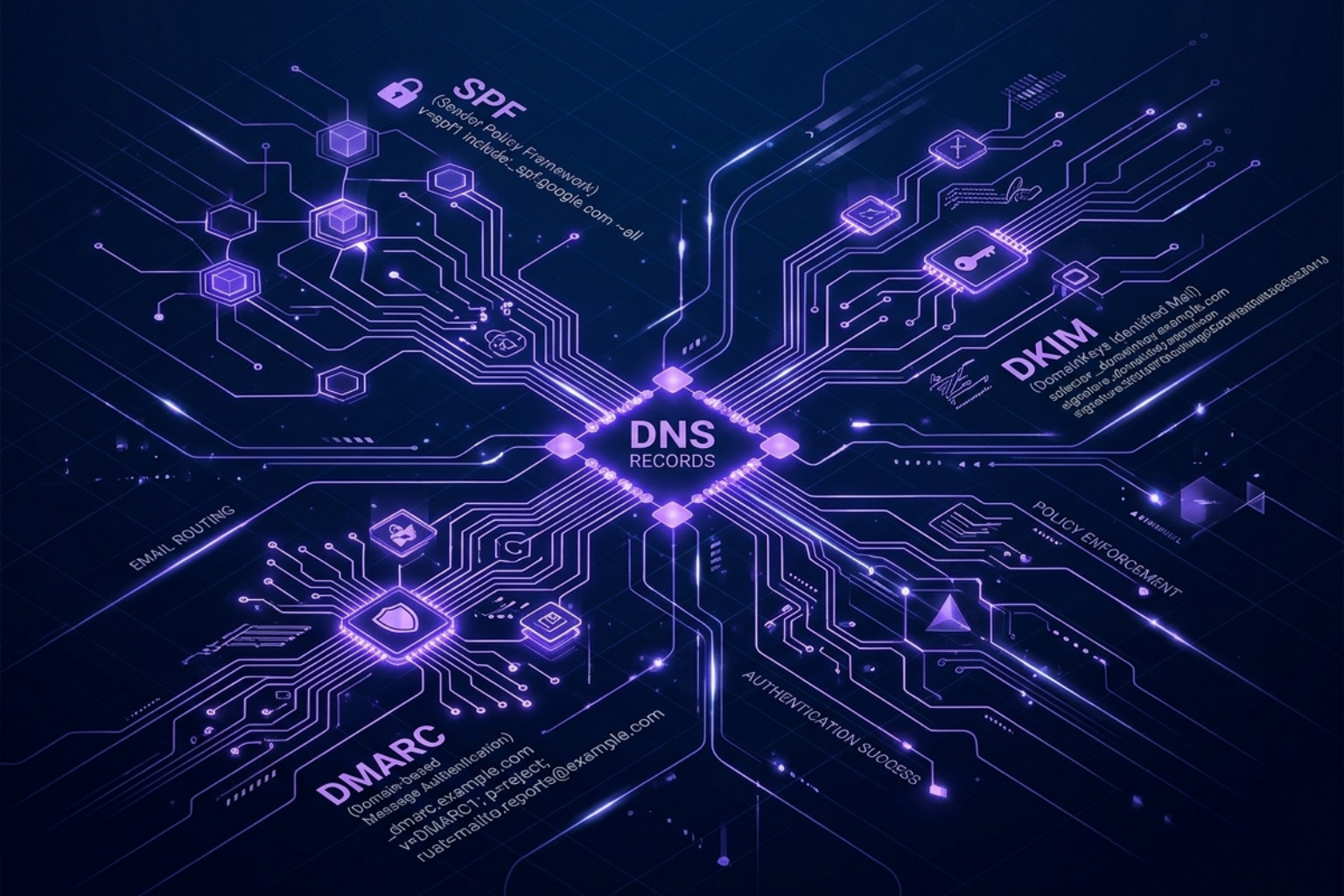
Here is the "Big Three" of email authentication:
- SPF (Sender Policy Framework): A list of IP addresses authorized to send mail on behalf of your domain. Think of it as an "Approved Guest List."
- DKIM (DomainKeys Identified Mail): Adds a digital signature to your emails. This ensures that the content wasn't tampered with while traveling from your server to the recipient's inbox.
- DMARC (Domain-based Message Authentication, Reporting, and Conformance): This tells the receiving server what to do if the SPF or DKIM fails. It’s your "Instruction Manual" for security.
Advanced tools will also check for BIMI (Brand Indicators for Message Identification), which allows your brand logo to appear next to your email in the inbox, and Reverse DNS, which confirms your IP address is correctly associated with your domain. For newer domains, "IP Warming"—the process of gradually increasing send volume—is also critical to avoid being flagged as a "spammer" by default.
How to Optimize Your Campaigns with the Best Email Spam Checker
To truly master deliverability, you need a workflow, not just a one-off test. Here is how we recommend using these tools to maximize your open rates and ROI:
- Clean Your List: Before testing content, ensure your list is healthy. Tools like Kickbox can reduce hard bounces by up to 27% by identifying "bad" or disposable emails.
- Monitor with Spamwise: For ongoing protection, Spamwise - Stop unwanted emails acts as an AI-powered shield, analyzing incoming threats and helping you manage sender reputations.
- Use Seed Testing: Don't just trust a score. Send your email to a "seed list"—a small group of your own accounts on Gmail, Outlook, and Yahoo—to see where the email actually lands.
- Check Google Postmaster & Microsoft SNDS: These are the only sources of truth directly from the providers. They show you exactly how Google and Microsoft view your domain reputation.
- Balance Text and Images: Aim for at least a 50/50 ratio. Emails that are just one giant image are a massive red flag for spam filters.
Frequently Asked Questions about Email Deliverability
How do I test if my email is spam?
The most effective way is to use a "send-to" tester like Mail-Tester. You copy the unique address they provide, send your campaign draft to it from your actual Email Service Provider (ESP), and wait for the report. This tests not just your content, but also your server's reputation and your authentication records.
What are common spam trigger words?
While AI is getting better at context, certain words still trigger "Spam Score" penalties. These usually fall into categories of:
- Urgency: "Act now," "Urgent," "Expire."
- Overpromises: "Double your income," "100% free," "No cost."
- Shady: "Hidden," "Passwords," "Unsecured." Tools like Folderly provide replacement suggestions to keep your tone professional without losing the "punch" of your copy.
Are free tools as accurate as the best email spam checker paid versions?
Free tools are excellent for "point-in-time" checks (testing a single email draft). However, paid suites like GlockApps or Litmus offer "Inbox Placement Testing." While a free tool says "Your score is 10/10," a paid tool might tell you "Your score is 10/10, but you're landing in the 'Promotions' tab in Gmail and the 'Junk' folder in Outlook." For high-volume senders, that distinction is worth the investment.
Conclusion
Navigating the AI era of marketing means moving beyond "gut feelings" and relying on data-driven signals. At The Brand Algorithm, we believe that deliverability is the foundation of brand trust. If your audience never sees your message, your brand strategy doesn't exist to them.
By using the best email spam checker for your specific needs—whether it’s the technical depth of MailGenius or the AI-driven insights of Spamoose—you ensure that your voice actually reaches the people you’re trying to serve.
Don't let a missing DNS record or a poorly chosen subject line kill your ROI. Test, optimize, and then send with confidence.
Sign up for expert marketing analysis at The Brand Algorithm to stay ahead of the AI tools reshaping our industry.