Most Companies Need a Brand Refresh, Not a Rebrand
A rebrand resets what customers remember. Most companies only need a refresh. How to tell them apart, which assets to protect, and when to rebuild.


Start With What Changed in the Business
Most companies considering a rebrand need a brand refresh: an update to the visual and verbal expression of a brand whose positioning, audience, and business strategy still hold. Choose a full rebrand only when the company's meaning in the market has changed, such as after a business-model pivot, merger, category move, or serious reputation failure.
A refresh improves how the brand is recognized and used across channels while preserving the assets customers already know. A rebrand changes the positioning, story, and often the identity that customers use to recognize the company. That distinction matters because brand equity is the value accumulated in customers' memory through repeated recognition and experience.
My opinion: executive teams too often mistake internal fatigue for a strategic problem. If the business is still selling to the same buyers with the same promise, replacing recognizable assets can create customer friction without fixing the actual issue.
I am Florian Radke, a brand strategist and fractional CMO with 25 years of building brands, including co-founding Cinnaholic and leading campaigns for brands such as Apple and Nike. Here I focus on the evidence leaders need to protect recognition while changing what truly needs to change.
The Real Difference Is Strategic Scope
The choice between a rebrand and a brand refresh comes down to strategic scope, not visual polish. A brand refresh updates surface execution while keeping the underlying value proposition intact. A full rebrand reconstructs the commercial strategy, targeting, and fundamental purpose of the enterprise.
| Dimension | Brand Refresh | Full Rebrand |
|---|---|---|
| Strategic Intent | Modernize visual and verbal expression | Redefine market meaning and business purpose |
| Core Positioning | Retained and clarified | Overhauled or rebuilt |
| Equity Risk | Low (preserves recognized assets) | High (resets customer memory structures) |
| Relative Duration | Shorter: design work and rollout | Longer: strategy, naming, legal clearance and full rollout |
| Typical Budget | Lower investment profile | Substantial capital allocation |
| Primary Driver | Interface decay, design drift, digital expansion | Mergers, acquisitions, business model pivots |
Confusing an expression issue with a foundational business issue leads to misdirected capital. A refresh protects the commercial momentum already earned, while a rebrand accepts the cost of rebuilding market awareness from the ground up.
What a Brand Refresh Modernizes
A brand refresh updates the design system without altering the company's reason for being. It addresses aesthetic drift, accessibility gaps, and cross-channel performance issues. Over years of growth, marketing teams create fragmented collateral, inconsistent typography, and unapproved color variations. A refresh cleans this up.
Key deliverables of a refresh include:
- Refining typography hierarchies for legibility on modern screens.
- Modernizing color palettes and expanding secondary palettes while retaining hero colors.
- Standardizing digital design components, iconography, and spacing.
- Updating visual brand codes to ensure distinctiveness in compressed media environments.
- Adjusting verbal tone and messaging clarity to align with changing customer expectations without rewriting the core brand story.
What a Full Rebrand Replaces
A full rebrand redefines what the business stands for in the marketplace. This intervention occurs when the commercial strategy has shifted so dramatically that existing customer perceptions hold the company back.
A complete rebrand reengineers:
- The core value proposition and organizational purpose.
- The target market, expanding into new verticals or transitioning upmarket.
- The strategic structure defined by a B2B brand positioning framework.
- The company name, tagline, or legal trademarks when legacy names restrict commercial growth.
- The overall portfolio logic defined by the B2B brand architecture following mergers or acquisitions.
The Hidden Cost: Throwing Away Assets Customers Use
The greatest hidden risk of a rebrand is the erasure of distinctive brand assets. Distinctive assets are non-name brand elements, such as colors, shapes, logos, fonts, and taglines, that trigger the brand name in customer memory. According to research from the Ehrenberg-Bass Institute, mental availability refers to the likelihood that a brand comes to mind in buying situations. When leadership discards established visual assets, they reset that mental availability.
Customers do not spend hours studying your company; they rely on quick visual heuristics to identify trusted providers in both B2C shopping aisles and complex B2B buying committee meetings. Discarding these cues weakens your brand's mental availability.
Find Your Load-Bearing Assets First
Before modifying an identity, marketing leaders must identify which assets are load-bearing. A load-bearing asset is an element that customers directly use to locate, verify, and choose your brand.
Conducting an asset audit using the distinctive asset grid provides objective clarity. The framework measures two metrics:
- Fame: What percentage of target buyers link the specific asset to your brand?
- Uniqueness: When buyers link the asset to a brand, how often is it yours rather than a competitor's?
Assets scoring high in both fame and uniqueness must never be discarded during a design overhaul. Leaders should prioritize building distinctive brand assets over novelty. Objective brand equity measurement protocols, outlined in our guide on how to measure brand equity, help protect hard-won market memory structures before design changes begin.
Lessons From Tropicana, Gap, Mastercard and Dunkin'
Brand history provides clear evidence on when to modify assets and when to leave them intact.
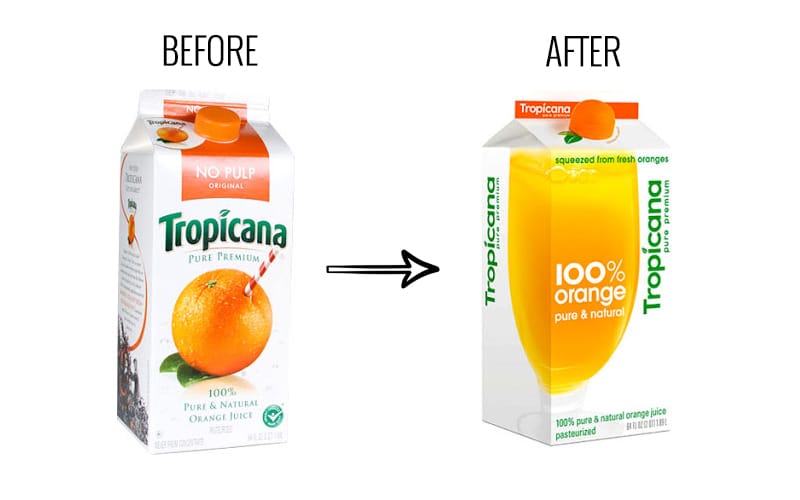
In 2009, Tropicana discarded its load-bearing asset: the orange with the drinking straw. It replaced it with a generic glass of juice and modern typography. Shoppers could no longer find the product on crowded shelves. Unit sales fell 20% between January 1 and February 22, according to Information Resources Inc. data reported by Bloomberg. The brand scrapped the redesign and returned to its original packaging.
In 2010, Gap attempted a rapid rebrand. It replaced the serif wordmark in its classic blue box with black Helvetica and a small blue gradient square. Customer backlash was instant because the brand made a radical aesthetic shift with zero underlying business change. Gap pulled the new logo within a week.
Mastercard took the evolutionary route. In 2016 and again in 2019, it kept its interlocking red and yellow circles, an asset with very high fame and uniqueness. In 2019, Mastercard announced it would drop its name from the symbol, citing research that more than 80 percent of people recognize the symbol without the word. It preserved its equity while simplifying the mark for digital use.
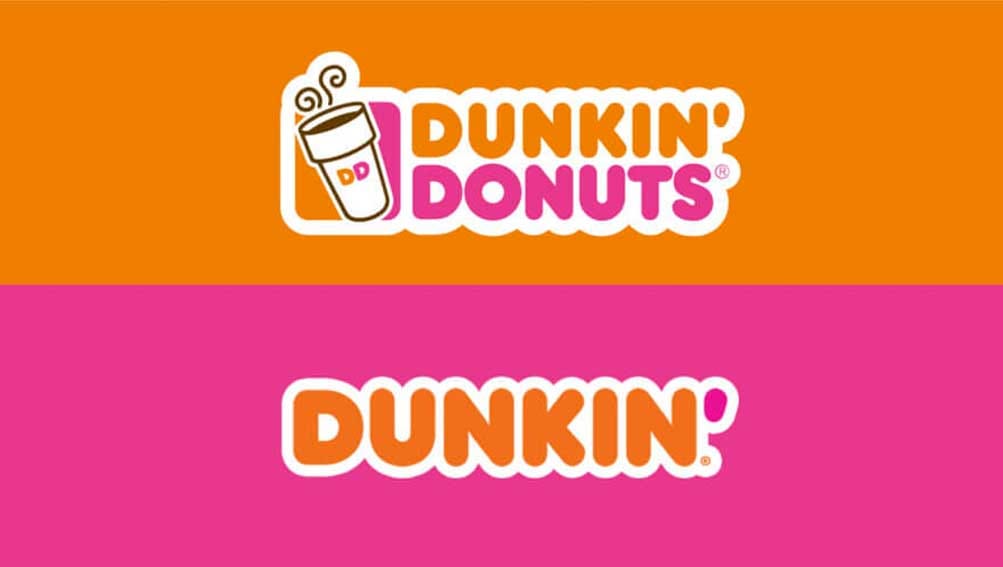
Similarly, Dunkin' Donuts became just Dunkin' in January 2019. The company changed its name because customer purchasing behavior had changed: beverages made up about 60% of its sales. It kept its familiar orange-and-pink color palette and rounded font, modernizing its market meaning without destroying its core recognizability.
When to Refresh and When to Rebrand
Diagnosing your brand's true operational state prevents executive missteps. Leadership teams must evaluate whether friction originates in market perception or business fundamentals.
Five Signs a Brand Refresh Is All You Need
A brand refresh is the appropriate path when:
- Core positioning remains accurate: The customer profile, product offerings, and value proposition continue to convert effectively.
- The design system is fragmented: Marketing and sales teams build rogue templates because existing brand guidelines are impractical or outdated.
- Digital interfaces require optimization: Legacy logos fail accessibility audits or lack clarity in mobile apps, social favicons, and digital ad formats.
- The visual identity feels dated, but awareness is high: Customer recognition is strong, but the aesthetics reflect design trends from a previous decade. Tracking brand recognition over time confirms whether buyers still identify your visual cues.
- Channel expansion demands new assets: The brand requires new sub-palettes, motion graphics, or video guidelines for modern media channels.
Five Signs You Need a Full Rebrand
A full rebrand becomes mandatory when:
- The business model fundamentally pivots: A software company moves from selling individual developer tools to enterprise-grade compliance suites.
- Mergers and acquisitions occur: Two organizations combine and require an integrated market identity, unified culture, and a deliberate choice of brand architecture model.
- A severe reputation crisis occurs: A legacy brand name carries structural, irrecoverable negative associations that prevent commercial progress.
- The brand has outgrown its name: A geographic or product-specific name limits expansion into adjacent categories or international regions.
- The buying committee has shifted upmarket: The brand needs to move from selling low-ticket tactical managers to closing seven-figure CFO and CIO engagements.
Where a Refresh Breaks Down
A brand refresh cannot fix a broken business model. When strategic misalignment exists, polishing the typography and color palette is an expensive distraction that wastes capital.
This breakdown occurs when a company attempts to solve commercial failure with visual design. If your product lacks market fit, if your pricing model is non-viable, or if enterprise buyers actively avoid your platform because of product reliability issues, a new logo changes nothing.
B2B organizations that scale from startup solutions into enterprise platforms often find that a refresh falls short. If your messaging speaks only to technical practitioners while your sales cycle requires buy-in from risk-averse CFOs, the company requires a ground-up reconstruction of its narrative, positioning, and market presence. When market conditions shift fundamentally, a full rebrand is the only intervention that aligns external perception with operational reality.
Frequently Asked Questions About Brand Evolution
How much does a brand refresh cost compared to a full rebrand?
A brand refresh typically requires a lower financial and operational commitment than a full rebrand. Refreshes finish faster because the strategic positioning stays fixed. A full rebrand demands extensive strategic discovery, executive alignment, legal trademark clearing, and complete asset replacement across every physical and digital touchpoint, so it takes considerably longer.
Does a rebrand always require changing the company name or logo?
A rebrand does not require changing the company name or visual mark. A rebrand fundamentally shifts what the company means, its position in the competitive arena, its customer target, and its commercial narrative. A business can maintain its visual identity while executing a deep rebrand that transforms its operating culture, market segment, and customer experience.
Can a brand refresh hurt customer recognition?
A brand refresh will not hurt customer recognition if leadership identifies and preserves load-bearing assets. Recognition losses occur when design teams alter distinctive shapes, hero colors, or established visual cues without strategic justification. As long as key identifying assets remain consistent, a refresh improves clarity, consistency, and conversion without disrupting customer memory structures.
What to Do Before You Touch the Logo
Protecting your brand as a durable commercial asset requires disciplined leadership:
- Conduct an objective asset audit using fame and uniqueness metrics before modifying any visual identity element.
- Choose a brand refresh if your business model, customer base, and core value proposition remain unchanged.
- Initiate a full rebrand only when your strategic foundation, corporate structure, or target market has fundamentally shifted.
- Align internal teams around practical guidelines that ensure long-term consistency across every digital and physical touchpoint.
Subscribe to The Brand Algorithm newsletter to receive our latest strategic frameworks directly in your inbox.