Why Buyers Can Know Your Brand and Still Not Think of It
Awareness tells you people know your name. Mental availability tells you whether they think of you when they need what you sell. Here is the difference and how to measure it.

The Brand That Comes to Mind First Wins
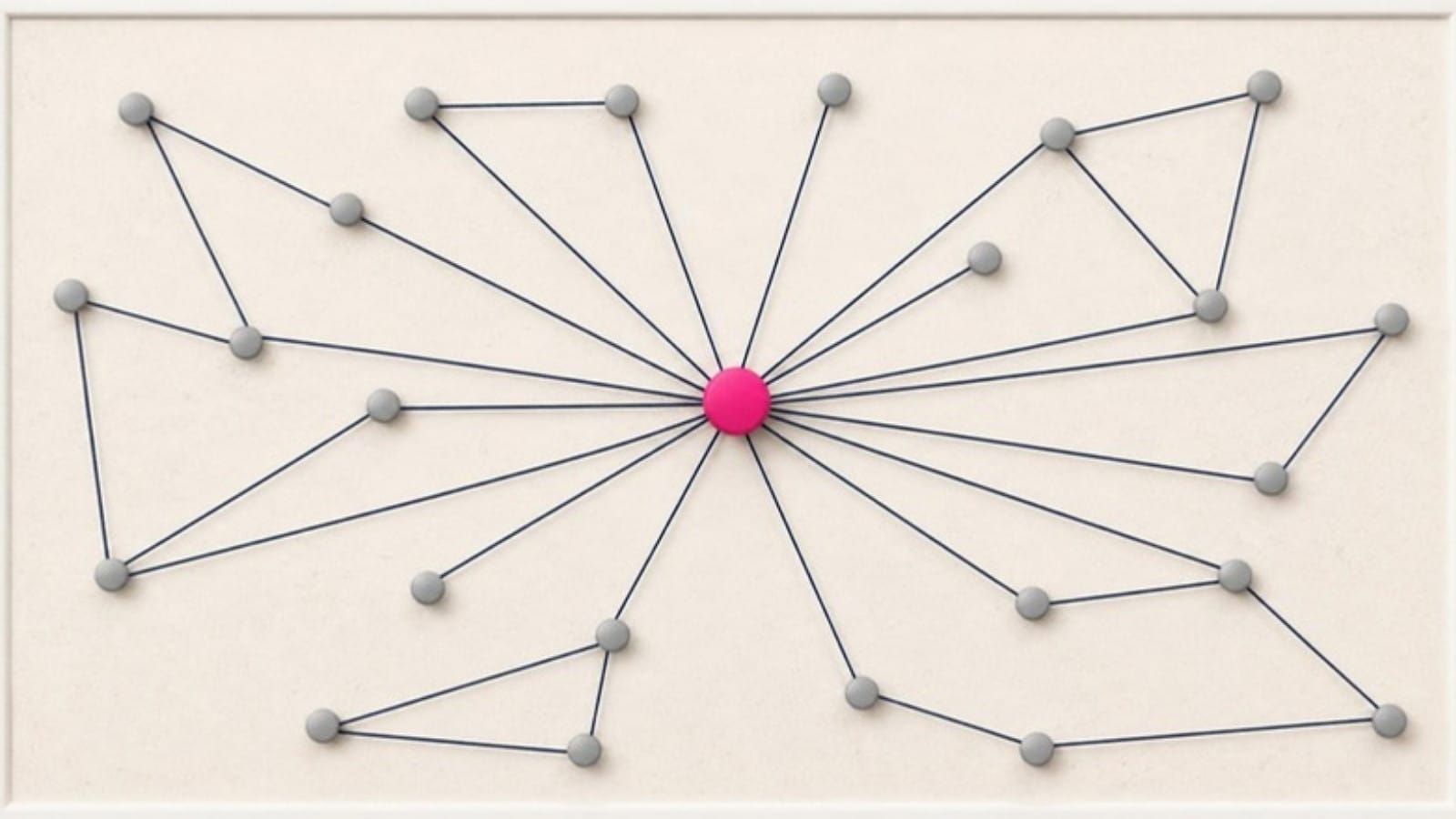
A mental availability brand strategy is the discipline of ensuring your brand is the first one consumers think of when a buying situation arises: not just that they recognize it when they see it, but that it surfaces automatically, without a prompt, at the moment of need. The idea comes from Byron Sharp and Jenni Romaniuk at the Ehrenberg-Bass Institute.
Here is the short version for anyone who needs it fast:
- Mental availability = the probability a buyer thinks of your brand in a specific buying situation
- It differs from brand awareness in that awareness is passive recognition; mental availability is active, situational recall
- It is built by linking your brand to Category Entry Points (CEPs): the needs, contexts, and triggers that bring buyers into a category
- It is measured with three metrics developed by Romaniuk: Mental Penetration, Network Size and Mental Market Share
- The strategic implication: reach more buyers across more CEPs, more consistently, with distinctive assets they can recognize without thinking
Most brand strategy discussions in 2026 are still optimizing the wrong thing. CMOs are tracking awareness scores, Net Promoter Scores, and share of voice: metrics that feel rigorous but routinely fail to predict what actually happens at the point of purchase. A brand can be known by almost everyone and still be losing ground to a challenger that owns the specific mental cues buyers use when they're actually deciding. Heinz didn't dominate ketchup for decades because people knew the name. They dominated because when someone thought "ketchup," the glass bottle with the keystone label materialized in their mind before any competitor had a chance to compete.
That is mental availability. And most marketing infrastructure, especially the performance-first stack that dominated the 2015–2023 era, was built to capture that kind of demand, not create it.
Many companies are now moving budget back to brand. But moving budget from Meta retargeting to "brand" without a structural framework for what brand actually builds in the brain is just a more expensive version of the same mistake.
Why Traditional Brand Awareness Fails the Modern CMO
The classic marketing funnel is a comforting fiction. We draw neat linear paths from awareness to consideration, preference, and action, assuming that if we pump enough money into the top of the funnel, sales will trickle out of the bottom. But the human brain does not operate like an assembly line. When a consumer experiences a need, they do not run a mental database search of every brand they have ever heard of. They access a highly restricted set of immediate, situational associations.
Traditional brand health metrics measure passive recognition. If we show a B2B buyer a list of software logos and ask, "Which of these have you heard of?" they might check Yahoo or an outdated enterprise platform simply because the name is familiar. But when that same buyer is trying to solve a sudden pipeline drop on a Friday afternoon, they do not consult that list. They think of the one tool that has anchored its identity to "instant pipeline recovery."
This distinction is what makes traditional brand awareness a dangerous proxy for commercial success. It creates "empty awareness": brands that are widely known but situationally irrelevant.
In B2B marketing, this disconnect is amplified by the 95-5 rule, from Ehrenberg-Bass professor John Dawes's research for the LinkedIn B2B Institute. At any given moment, only about 5% of your target market is actively looking to buy. The other 95% are out-of-market. They will not click your search ads, they will not read your whitepapers, and they will not book a demo. If we focus entirely on demand capture, we compete in a brutally expensive red ocean for that 5%.
To win the remaining 95% before they even look for a solution, we must build mental availability while they are out-of-market. When they eventually enter the buying window, which might be three years from now when their IT infrastructure contract expires, our brand must be the default mental choice.
The Mechanics of Mental Availability
Building mental availability requires moving away from abstract positioning statements and focusing on the concrete triggers that cause someone to enter a category. Jenni Romaniuk calls these Category Entry Points (CEPs).
CEPs are the mental cues, environmental contexts, and emotional states that initiate a purchase journey. They exist independently of your brand. Your job is not to invent them, but to build cognitive bridges between these existing entry points and your brand assets.
In practice the work has four steps:
- Map the entry points: Audit the existing associations within your category. Identify what triggers light and non-buyers to think of your industry.
- Pick 3 to 5 you can credibly win: Select 3 to 5 high-value Category Entry Points where your brand has a credible right to win.
- Tie them to distinctive assets: Tie your chosen entry points directly to highly distinctive, sensory brand assets that bypass rational evaluation.
- Measure and adjust: Continuously measure mental market share and network size to adapt your campaigns to shifting competitor positions.
To prioritize which CEPs to own, filter potential entry points with three questions:
- Credibility: Does our product offer a genuine, high-performing solution for this specific context?
- Competitive Opportunity: Are our competitors ignoring this specific trigger, leaving an open mental space?
- Commonality: Is this trigger experienced by a large volume of category buyers, particularly light and non-buyers?
Consider McDonald's. They do not just market "burgers." They systematically build links to highly specific CEPs: "quick lunch during a road trip," "late-night food run with friends," or "treating the kids after a soccer game." Since 2010, Snickers has anchored its advertising to one universal entry point: being hungry and grumpy ("You're not you when you're hungry").
By anchoring your brand to these situational triggers, you create a resilient cognitive network.
Entry points are how people now ask AI for recommendations
The rise of generative AI search engines and voice assistants has changed how memory structures are triggered. When a user asks an AI search tool or a voice system for a recommendation, they do not type in keywords; they describe their situational context. They ask: "What is a reliable project management tool for a remote creative team with tight deadlines?"
This is a complex, multi-layered Category Entry Point. The brands an assistant names for a question like that are the ones most often linked to that situation across reviews, press and the wider web. That is the same association-building work described above.
Distinctive Brand Assets: The Memory Anchors of Modern Branding
If Category Entry Points are the pathways in the buyer's brain, Distinctive Brand Assets (DBAs) are the anchors that secure your brand at the end of those paths.
A distinctive asset is anything that triggers the recall of your brand without requiring the consumer to see your logo or brand name. It can be a color, a shape, a sound, a character, or a packaging format.
When we evaluate assets, we plot them on the Distinctive Asset Grid, measuring two key metrics:
- Fame: What percentage of category buyers associate this asset with our brand?
- Uniqueness: Of the buyers who link the asset to any brand, what share link it only to yours?
To see how this works in practice, look at Heinz's "Draw Ketchup" campaign. They asked people around the world to draw ketchup. Most drew the iconic Heinz glass bottle, complete with the keystone label. The shape of the bottle is so deeply embedded in the category's memory structure that it functions as a perfect distinctive asset.
Liquid Death stood out in a category of clear plastic bottles by selling water in tallboy cans with heavy-metal branding.
Similarly, Duolingo turned its green owl mascot, Duo, into a chaotic, persistent meme across social channels. They did not market grammar features; they marketed the persistent, funny reminder to do your lessons, anchoring their brand to the daily habit loop.
Consistency is key. The moment you change your visual identity, your signature colors, or your brand voice, you erase the memory structures you have paid to build. To test your own assets, see How to Tell Which of Your Brand Assets Actually Work.
Measuring Mindshare: Three Core Metrics
You cannot manage what you do not measure, but traditional brand tracking is broken. It relies on aided and unaided awareness metrics that overstate the health of legacy brands and underrepresent the growth of agile challengers.
Romaniuk's three core measures:
| Metric | What it measures |
|---|---|
| Mental Penetration | The share of category buyers who link your brand to at least one entry point. |
| Network Size | The average number of entry points linked to your brand among those buyers. |
| Mental Market Share | Your brand's share of all brand-to-entry-point links in the category. |
When your Mental Market Share exceeds your physical market share, it indicates unrealized sales potential: the bottleneck may be elsewhere, such as distribution or price.
Romaniuk's Mental Advantage analysis goes a step further. By mapping your brand's performance across key category entry points against your competitors, we can identify where to defend your position and where to build new memory structures.
Conclusion: Balancing the Brand Ledger
Building mental availability is not a soft, creative exercise. It is a commercial strategy that directly impacts sales. To achieve sustainable growth, we must balance long-term brand building with short-term performance marketing.
The empirical research pioneered by Les Binet and Peter Field suggests a 60/40 budget allocation: roughly 60% of your budget dedicated to building mental availability (broad-reach, brand-building campaigns) and 40% dedicated to capturing immediate demand (performance marketing, search ads, and direct response). They also stress that the right split varies by category and is lower for most B2B brands.
When you under-invest in brand building, your performance marketing becomes less efficient over time because you are competing for a shrinking pool of buyers who already know you. But when you build strong memory structures, your performance marketing works harder because the buyers clicking your search ads already have an intuitive preference for your brand.
In the age of AI, where content production is cheap and search queries are mediated by algorithms, a distinctive, highly memorable brand is one of the few advantages that lasts.
Subscribe to The Brand Algorithm for new essays on brand strategy, brand systems and marketing leadership.