Ultimate Checklist for Optimizing Content for AI Answers
Traditional SEO Is Dead: The Shift to Generative Extraction
Your keyword ranking strategy is bleeding value.
I am not saying organic search stopped mattering. I am saying the old operating model — rank the page, win the click, let the landing page do the selling — no longer matches how buyers are forming opinions. AI systems now strip pages into passages, compare claims across sources, and assemble answers before your prospect ever reaches your site.
My thesis is simple: brands that want to optimize content for AI answers must stop writing pages for rankings and start engineering extractable evidence for answer engines while protecting the insights that should still require a click.
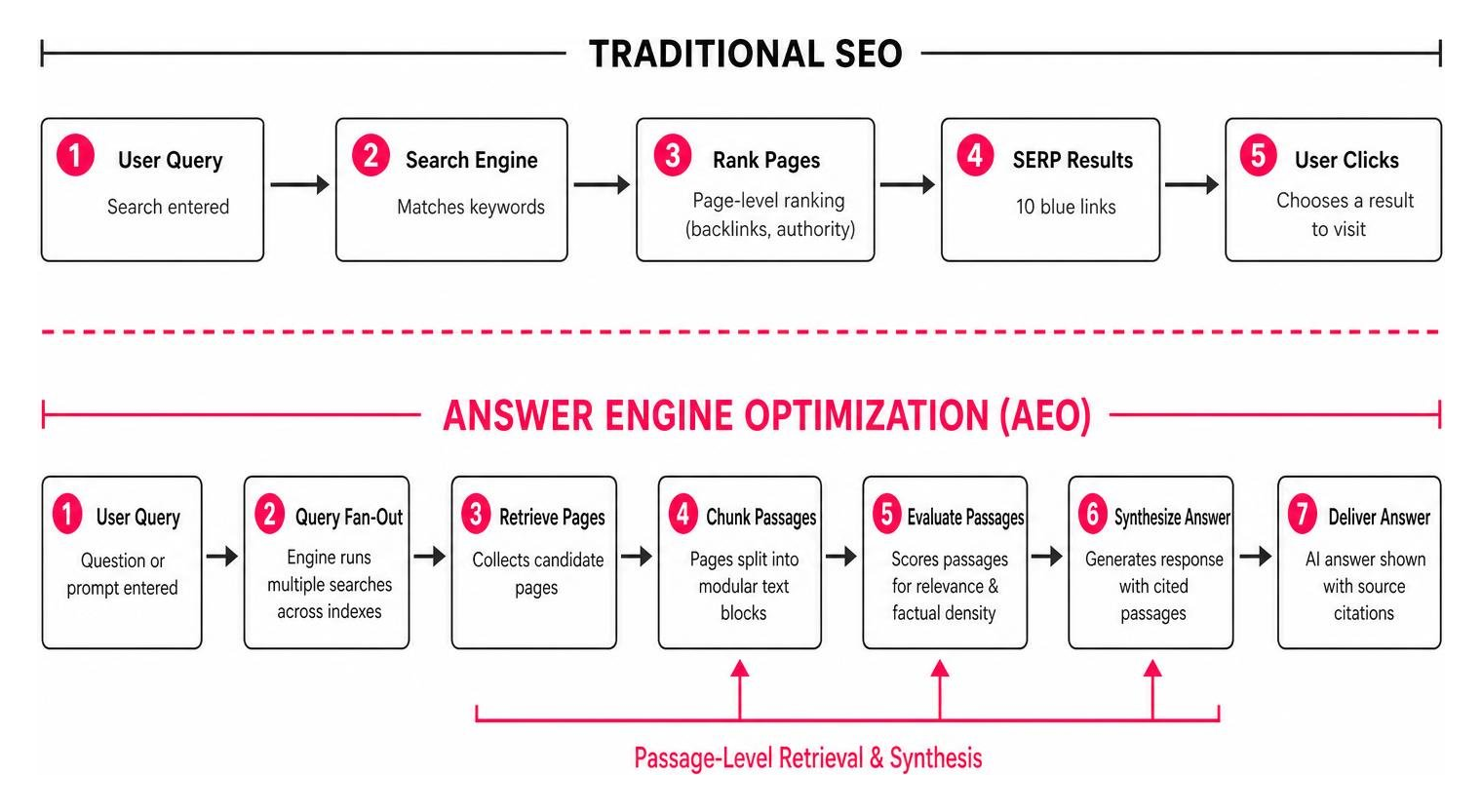
That sounds uncomfortable to a lot of marketing teams because it moves the work away from the familiar SEO scorecard. Backlinks still matter. Technical health still matters. But the decisive unit has changed. Traditional Search Engine Optimization focused on page-level signals: backlinks, domain authority, keyword density, and URL-level relevance. Modern Answer Engine Optimization (AEO) operates on passage-level retrieval. Search engines no longer behave like librarians handing users a stack of books. They behave like analysts who have read the entire library and synthesize a three-paragraph memo for the buyer.
To understand how to optimize content for AI answers, you need to understand Retrieval-Augmented Generation (RAG). When a user prompts an AI engine — whether Google AI Overviews, Perplexity, or ChatGPT — the system does not generate the answer purely from static training data. It runs query fan-out searches across web indexes, gathers candidate pages, chunks those pages into modular text blocks, evaluates individual passages for factual density, and synthesizes a response.
This architecture changes source selection. Google AI Overviews regularly cite sources ranking below position one in traditional organic results. I have seen pages sitting in positions 2 through 10 win the AI citation because one paragraph answered the question cleanly while the higher-ranking page buried the answer under brand copy, disclaimers, and 900 words of setup. The machine does not reward your internal content calendar. It rewards extractable proof.
ChatGPT adds another hard lesson. Many marketing teams still treat Bing as a rounding error because their Google traffic reports look healthy. That is lazy governance. Platforms like ChatGPT rely heavily on Bing's search index for live web retrieval. If you have ignored Bing Webmaster Tools indexing, your content can be functionally invisible to ChatGPT's live search capabilities, regardless of your Google rankings.
| Vector Dimension | Traditional SEO | Answer Engine Optimization (AEO) |
|---|---|---|
| Primary Goal | Rank #1 on SERP to drive link clicks | Earn direct passage extraction and brand citation |
| Retrieval Unit | Entire URL / Document Level | Modular Passage / Chunk Level |
| Engine Focus | Google Search Console & PageRank | Multi-Engine Indexing: Google, Bing, Perplexity |
| Content Mechanics | Keyword placement & topic coverage | Information density, claim clarity, schema, and evidence |
| User Interaction | Search to Click to Read | Prompt to Synthesized Answer to Citation |
The trap is treating AEO as a plugin, a schema update, or another content brief template. It is an operating decision. If your team writes like it is filling a blog quota, AI systems will use your competitors' clearer passages to answer your buyers' questions.
For a complete breakdown of this structural shift, review the Bing Webmaster Guidelines for web indexing standards and explore our deep-dive on generative engine optimization.
The D.E.E.P. Extraction Model for AI Answers
Most AI optimization advice fails because it tells teams to be helpful. That is not a strategy. Helpful content that cannot be extracted, attributed, and trusted is invisible in answer engines.
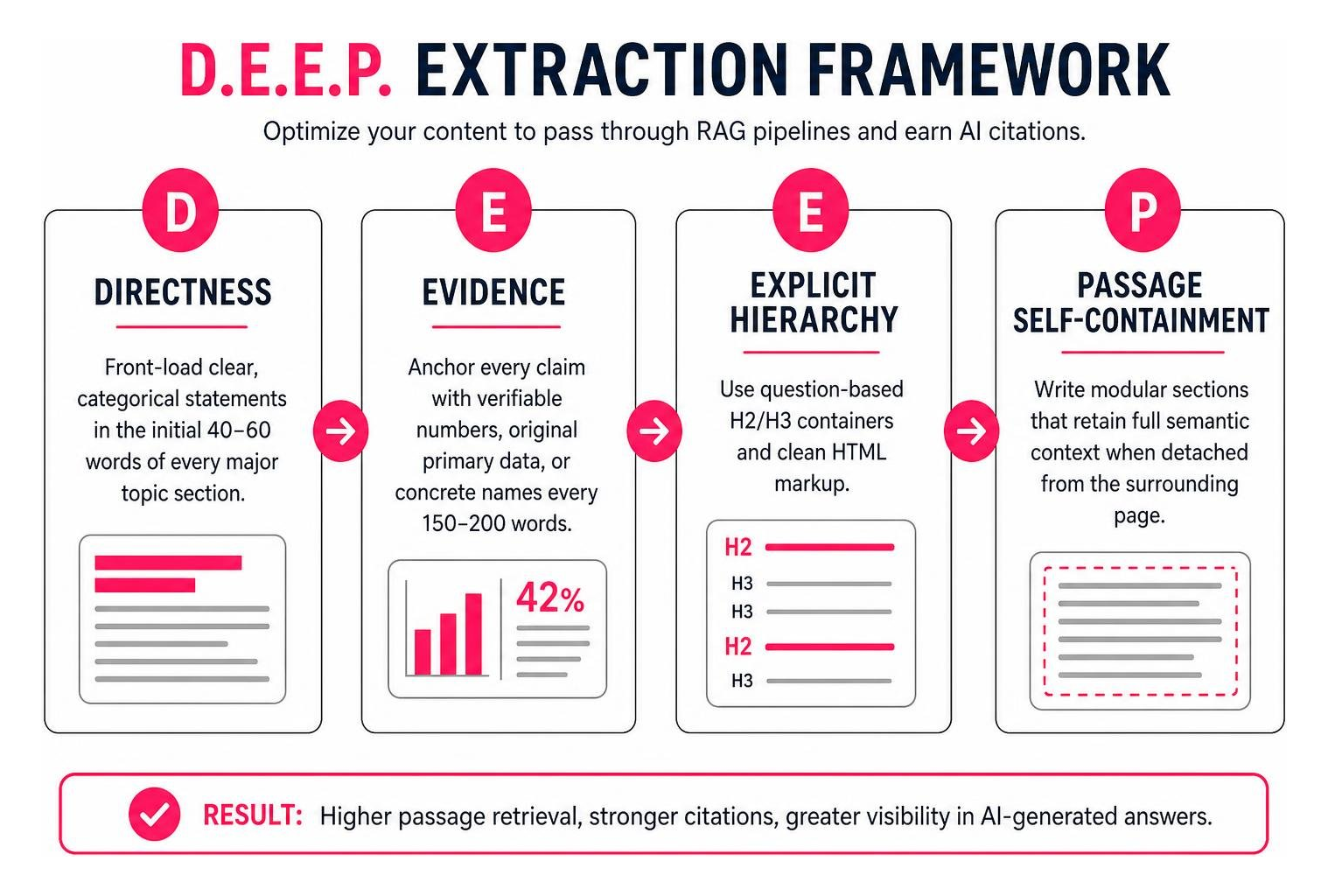
I use the D.E.E.P. Extraction Framework when I evaluate whether a page can survive automated retrieval. It has four parts, and each one maps to how RAG systems select source material:
- Directness: Front-load clear, categorical statements in the initial 40 to 60 words of every major topic section. Do not warm up. State the answer.
- Evidence: Anchor every claim with numbers, primary observations, named companies, concrete tools, or dated examples every 150 to 200 words.
- Explicit Hierarchy: Use question-based H2/H3 containers, clean HTML, and predictable section logic so crawlers understand where one answer ends and the next begins.
- Passage Self-Containment: Write modular sections that retain full semantic context when detached from the surrounding page.
This is not a writing style preference. It is a retrieval requirement. A passage that says “this strategy improves visibility” is weak. A passage that says “ChatGPT live browsing depends heavily on Bing indexing, so a B2B software company that only submits XML sitemaps to Google may miss citation opportunities in ChatGPT even when Google rankings are stable” gives the machine something specific to quote.
We execute D.E.E.P. with an inverted pyramid structure. Lead with the answer. Then explain the mechanism. Then add proof. Then add the caveat. The caveat matters because senior buyers can smell content that pretends every tactic works everywhere.
This works when the query is informational, comparative, procedural, or diagnostic. It breaks when the query requires proprietary judgment, sensitive pricing logic, or implementation details that should create sales conversations. A public article should answer enough to earn trust. It should not give away the entire consulting engagement.
Follow our ai content optimization strategies guide 2026 to structure your editorial workflows around this principle.
Structural Formatting Rules to Optimize Content for AI Answers
Parsing algorithms reward semantic clarity. Anything that adds friction to automated text extraction reduces your citation potential.
- Heading Containers: Frame H2 and H3 headers as exact conversational questions or decision statements. “How long does schema markup take to impact AI citations?” beats “Schema Timeline” because it mirrors how buyers prompt AI systems.
- Bulleted Lists & Comparison Tables: LLMs prioritize structured tables and bulleted steps for fast modular extraction. Convert dense comparative text into clean HTML tables when the buyer is choosing between options.
- Raw HTML Crawlability: Publish critical information in plain, static HTML. If the claim matters, do not trap it in JavaScript, an image, a downloadable PDF, or a script-heavy component.
- Avoid Interactive Accordions: AI crawlers often overlook text buried inside click-to-expand accordions, UI tabs, images, or attached PDFs.
A practical example: a cybersecurity vendor comparing SOC 2, ISO 27001, and HIPAA should not bury the comparison inside a glossy interactive module. Put the comparison table in the HTML. Name the control frameworks. Add the decision rule. Then reserve the audit-readiness calculator for the click-through.
Consult Google's Structured Data Guidelines to ensure clean indexing compliance.
Technical Schema Strategies to Optimize Content for AI Answers
Structured data acts as explicit semantic instruction for search systems. Schema will not rescue vague content, but it gives Google, Bing, and other crawlers confidence when they parse your claims.
Focus on three JSON-LD schema formats first:
- FAQPage Schema: Wrap explicit Q&A blocks to accelerate direct answer extraction.
- HowTo Schema: Use for multi-step processes, enabling AI engines to render procedural answers directly in search results.
- Article & Author Schema: Define entity connections clearly to confirm human expertise, editorial review, and topic ownership.
I would not start with twenty schema types. That is how technical teams create debt disguised as sophistication. Start with the formats tied to the jobs your content actually performs. A software pricing explainer needs clear Article schema, author data, and FAQ blocks around buying objections. A migration playbook needs HowTo structure. A thought leadership essay with no clear answer pattern may not need FAQ schema at all.
To execute this technical setup safely across complex sites, see our guide on ai search optimization for brands.
Entity Authority Beats Content Volume
Publishing more content will not make an untrusted brand cite-worthy. It usually makes the problem easier to see.
AI systems rely heavily on Experience, Expertise, Authoritativeness, and Trustworthiness (E-E-A-T) to reduce bad answers. An anonymous blog post with clean formatting can still lose to a less polished page from McKinsey, Gartner, Salesforce, Adobe, or a recognized niche operator because the system sees stronger entity confidence around those brands.
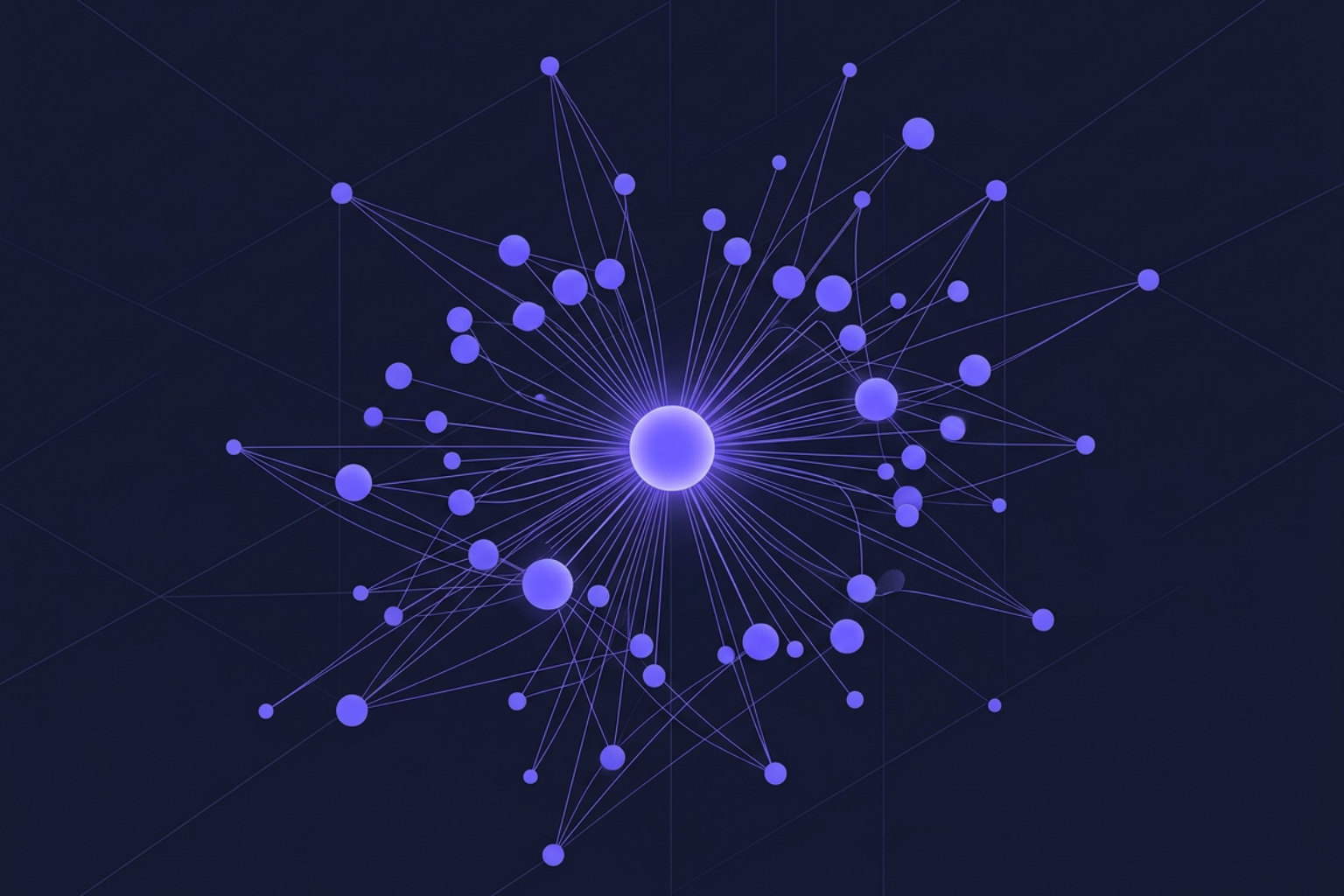
The answer is not to fake authority with longer author bios. The answer is to build an entity graph that machines can verify.
Start with a hub-and-spoke content architecture. Link 5 to 10 narrow, supporting articles directly to a core pillar page. The pillar should define the executive position. The spokes should handle specific buyer questions: implementation cost, governance, measurement, risk, vendor selection, and organizational ownership. This structure proves topical depth to semantic crawlers and gives sales teams a cleaner asset map.
The strongest hubs are not encyclopedias. They are points of view with evidence. A marketing operations company writing about attribution should not publish twelve generic posts about “measuring ROI.” It should publish a pillar on attribution governance, then spokes on GA4 limitations, Salesforce campaign hierarchy, self-reported attribution, partner-sourced pipeline, and board reporting. Specific beats broad. Every time.
Content freshness is equally important. Information older than 6 months can lose citation strength when the category moves quickly. AI tools, paid media benchmarks, privacy rules, and platform documentation age fast. Maintain a 90-day refresh cycle across high-priority assets to update statistics, links, screenshots, and examples. Do not call this maintenance. Call it inventory protection. A page that drove $200,000 in pipeline last year deserves more care than a campaign landing page that ran for two weeks.
Off-page entity signals matter as much as on-page optimization. AI search systems calculate brand consensus by tracking unlinked brand mentions across third-party industry journals, Quora, Reddit, analyst reports, podcast transcripts, YouTube descriptions, review platforms, and partner pages. If your company only exists on its own website, the machine has limited reason to trust you.
This is where many CMOs underinvest. They will approve $40,000 for another white paper but hesitate to build a steady program for founder commentary, executive bylines, customer proof, category participation, and third-party mentions. That trade-off is backwards when AI systems are building consensus from distributed signals.
This works when the brand has a defensible point of view and enough proof to repeat it across channels. It breaks when marketing invents a category story that the product, customers, and sales motion do not support. AI retrieval exposes inconsistency. So do buyers.
Read our strategies on how to get mentioned by chatgpt and review Google's Search Central Guidance on Helpful Content to refine your off-page entity graph.
Measurement Has to Move Beyond Rank Tracking
A rank tracker can tell you where a URL sits. It cannot tell you whether an AI system used your argument to shape a buyer's opinion.
That distinction matters for anyone with P&L responsibility. If your board still asks only for organic sessions, you will undercount influence and overreact to falling click-through rates. AI answer engines are changing the visible funnel. Some of the value now happens before the click.
You will likely see a specific analytics pattern: Google Search Console impressions rise while traditional organic click-through rates fall. This divergence often occurs when AI search engines use your content to answer user queries directly on the search page. The impression confirms exposure. The missing click may indicate zero-click intent resolution.
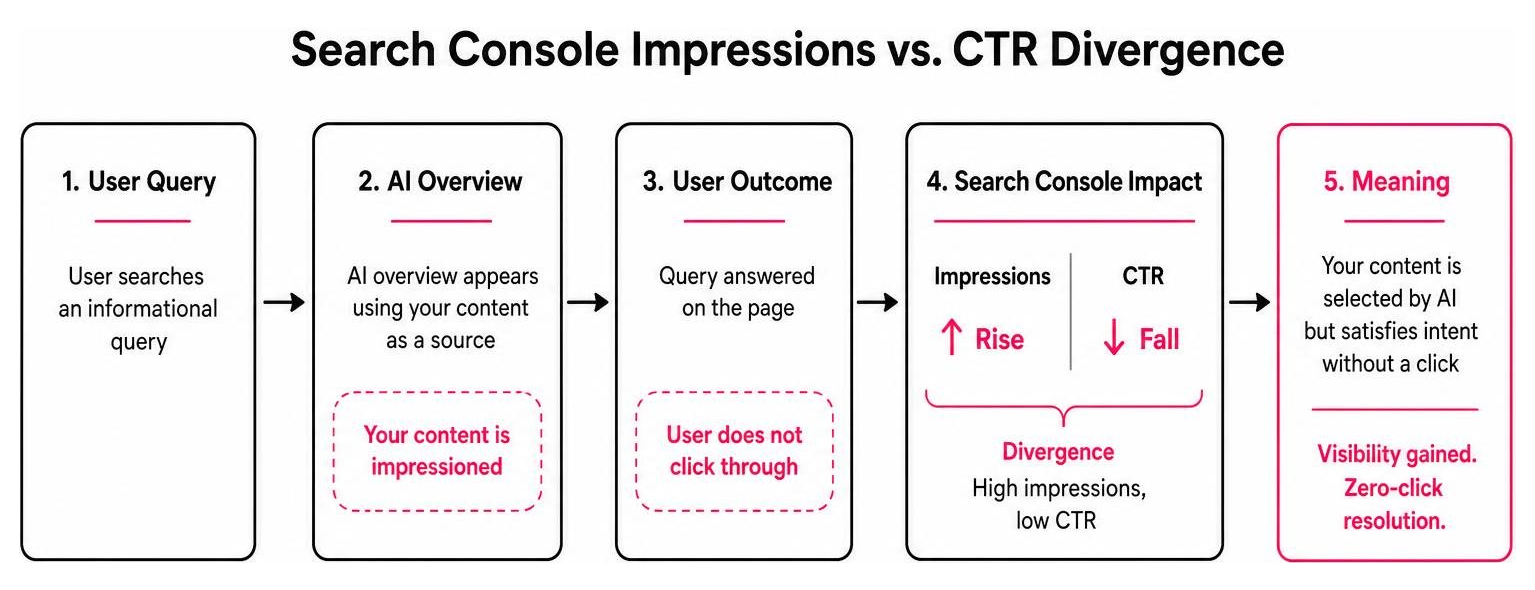
Do not panic when CTR drops on simple informational queries. Panic if commercial pages lose qualified sessions and pipeline. Those are different problems.
I use a three-tiered measurement stack:
- First-Party Diagnostics with GSC: Filter query performance by informational intent. Analyze pages with high impression growth but declining CTR to identify where AI answers may be using your content. Pay special attention to pages that rank outside position one but still gain impressions.
- Behavioral Attribution with GA4: Measure engagement time, assisted conversions, and conversion rates on traffic coming from AI referrals. Visitors who click through from an AI citation often arrive more educated because they have already consumed a synthesized answer.
- Cross-Platform Visibility Monitoring: Audit citation frequency weekly across ChatGPT, Perplexity, Gemini, and Google AI Overviews. Record prompts, answer phrasing, cited sources, and whether your brand appears as a source, an option, or an implied authority.
A concrete scenario: a B2B SaaS company selling contract lifecycle management may see fewer clicks on “what is contract lifecycle management” while gaining more demo requests from searches like “best CLM software for Salesforce integration.” The first query is education. The second query is buying motion. Treat them differently.
Another scenario: a professional services firm may earn citations in Perplexity for “how to structure an AI governance committee” but receive only a handful of visits. If those visits include a CFO, general counsel, or CIO spending six minutes on the site and viewing the advisory page, that is not a traffic problem. That is a sales development signal.
This measurement model works when marketing and sales agree on which queries influence pipeline. It breaks when the organization treats all impressions, all clicks, and all content pages as equal. A visit from a procurement director researching a $250,000 platform decision is not the same as a student reading a glossary page.
For an operational blueprint, review our guides on how to track brand mentions in generative ai responses and the best platforms for monitoring brand mentions in ai generated content. Refer to Google Search Console Documentation for query reporting workflows.
The Zero-Click Dilemma: Give Answers, Protect Advantage
AI visibility can create brand authority and destroy click volume at the same time. Pretending otherwise is irresponsible.
The mistake I see is over-optimizing every asset for extraction. Marketing teams take their most valuable proprietary thinking — benchmarks, pricing calculators, implementation sequences, account prioritization models, category-specific playbooks — and format it into neat public answer blocks. Then they act surprised when the search engine satisfies the buyer without sending traffic.
If you format high-intent, bottom-of-funnel expertise into easy AI summaries, search engines will fulfill more of the user's need directly on the results page. You may win the citation and lose the conversion path. That is not thought leadership. That is margin leakage.
Apply the 30 Percent Rule for Content Funnel Protection:
- Top-of-Funnel Informational Content: Optimize aggressively for AI extraction. Front-load roughly 30% of the asset with direct answer blocks, schema, comparison tables, and open formatting to maximize brand visibility and citations.
- Mid-Funnel Evaluation Content: Answer the buyer's decision criteria, but hold back the full methodology. Share the framework, not the complete operating manual.
- Bottom-Funnel Commercial Content: Protect proprietary insight. Keep pricing logic, benchmark depth, calculator mechanics, implementation templates, and customer-specific examples behind conversion paths or sales conversations.

A simple example: publish the criteria for evaluating an enterprise CRM migration partner. Do not publish the entire migration risk-scoring worksheet your team uses in paid engagements. Another example: share the range of paid media efficiency benchmarks by channel. Do not publish the client-level forecasting model that helps a prospect decide whether to move $500,000 from Meta to Google Search.
This works when the open content creates confidence and the protected content creates demand. It breaks when the gated asset is weak. Buyers will not exchange an email address for recycled advice. They will exchange it for proprietary benchmarks, a useful calculator, a board-ready template, or a diagnostic that would take their team hours to build.
The board-level question is not “How much traffic did this article get?” The better question is “Which parts of our knowledge should AI quote, and which parts should a buyer need us to access?” That one question changes the content roadmap.
Learn how to manage this balance in our analysis of content strategy in the age of ai.
Field Notes: Questions I Hear From Marketing Leaders
Does ranking position one in Google guarantee inclusion in AI Overviews?
No. Classic organic search rankings do not guarantee inclusion in Google AI Overviews. A page can rank first and still lose the AI citation if the useful answer is buried, vague, or difficult to extract. AI systems select sources based on passage-level clarity, evidence, schema, and entity trust. Domain authority helps. It does not excuse sloppy thinking.
How does ChatGPT select web sources for real-time citations?
ChatGPT uses Bing's search index for live web retrieval. That means Bing indexing is not optional for brands that care about AI visibility. ChatGPT evaluates candidate pages based on recency, direct answer formatting, citation density, entity consistency, and third-party mentions across sources such as review platforms, industry publications, Reddit, Quora, and partner sites.
Will optimizing for AI answers destroy organic website traffic?
It will reduce clicks on simple factual queries when the answer can be satisfied directly in the AI response. That is the trade-off. Complex commercial queries behave differently. A buyer who clicks after reading an AI citation often arrives with stronger intent because the basic education already happened upstream.
Where does this advice break down?
It breaks down when the content is commercial but formatted like public education. It also breaks when the brand has no real authority outside its own site. You cannot schema-markup your way into trust if no customers, analysts, partners, executives, or industry communities validate your position.
What should a CMO do first?
Start with the 20 pages most likely to influence pipeline: category pages, comparison pages, pricing explainers, implementation guides, executive POVs, and high-performing informational assets. Audit each page for D.E.E.P. extraction, Bing indexation, schema, freshness, and funnel protection. Then fix those before commissioning another batch of generic articles.
What Marketing Leaders Should Do Next
AI answer optimization is now a governance issue, not a content experiment.
If you own growth, brand, or pipeline, assign one person to be accountable for AI visibility across Google AI Overviews, ChatGPT, Perplexity, Gemini, Bing, GSC, GA4, and the editorial roadmap. Do not bury this inside a junior SEO ticket queue. The work touches technical indexing, messaging, PR, sales enablement, analytics, and product marketing.
Start with five actions:
- Audit your top 20 revenue-relevant pages for extractable answer blocks, schema, static HTML, and dated claims.
- Submit and monitor your site in Bing Webmaster Tools so ChatGPT's live retrieval path can find you.
- Rewrite weak passages using the D.E.E.P. Extraction Framework: direct answer, evidence, explicit hierarchy, and passage self-containment.
- Map entity authority beyond your website by identifying where your brand, executives, customers, and category language appear across third-party sources.
- Apply the 30 Percent Rule so top-of-funnel pages earn citations while commercial assets preserve the knowledge that should create sales conversations.
This is where the gap will widen. Teams that treat AI optimization as another blog formatting checklist will publish more content and gain little authority. Teams that treat it as distribution architecture will shape how buyers understand the category before a sales call ever happens.
At The Brand Algorithm, we teach marketing leadership teams how to build defensible brand moats while using AI systems as operational force multipliers. Winning the next decade of search requires modernizing technical formatting, organizing topic clusters, measuring generative visibility, and protecting proprietary insight.
To scale your company's visibility across generative engines, explore our executive frameworks on Generative AI Impact on Brand Visibility and book a strategy consultation with our team.