Mastering LinkedIn Content Strategy in the Age of AI


The 2026 Algorithm Shift: From Network to Interest-Graph
Mastering a LinkedIn content strategy in the age of AI videos means navigating a platform that has fundamentally changed — and doing it while every competitor now has access to the same AI tools you do.
Quick answer: The most effective LinkedIn content strategy right now combines AI-assisted creation with strong human editing, prioritizes carousels and PDFs over video, posts 2-5 times per week with a niche focus, and invests heavily in the first 90 minutes after publishing to drive comment velocity.
LinkedIn's numbers tell a sobering story. Organic views are down 50% year-over-year. Engagement has dropped 25%. Follower growth has declined 59%. And yet — 85% of FTSE top CEOs are now actively using the platform, up from just 12% in 2023.
That gap between declining reach and rising executive presence is exactly where the opportunity lives.
Here's the uncomfortable truth most LinkedIn advice ignores: AI has made content cheaper and faster to produce, but it has not made it better. Research from a media company analysis shows human-edited content outperforms raw AI output by 10x. LinkedIn's algorithm is increasingly capable of detecting generic AI patterns — and suppressing them.
The platform has also shifted in a less obvious way. Distribution is no longer primarily driven by who follows you. It's driven by what topics you're known for. That's a fundamental change with massive implications for how you build a strategy.
The creators winning right now are not the ones using the most AI tools. They're the ones using AI strategically — to move faster, not to replace their thinking.
This guide breaks down exactly how to do that.
Linkedin content strategy in the age of ai videos terms to know:
For years, LinkedIn functioned as a "network graph." If you posted, your connections saw it. In 2026, we have moved firmly into the era of the interest-graph. This means the algorithm now prioritizes content based on topic relevance and expertise signals rather than just your immediate circle of followers.
This shift is powered by sophisticated semantic ranking. Since late 2025, LinkedIn has utilized LLM (Large Language Model) embeddings to scan the actual text of your posts. It no longer relies on "hashtag stuffing" to understand what you're talking about. Instead, it categorizes your content into professional cohorts. If you are a supply chain expert, the algorithm identifies the semantic patterns in your writing and serves your post to other supply chain professionals, even if they aren't in your network.
This creates what we call the "Niche Advantage." Creators who stay consistent within a specific domain build a stronger expertise signal. When you pivot too often — posting about AI one day and mindfulness the next — you confuse the semantic ranker, leading to suppressed distribution.
The Four Phases of Distribution
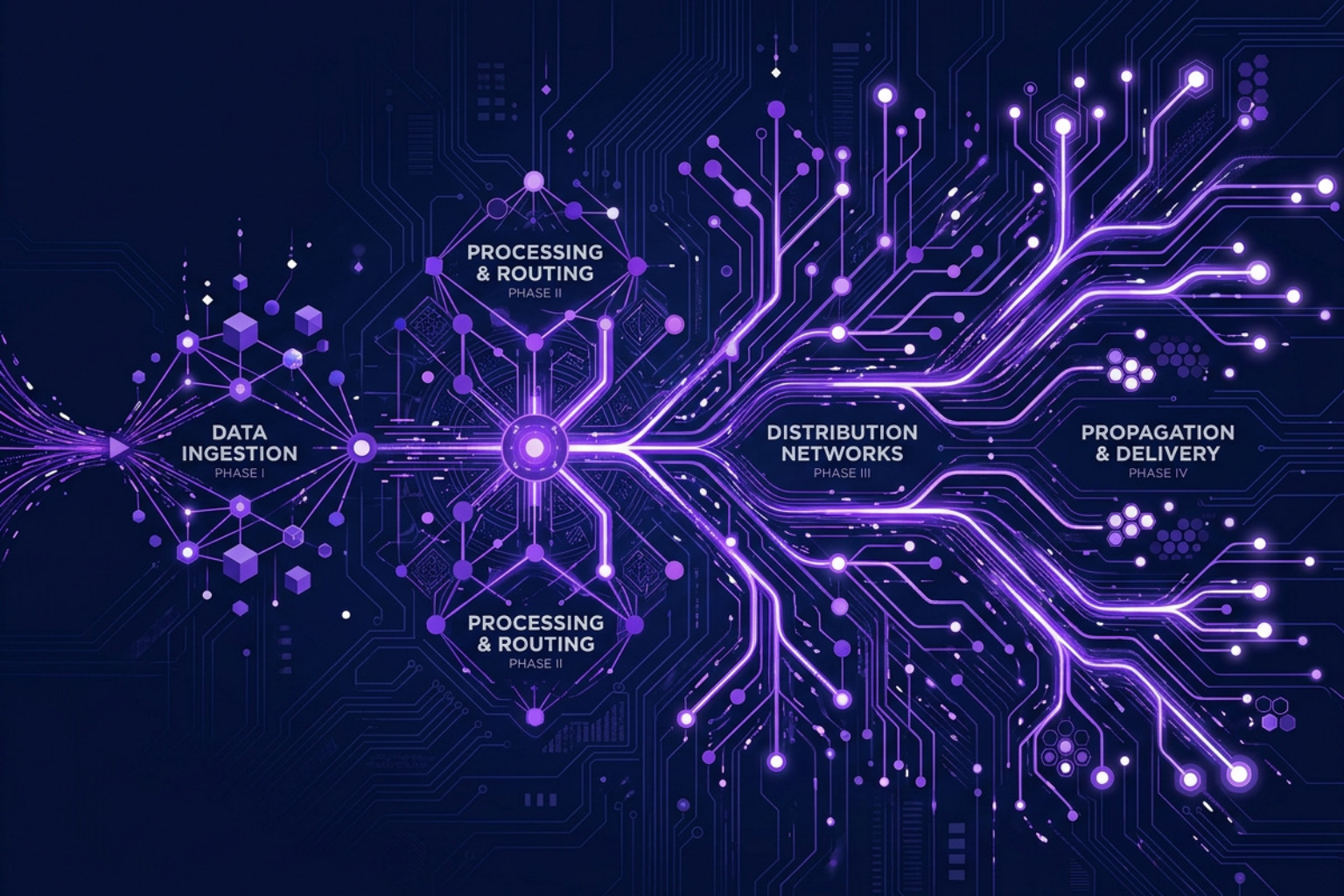
The 2026 algorithm operates in four distinct stages:
- Quality Classification: A real-time spam filter (with 93% accuracy) checks for low-quality signals or obvious raw AI patterns.
- Cohort Seeding: The post is shown to a small "test group" of your network and users interested in your specific niche.
- Network Distribution: If the test group engages, the post is pushed to your wider network.
- Sustained Amplification: Posts that spark meaningful conversations can live in the feed for 2-3 weeks, a massive departure from the 24-hour lifespan of the past.
Understanding this process is vital for any linkedin content strategy in the age of ai videos. To master these phases, many professionals are turning to structured learning, such as the LinkedIn Learning Certificate of Completion programs, to stay ahead of AI marketing trends.
High-Performance Formats: Why Carousels Outpace AI Videos
Despite the hype surrounding AI video tools, the data reveals a surprising trend: static, high-value formats are dominating engagement. While video creation on LinkedIn is growing at twice the rate of other formats, its reach has actually dropped by 200% compared to 2024.
Why the disconnect? Dwell time.
LinkedIn’s algorithm prioritizes how long a user stays on a post. A 60-second video might be scrolled past after 3 seconds. However, a 10-slide PDF carousel requires the user to click, read, and stay engaged. Multi-image posts currently achieve a 6.60% engagement rate, compared to roughly 5.60% for video.
| Content Format | Engagement Rate | Primary Algorithm Signal |
|---|---|---|
| Multi-Image Carousels | 6.60% | Dwell Time & Clicks |
| Native PDF Documents | 5.85% | Dwell Time & Saves |
| Short-form Video (<90s) | 5.60% | Completion Rate |
| Polls | High Reach | Interaction Volume |
| Text-only Posts | 4.00% | Comment Velocity |
While video reach has dipped, it still serves a purpose. Short-form vertical videos (under 90 seconds) are excellent for "real talk" and building a human connection. However, if your goal is lead generation or authority building, the data suggests you should lean into carousels.
The Power of the PDF
Native document carousels (PDFs) are the "gold mine" of 2026. They allow you to package complex insights into scannable, visually appealing slides. Because they are hosted natively, they keep users on the platform — something LinkedIn rewards heavily. In contrast, posts containing external links are penalized with a 60% reduction in distribution.

Building a LinkedIn Content Strategy in the Age of AI Videos
To succeed with a linkedin content strategy in the age of ai videos, we must stop treating AI as a "content vending machine" and start using it as a "context multiplier."
The biggest mistake creators make is feeding AI a generic topic (e.g., "Write a post about B2B sales"). This results in generic, "beige" content that the algorithm suppresses. Instead, you must build a Personal Context Foundation.
The 6 Elements of Context
Before you prompt an AI tool, you need to define:
- Business Reality: What are the actual stakes in your industry right now?
- Audience Problems: What keeps your specific ICP (Ideal Customer Profile) awake at 2 AM?
- Personal Story: What unique experiences or mistakes have you had?
- Voice and Tone: Are you contrarian, academic, or encouraging?
- Past Examples: What has worked for you previously?
- Proven Methods: What frameworks do you use to solve problems?
When we provide this level of detail, AI becomes a powerful partner for generating creative briefs, moodboards, and even scripting. At The Brand Algorithm, we often discuss how AI in marketing is shifting from generation to orchestration. If you need help refining this, exploring AI content strategy services can provide the necessary framework to ensure your AI-augmented content doesn't lose its soul.
The Human-AI Synergy: Scaling Without Losing Authenticity
There is a 10x performance gap between raw AI-generated posts and human-edited content. LinkedIn’s current algorithm is designed to sniff out the "uncanny valley" of AI writing — those repetitive sentence structures and overly enthusiastic adjectives that scream "I didn't write this."
The "Authenticity Paradox" is that as AI makes content easier to create, human authenticity becomes more valuable. We use AI to handle the heavy lifting — research, initial drafting, and formatting — but the final 20% must be human.
The AI Video Tool Stack for 2026
While static formats lead in engagement, video is still vital for the "human touch." Here are the tools we recommend for an AI-augmented workflow:
- Runway ML: For high-end video editing and text-to-video enhancements.
- Synthesia & HeyGen: Excellent for scaling personalized video messages with human-like avatars.
- Opus Clip: A must-have for repurposing one long-form video into multiple short-form "hooks" for the LinkedIn feed.
- Descript: For "edit-by-text" capabilities that make video production as easy as editing a Word document.
The 90-Minute Golden Hour
In 2026, the first 90 minutes after you post are critical. This is the "Golden Hour" where the algorithm decides if your post is worth amplifying.
- Comment Velocity: A thoughtful, multi-sentence comment is worth 15x more than a simple "like."
- Response Time: Responding to a comment within 15 minutes can generate a 90% boost in algorithmic reach.
- The External Link Penalty: Never put a link in the main post. Instead, wait 30-60 minutes and place it in the first comment. This avoids the "platform exit" penalty that kills 60% of potential reach.
Execution and Metrics: Your 90-Day Scaling Blueprint
Scaling a linkedin content strategy in the age of ai videos requires a disciplined mix of content types. We recommend following the 60-30-10 Rule:
- 60% Educational: Carousels and PDFs that solve a specific problem.
- 30% Thought Leadership: Contrarian takes or industry analysis that shows your unique perspective.
- 10% Engagement: Polls or personal stories that build community.
Alternatively, some prefer the 5-3-2 Rule: Out of every 10 posts, 5 should be curated content from others, 3 should be original insights, and 2 should be personal/humanizing posts.
Metrics That Actually Matter
Stop chasing likes. In 2026, vanity metrics are a distraction. Instead, track:
- Comment Rate: Aim for a 0.3% comment-to-impression ratio.
- Saves and Sends: These indicate high-value content that users want to revisit or share privately (the "Dark Reach").
- Profile Views: Are your posts actually driving people to check who you are?
- The 95-5 Rule: 95% of your audience isn't ready to buy today. Your content should keep you top-of-mind for when they are in the 5% market.
The 90-Day Action Plan
- Month 1 (Test & Learn): Post 2-3 times per week. Focus on building your "context foundation" and testing different hooks.
- Month 2 (Double Down): Analyze your data. Which formats got the most "Saves"? Double down on those.
- Month 3 (Scale): Increase frequency to 4-5 times per week using AI to repurpose your "winner" ideas into different formats (e.g., turning a high-performing carousel into a short video).
Frequently Asked Questions about LinkedIn Content Strategy in the Age of AI Videos
How does the 2026 algorithm impact linkedin content strategy in the age of ai videos?
The 2026 algorithm uses interest-graph matching and semantic analysis to distribute content. This means your "expertise signal" matters more than your follower count. Posts now have a longer lifespan (up to 3 weeks) if they generate meaningful, sustained conversation.
What are the best tools for a linkedin content strategy in the age of ai videos?
For video, Opus Clip and Descript are essential for repurposing and editing. For content intelligence and trend analysis, tools like Jasper or Taplio help identify what is currently resonating in your specific niche, allowing you to fill "content gaps" that others are missing.
Why does raw AI content underperform on LinkedIn?
LinkedIn has implemented aggressive AI detection. Raw AI content often lacks a unique "point of view" and follows predictable linguistic patterns. This leads to an "authenticity paradox" where the more "perfect" a post looks, the less humans (and the algorithm) trust it. Human-edited content consistently sees 5x to 10x more engagement.
Conclusion
The era of "posting for the sake of posting" is over. Success on LinkedIn in 2026 requires a sophisticated blend of human intuition and AI efficiency. By focusing on the interest-graph, prioritizing high-dwell-time formats like carousels, and providing deep personal context to your AI tools, you can build a brand that is both scalable and deeply authentic.
At The Brand Algorithm, we believe that AI is not here to replace the marketer, but to elevate the craft. For senior professionals, the goal isn't just to increase reach — it's to build brand equity and consumer trust in a landscape crowded with noise.
If you're ready to stay ahead of these shifts and master the intersection of brand strategy and artificial intelligence, sign up for our newsletter to receive practitioner-level analysis delivered directly to your inbox.