A Comprehensive Guide to AI for Marketing Professors


Why AI for Marketing Professors Is Reshaping Business Education
AI for marketing professors is no longer a niche interest — it's rapidly becoming a core competency for anyone teaching, researching, or leading marketing programs.
Here's a quick snapshot of what this means in practice:
- Curriculum design: Schools like Wharton, Harvard, and Stanford GSB are building dedicated AI-in-marketing courses and executive programs
- Research tools: Professors are using large language models, synthetic data, and custom AI agents to generate new marketing insights faster
- Teaching assistants: Purpose-built AI tools (like professor-created agents trained on course materials) are extending faculty reach beyond classroom hours
- Frameworks: New academic frameworks — like the AI Marketing Canvas and the PAIR Framework — are giving educators structured ways to integrate AI responsibly
- Student outcomes: AI is helping students engage with marketing problems at a depth and speed that wasn't possible before
Marketing is already the leading functional use case for AI across industries, according to Wharton's ongoing Generative AI Adoption Report. That puts marketing professors in a unique position — they're not just observers of AI's impact. They're the ones responsible for preparing the next generation of practitioners to navigate it.
But the challenge is real. The field is moving fast. Textbooks go stale. Tools change monthly. And the pressure to teach AI well — not just mention it — is growing from students, deans, and employers alike.
This guide maps what the most forward-thinking marketing professors and business schools are actually doing: the frameworks they're building, the tools they're using, and the research that's shaping how AI and marketing education evolve together.
Leading Frameworks and Textbooks for AI for Marketing Professors
As we navigate this shift, the academic community has moved beyond theory into practical, structured resources. One of the most significant milestones is the emergence of comprehensive textbooks designed specifically for the classroom. Dr. Hannah Walters, an associate professor at Northern State University, recently published "AI in Marketing: Applications, Insights, and Analysis." This text is a vital resource for AI for marketing professors because it balances foundational concepts with practical exercises, helping students develop the hands-on skills they’ll need in an AI-driven workforce.
Beyond the basics, leading scholars are developing frameworks that redefine how we think about brand strategy and customer journeys. Vanitha Swaminathan's research on AI branding at the University of Pittsburgh is a prime example. Her work explores how brands create and govern value in AI-enabled markets. She is even authoring a 2025 book, Hyper-Digital Marketing, which introduces six pillars of strategic brand marketing for an AI-powered world.
Another cornerstone framework is the AI Marketing Canvas, developed by Raj Venkatesan of UVA Darden. This framework outlines a five-stage path for AI-powered marketing success, moving from initial experimentation to full-scale organizational adoption. For those of us teaching senior leaders, these frameworks are essential for translating "cool tech" into a robust AI Strategy for CMO.
When we discuss Generative AI Branding, we aren't just talking about making logos; we're talking about the ethical integration of these tools into the marketing value chain. These textbooks and frameworks provide the scaffolding professors need to ensure students aren't just using AI, but are using it responsibly and strategically.
How Top Business Schools Structure AI for Marketing Professors and Students
Top-tier business schools are not just adding a single "AI week" to their syllabus; they are restructuring entire curricula to reflect the new reality. At the Wharton School, the AI Initiative led by professors like Eric Bradlow and Stefano Puntoni emphasizes a customer-centric approach. They argue that AI doesn't change the goal of marketing—delivering customer value—but it radically transforms the workflow used to achieve it.
Harvard Business School, led by professors like Rajiv Lal, uses a case-based approach to explore the "many-to-many" world where algorithms and influencers often hold more sway than traditional firm-driven communication. Their modules dive deep into how AI augments human ingenuity rather than replacing it.
To help visualize how these leading institutions are approaching the topic, we can compare their structural choices:
| Feature | Wharton (Executive Education) | Harvard Business School (MBA/Exec) |
|---|---|---|
| Primary Focus | Reshaping the marketing value chain and analytics-driven growth. | Case studies on AI-driven entrepreneurs and organizational transformation. |
| Learning Format | Tri-variate: Asynchronous, live online, and in-person sessions. | Case-based modules with a focus on human-AI collaboration. |
| Key Concepts | Intelligent systems, value chain stages, and senior leadership adoption. | Synthetic users, GEO vs. SEO, and agentic commerce. |
| Tools Highlighted | Marketing AI Tools Evaluated for strategic growth. | AI-Driven Content Creation for demand generation. |
These programs often utilize multi-faculty modules to ensure students see AI from every angle—from the statistical models used in AI-Driven Content Creation to the organizational change management required for adoption.
Pioneering Research and Custom Agents in AI for Marketing Professors
One of the most exciting developments in AI for marketing professors is the creation of custom AI agents to enhance the learning experience. Imagine a 24/7 teaching assistant that has read every case study, syllabus, and lecture note in your course. This is already happening.
Professor Oguz A. Acar at King’s Business School developed the PAIR Framework (Problem, AI, Interaction, Reflection) to help educators integrate generative AI into their teaching thoughtfully. He also co-developed a free online module taken by thousands of people globally. Similarly, some professors are using tools like Google NotebookLM to build agents like "Ask Athena," which provides structured, principle-based responses to student questions at any hour of the day.
On the research front, Shane Wang's publications at Virginia Tech highlight the strategic impact of AI agents and synthetic data on consumer markets. His work, alongside that of Joseph Johnson at Miami Herbert Business School, uses deep learning and text-mining to solve real-world problems like advertising design and brand management. These Advanced AI Techniques for Content Creators Workflow Optimization are now being taught in the classroom, moving students from "prompting for fun" to "prompting for precision."
Transforming the Marketing Value Chain: From Insights to Agentic Commerce
AI is fundamentally re-engineering the marketing value chain. This transformation starts with how we gather insights. Traditionally, we relied on focus groups; today, professors are teaching the use of synthetic users—AI models that simulate consumer behavior to test product ideas or marketing messages.
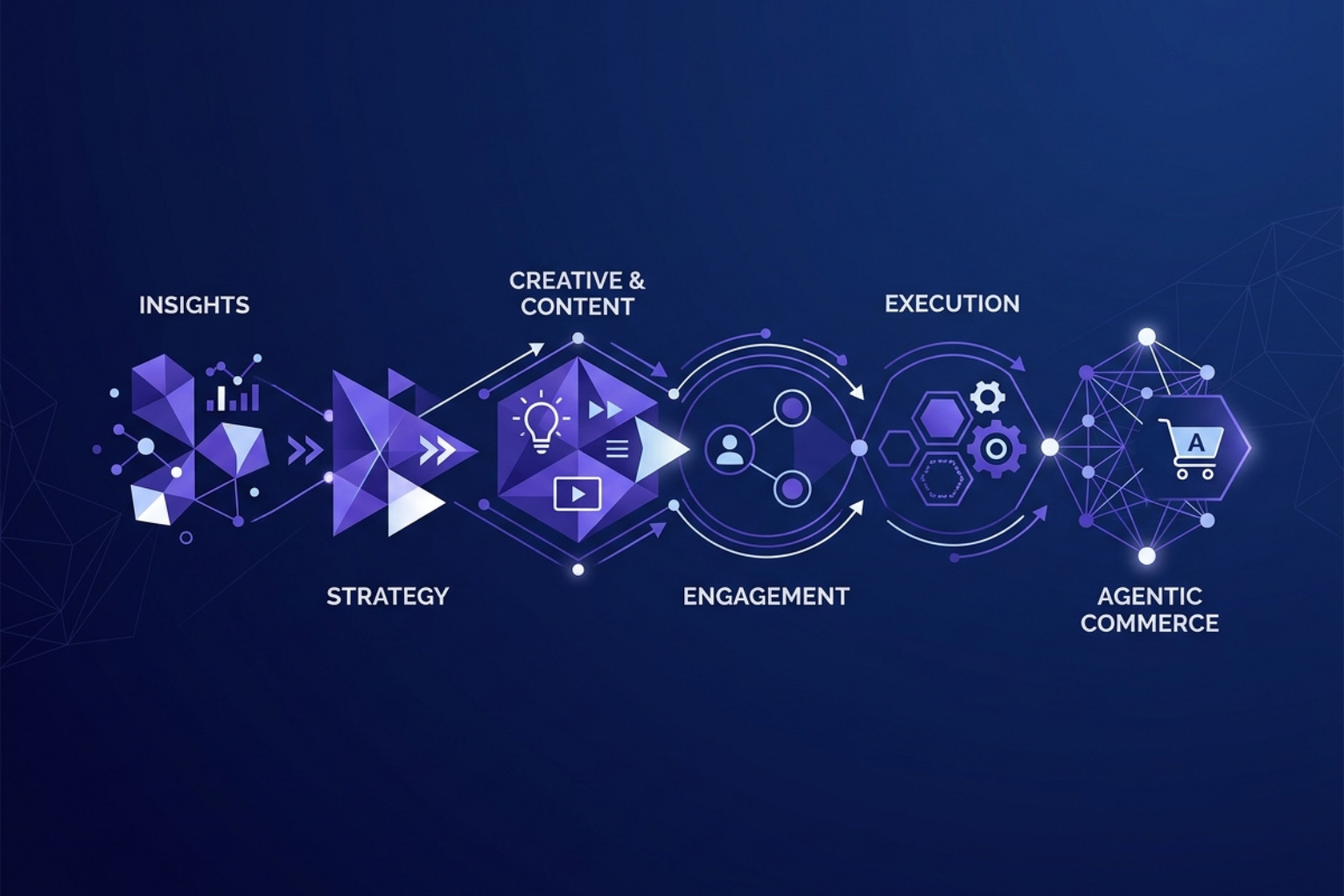
This shift continues through every stage of the chain:
- Consumer Insights: Using AI to analyze unstructured data (images, text, social signals) to find "breakthrough" opportunities.
- Product Development: Leveraging AI to generate counterfactual images or simulate market reactions to new features.
- Search and Discovery: We are moving from SEO to GEO (Generative Engine Optimization). As David Schweidel of Emory University points out, search is evolving from keywords to full-sentence conversational queries. This requires Best Practices for Increasing Brand Visibility in AI-Generated Search Results.
- Demand Generation: Using Natural Language Generation (NLG) to automate Content Strategy in the Age of AI, creating personalized content at a scale previously impossible.
- Agentic Commerce: In the near future, AI agents will handle the research, comparison, and even the transaction for consumers. This forces us to rethink brand loyalty and pricing strategy entirely.
Professor Schweidel’s research also highlights how consumer digital signals can be used to manage customer journeys more effectively, providing firms with a competitive edge through technology-enabled detection and response.
Ethical Considerations and Human Creativity in AI for Marketing Professors
As we empower students with these tools, we must also address the risks. The "word-of-machine" effect is a real phenomenon—consumers trust AI recommendations differently depending on whether the context is utilitarian (like choosing a vacuum) or hedonic (like choosing a perfume).
AI for marketing professors must include a deep dive into:
- Algorithmic Bias: How training data can perpetuate stereotypes in personalized ads.
- Transparency: The need for "human-in-the-loop" systems to ensure that AI-generated content remains ethical and accurate.
- Brand Voice: Ensuring Brand Voice Consistency in AI-Generated Content is a major challenge for modern CMOs.
We believe that AI should augment, not replace, human creativity. The goal is "creative augmentation"—using AI to handle the repetitive, data-heavy tasks so that human marketers can focus on high-level strategy and emotional resonance. Responsible AI use isn't just a "nice-to-have" anymore; it's a core component of consumer trust and long-term brand equity.
Frequently Asked Questions about AI for Marketing Professors
What are the best AI tools for marketing professors to use in the classroom?
The "best" tools are often those that allow students to experiment with real-world data. We recommend using custom AI agents (built via NotebookLM or custom GPTs) to act as 24/7 tutors. For research and strategy, Marketing AI Tools Evaluated provides a great starting point for selecting platforms that handle everything from sentiment analysis to synthetic market research. Simulation software that allows students to see the impact of their decisions in a "sandbox" environment is also becoming increasingly popular.
How is AI changing the way marketing professors teach SEO and content strategy?
The shift is dramatic. We are moving away from teaching keyword stuffing and toward teaching Generative Engine Optimization (GEO). This involves understanding how LLMs pull information to answer full-sentence queries. Professors are now focusing on Global AI Content Optimization Strategies that emphasize authority and context over simple repetition. Additionally, teaching AI Content Strategy Services helps students understand how to manage the massive influx of AI-generated content while maintaining quality.
Which marketing professors are leading the research in generative AI?
Several pioneers are shaping the field. Shane Wang | Marketing | Virginia Tech is a leader in the strategic impact of AI. Eric Bradlow (Wharton) is a titan in marketing analytics. Oguz A. Acar (King's College) is a leading voice on AI in education. Vanitha Swaminathan (Pittsburgh) is the go-to expert for AI-enabled branding, and David Schweidel (Emory) is pioneering work in social media analytics and NLG.
Conclusion
The future of AI for marketing professors is one of constant evolution. We are moving toward a world of "agentic interactions," where marketing strategies will be designed not just for humans, but for the AI agents that serve them. This requires a lifelong learning mindset for both students and faculty.

The bridge between academia and industry has never been more important. At The Brand Algorithm, we are dedicated to helping you stay at the "frontier of the firm." Whether you are a professor looking to update your syllabus or a senior marketer trying to understand the next wave of disruption, we provide the practitioner-level analysis you need.
Don't let your curriculum fall behind the curve. Sign up for The Brand Algorithm today to receive 3–4 updates per week on how AI is reshaping the craft of marketing. Together, we can ensure that the next generation of marketers is ready to lead in the AI era.