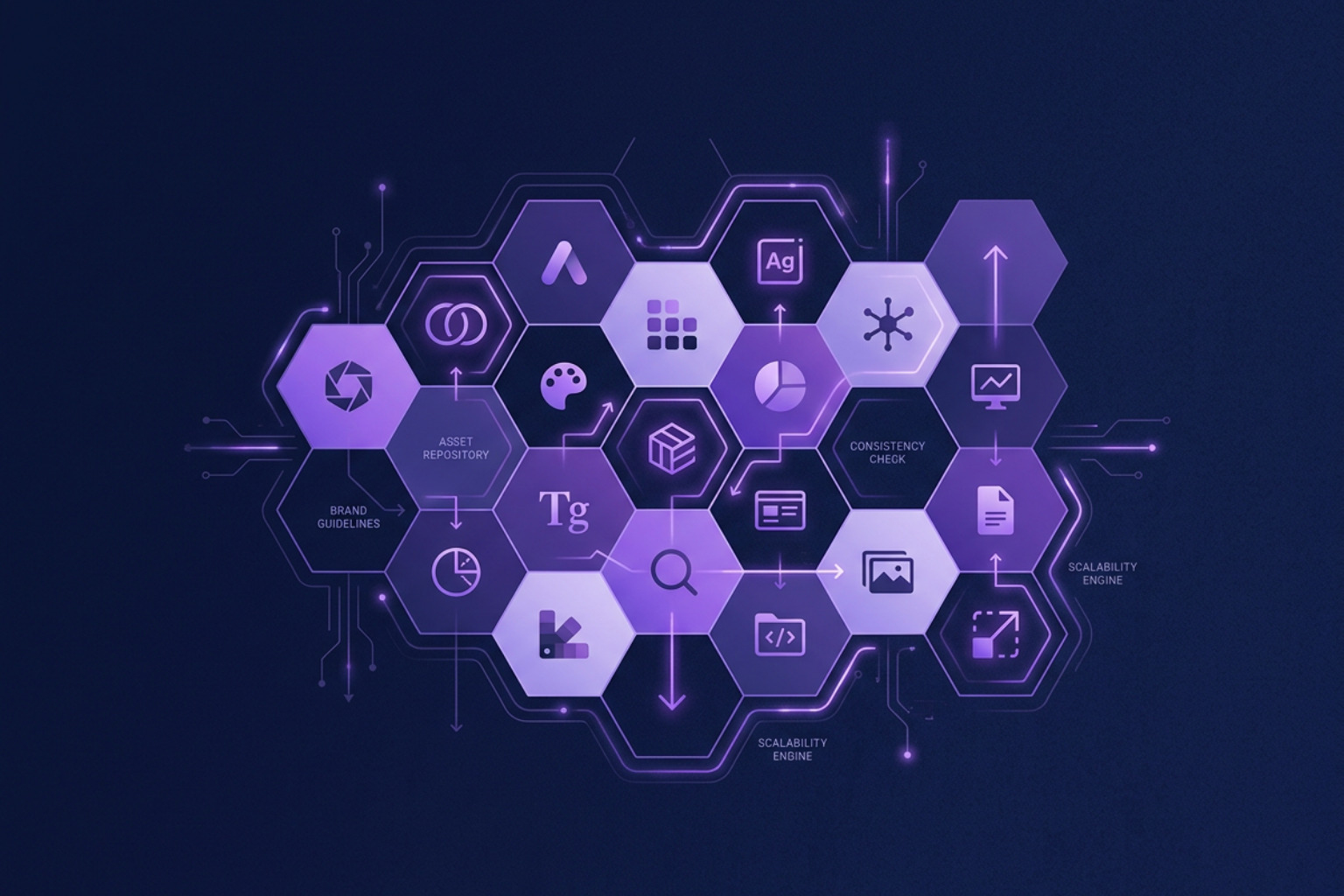
Beyond Efficiency: Marketing Workflow Software as a Brand Governance Engine


For the better part of a decade, the conversation around marketing workflow software has been stuck on efficiency. That’s a dangerously outdated signal. The real value today isn’t about moving faster; it's about reclaiming control over brand equity in an era of automated chaos.
Why Workflow Software Is Now a Brand Governance Tool
Most marketers are getting this wrong. They still see workflow software as a souped-up project management tool for MarOps. The evidence suggests it has become a strategic governance asset, and senior marketers must treat it as such.
As AI automates tactical execution at unprecedented scale, the workflow platform becomes the central nervous system for your brand strategy. It’s the one place you can ensure every automated email, social post, and ad variant aligns with the brand you’ve painstakingly built. Choosing the right software is no longer an operational decision. It’s a C-suite choice that defines how your brand is protected and projected.
The strongest counterargument is that an existing stack—a jumble of project management tools, DAMs, and separate approval queues—is good enough. Frankly, that’s lazy thinking. A disconnected stack doesn't just create inefficiencies; it creates unacceptable brand risk. It’s a broken framework where an off-brand, AI-generated email can easily slip through because the approval process is siloed from content generation.
The Shift From Operations to Governance
Practitioners face a new reality where generative AI can spin up thousands of creative variations in minutes. Without guardrails, this speed becomes a liability. A unified marketing workflow software platform provides control by embedding governance directly into the creative process.
Here’s what this actually means for your team:
- Centralized Asset & Guideline Control: Instead of expecting teams to reference a static PDF, the platform programmatically enforces brand guidelines. AI-generated copy can be automatically scanned for brand voice, tone, and forbidden terms before a human ever sees it.
- Audit-Ready Approval Trails: When a compliance issue arises, you need a single, unbreakable record showing who approved what, and when. A scattered trail across email and Slack won’t hold up. A workflow platform provides a defensible, consolidated trail for your legal team.
- Strategic AI Integration: The platform becomes your controlled environment for safely integrating AI into your marketing engine. This is essential for building a coherent CMO AI strategy that strengthens brand equity instead of diluting it.
The market is already signaling this shift. Precedence Research projects the workflow management system market will grow from $22.84 billion in 2026 to $371.92 billion by 2035. This growth is a direct reflection of AI's tightening grip on brand operations.

This reframes the evaluation question. It's no longer, "How much time will this save us?"
The real question is, "How does this platform protect our brand at the speed of AI?" This isn’t about operational efficiency. It’s about brand resilience.
Understanding the Four Software Archetypes

Most marketers get vendor selection wrong. They get lost in exhaustive feature spreadsheets, comparing platforms on metrics that don't actually matter to their business. This is how you end up with a powerful, expensive tool that actively fights your company's strategy.
The honest answer is that not all marketing workflow software is built from the same blueprint. A platform’s core philosophy—its strategic DNA—is a far better predictor of success than any single feature.
Once you learn to recognize these four distinct vendor archetypes, you can disqualify mismatched platforms in minutes, not months. It's about finding a tool whose worldview aligns with your own.
The All-in-One CRM
This first archetype, with HubSpot as the classic example, operates on a simple, powerful idea: consolidation. The platform is built on the belief that marketing, sales, and service are deeply connected, and all their data should live in one place.
It’s a natural fit for mid-market B2B companies or B2C brands with a considered sales process. The primary use case is inbound marketing—attracting leads and nurturing them through a multi-touch journey. Its true strength is the seamless connection between the CRM and the marketing tools.
But there's a catch. The "all-in-one" approach often means being a "master of none." While the platform’s breadth is its main selling point, the depth in specialized areas like e-commerce or complex multi-brand governance can’t compete with a dedicated tool.
The E-commerce Specialist
Platforms like Klaviyo represent a completely different philosophy. Their world is entirely transaction-focused, built from the ground up to drive repeat purchases and boost customer lifetime value for direct-to-consumer (D2C) brands.
Their DNA is coded with deep, native integrations into e-commerce backbones like Shopify. This gives them direct access to rich behavioral data—cart abandonment, purchase history, browsing patterns—that all-in-one CRMs often struggle to capture in real-time. This is what allows a D2C apparel store, for example, to automatically email customers who bought a specific jacket last winter and show them a new matching accessory.
The obvious limitation? These platforms are one-trick ponies. Their data model is fundamentally misaligned for a B2B enterprise or any service-based business.
The Agency Engine
A newer, explosive archetype is the Agency Engine, where HighLevel is the dominant player. This is white-label marketing software built specifically for marketing agencies to rebrand and sell to their small business clients. The entire philosophy is about bundling a comprehensive, affordable toolset for the Main Street market.
Its core strengths are its sheer breadth and low cost, packing a CRM, email, SMS, and funnels into one platform. For an agency serving dentists and real estate agents, it's a massive force multiplier. They can deliver sophisticated marketing services at scale without managing a dozen different subscriptions.
The market shift toward this model is undeniable. While older tools have more installations, HighLevel's reported 3,322,700% growth over the past 10 years shows a fundamental change in how SMBs buy marketing software.
The tradeoff is a lack of deep enterprise functionality. It doesn't have the robust security protocols, advanced governance controls, or complex user permissions that larger organizations require.
The Enterprise Orchestrator
Finally, we have the Enterprise Orchestrator, a category defined by platforms like Adobe Marketo Engage. These systems are engineered for complexity and scale. They are designed to manage millions of contacts across multiple brands, regions, and business units.
This is the only realistic choice for large, global corporations, especially those in highly regulated industries like finance or healthcare. Its strengths are in its granular control over user permissions, sophisticated lead scoring, and its ability to handle immense volumes of data while integrating deeply with the wider enterprise stack like Salesforce.
The clear downside is the immense cost and complexity. These are not tools you just "turn on." They demand a dedicated team of certified specialists, a significant budget, and a long implementation. For any company without that level of scale, an Enterprise Orchestrator is a strategic misstep—like buying a freight train to deliver a pizza.
For more guidance, check our insights on leading marketing technology companies.
A Strategic Comparison of Workflow Software Archetypes
To make the right choice, you have to look beyond a simple feature list. The table below compares these four archetypes based on their core philosophy and ideal use case, helping you align your business needs with the platform's fundamental design.
| Archetype | Example Vendor | Core Philosophy | Ideal For | Key Limitation |
|---|---|---|---|---|
| All-in-One CRM | HubSpot | Consolidation: Unify marketing, sales, and service data in one system. | Mid-market B2B or B2C with long sales cycles. | Lacks deep functionality in specialized areas like e-commerce. |
| E-commerce Specialist | Klaviyo | Transaction-Focus: Drive revenue and LTV for online stores. | Direct-to-consumer (D2C) e-commerce brands. | Misaligned data model for non-transactional businesses. |
| Agency Engine | HighLevel | Resell & Scale: Provide a bundled toolset for agencies to serve SMBs. | Marketing agencies serving local or small businesses. | Lacks enterprise-grade security, governance, and permissions. |
| Enterprise Orchestrator | Adobe Marketo Engage | Scale & Governance: Manage complex marketing across a global organization. | Large, multinational corporations in regulated industries. | Extremely high cost and implementation complexity. |
Choosing the right platform begins with an honest assessment of your own organization's size, business model, and strategic priorities. Mismatches happen when you choose a tool based on what it can do, rather than what your business needs it to do.
A Practitioner's Framework for Platform Evaluation
The traditional RFP process for marketing software is a relic. It encourages procurement teams to reward the vendor who checks the most boxes, reducing a critical strategic decision to a feature bake-off. This approach is broken.
Senior marketing leaders need to throw out the old checklist. The right marketing workflow software isn't the one with the most bells and whistles; it's the one with the right architecture to support your specific strategy. This means analyzing platforms across four non-negotiable pillars.
Core Capabilities and Data Model
The first pillar is about looking beyond the surface. Don't ask, "Does it have email automation?" Ask, "How does its core data model handle a unified customer profile across every channel?" A platform built for e-commerce, like Klaviyo, thinks about customers in a fundamentally different way than one designed for long B2B sales cycles, like Marketo Engage.
Map one of your core customer journeys and ask the vendor to build it live. This exercise quickly exposes the system’s true logic, not just its advertised capabilities.
The hard truth is that many all-in-one platforms can't deliver true omnichannel data fusion. Their databases are often a patchwork of acquisitions stitched together, not a single, coherent architecture. This creates the very data silos a unified platform is supposed to eliminate.
Integration Architecture and True Cost
Every vendor will tell you they have a robust API. That claim is table stakes. The critical analysis isn't about whether an API exists, but about the real-world cost and complexity of connecting the platform to your existing stack.
Here’s what to dig into:
- Native vs. Third-Party Connectors: Ask for a list of their native, pre-built integrations for your essential tools (your CRM, your DAM, your BI platform). If a connection relies on a third-party tool like Zapier, you're adding another point of failure and more complexity.
- Implementation SOWs: Push to see an anonymized Statement of Work from a recent implementation for a company of similar complexity. This is where you'll find the hidden professional services costs. A $50,000 annual license can easily be eclipsed by a $150,000 implementation fee.
The counterargument is that a best-of-breed, integration-heavy strategy gives you more flexibility. While true in theory, the operational overhead and "integration debt" quickly become a nightmare for most marketing teams.
Governance and Brand Safety
For any CMO, this is arguably the most important pillar. A marketing platform isn’t just a workflow engine; it’s a tool for brand governance and risk mitigation. It must provide the guardrails to protect your brand's equity.
Rigorously test its ability to enforce control. Make the vendor demonstrate these specific, high-stakes scenarios:
- Programmatic Guideline Enforcement: Show how the system can automatically flag or block an AI-generated email that uses a term from a "do not use" list.
- Granular User Permissions: Ask them to configure a role for a junior regional marketer who can create campaigns from templates but is blocked from editing brand-locked assets.
- Audit Trail for Compliance: Have them run a report showing the complete, unalterable history of an ad creative—from creation through every revision and final approval.
Most marketers get this wrong by treating governance as just another feature. It's a foundational architectural requirement, especially for brands in regulated industries.
AI Roadmap and Future-Proofing
Finally, cut through the marketing hype and scrutinize the vendor's actual AI strategy. Don't be impressed by a slick demo of AI-powered copy generation—that's a commodity. The real value is in how AI is woven into the core workflow and data engine.
Press vendors to explain how their AI models will impact brand consistency. A forward-thinking platform lets you train its AI on your brand's specific voice, your top-performing content, and your own proprietary customer data. This turns a generic AI assistant into a strategic asset.
A weak answer sounds like, "We're incorporating generative AI across the platform." A strong answer sounds like, "Our Q4 release includes a predictive analytics module that will analyze past campaign data to forecast the ROI of planned initiatives." One is a vague promise; the other is a concrete capability.
The number on the vendor's proposal is just the beginning. The real investment—the one that will make or break your success—is rarely listed on the invoice. We're talking about the overlooked costs of implementation, data migration, and actually getting your team to use the new platform.

The biggest pitfall is a "rip and replace" strategy. Abruptly swapping out an old system for a new one almost guarantees chaos. Campaigns stall, teams get frustrated, and critical data gets lost. Your new strategic asset quickly becomes a very expensive paperweight.
The Real Price of Implementation
A successful launch takes a dedicated project team, a realistic timeline measured in quarters, and a budget that earmarks a serious chunk for professional services. For a mid-sized company adopting a platform like Marketo Engage or HubSpot, it’s not uncommon for implementation costs to be 2-3x the first-year subscription fee.
These unlisted costs pay for the critical change management needed to break old habits and drive adoption.
The most expensive software is the one nobody uses. Without a formal change management plan, your team will default to the familiar chaos of spreadsheets and email.
This leads to a tough conversation about talent. You can't run sophisticated marketing workflow software without a dedicated marketing operations team. These aren't just extra tasks for a brand manager. You need people with a unique blend of technical know-how, strategic thinking, and project management discipline.
The Risk of Doing Nothing
The counterargument is that implementation sounds hard and expensive. It is. But standing still is the far greater strategic threat. Sticking with a disconnected, manual tech stack is a surefire path to brand decay and competitive irrelevance.
Research from McKinsey points out that up to 22% of a marketer’s current work can be automated. Without a central workflow platform, you have no practical way to capture that efficiency. Your competitors will be launching campaigns faster because their operations are smarter.
Here’s what sticking with the status quo actually costs:
- Slower Time-to-Market: While the competition is live, your team is stuck in a frustrating loop of emails and manual approvals.
- Brand Inconsistency: With no central system to enforce standards, your voice and visuals fracture, eroding trust.
- Wasted Talent: Your best people spend their days chasing assets and approvals instead of doing high-impact strategic work.
The cost of implementation is a finite challenge. The cost of inaction is a slow, compounding slide into obsolescence.
How to Measure ROI Beyond Lead Generation

When calculating ROI for workflow software, most marketers stop at surface-level metrics like lead volume. This overlooks the platform's deeper, strategic impact on brand equity and operational resilience. You're not just building a more efficient marketing team; you're building one that's more scalable and fundamentally less risky.
Moving from Tactical to Strategic Metrics
To make a compelling case to the C-suite, you need a more sophisticated way to measure success. Drawing a clean line from a workflow platform to Q3 revenue is a flawed story. Instead, connect the platform’s capabilities to the high-level business outcomes the entire executive team cares about.
Track metrics that prove you're building a healthier marketing engine:
- Campaign Time-to-Market: Measure the average cycle time from initial brief to final launch. A 30% reduction means the entire business can react to market shifts faster.
- Brand Consistency Score: Use brand monitoring tools to audit creative assets across every channel. A centralized platform with locked templates and automated guideline checks directly improves this score, protecting your investment in brand equity.
- Reduction in Compliance Errors: For regulated industries, this is a game-changer. Track the number of compliance-related revisions before and after implementation. An automated approval workflow becomes a powerful risk mitigation tool.
Quantifying the Unquantifiable
I hear the counterargument: these metrics feel "soft" compared to hard revenue figures. That thinking is outdated. These operational improvements have a clear, demonstrable financial impact that can be modeled with confidence.
A central digital asset management (DAM) feature doesn't just make designers' lives easier. It slashes the time your highest-paid strategists waste hunting for files and eliminates the risk of using unlicensed imagery, which can result in six-figure lawsuits. That’s a tangible financial benefit.
The evidence suggests companies wielding these platforms see significant results. Research shows a 10% revenue uplift within six to nine months, alongside 80% more leads and 77% higher conversions. Our guide on descriptive analytics can help build the right measurement framework.
AI-driven analytics will make this connection even clearer. Analysts forecast these systems will slash operational costs by up to 30% by 2026. You can explore the market research from Fortune Business Insights for a closer look.
Measuring the ROI of workflow software requires you to think like a COO. The real value isn’t just in the campaigns you launch; it’s in building a resilient, scalable, and governance-driven marketing organization.
Five Questions to Ask Before You Sign the Contract
Let's be honest: the vendor demo is pure theater. It’s a perfectly rehearsed highlight reel designed to gloss over the platform’s real-world weak spots. If you want to cut through the polished presentation, you have to go off-script.
The answers you get to the following questions will tell you far more than the demo ever will. They expose a vendor's core philosophy and architectural blind spots.
1. Show Me How Your Platform Stops an Off-Brand AI Message. Right Now.
This isn't a theoretical exercise. Ask them to build it live on the call. The prompt: "Demonstrate how your system would automatically block an AI-generated social post that uses a term from our 'do not use' list or strays from our brand's trained voice."
- A weak answer is, "Well, it would go into a manual approval workflow for review." That’s just a digital version of your current process.
- A strong answer involves showing you programmatic guardrails. They'll demonstrate how their native AI audits content against your specific brand rules before a human ever has to see it.
This question immediately separates the platforms that just generate content from the ones built to protect your brand.
2. Walk Me Through a Real-World Migration for a 50-Person Team.
Ask for a step-by-step walkthrough of migrating a mid-sized team from a common setup (think Asana plus Google Drive) onto their marketing workflow software. Better yet, ask to see an anonymized project plan from a similar implementation.
Push for specifics on data mapping, asset transfer, user training, and typical professional services costs. An honest partner will be upfront about the complexity and detail the change management needed. They sell solutions, not just licenses.
3. How Does Your Data Model Tell the Difference Between a Lead and a Customer?
This question gets right to the heart of a platform’s architecture. Is it built for sales, e-commerce, or a full-funnel relationship? A system like Klaviyo is transaction-centric, while a platform like HubSpot is built around the lead-to-customer lifecycle.
Ask them to pull up a single, unified profile that shows both pre-purchase marketing touchpoints and post-purchase support tickets for the same person. How the system handles this reveals everything about whether its architecture fits your business model.
4. Build Me a Report Measuring Campaign Cycle Time.
Don't let them dazzle you with pre-built dashboards full of vanity metrics. Give them a real task: "Build a custom report from scratch that tracks the average time from 'brief submitted' to 'campaign live' for all projects last quarter."
This simple request forces them to show you how intuitive their analytics tools really are. More importantly, it reveals if the platform is designed to give a marketing leader operational intelligence or just tactical data.
The ability to measure and diagnose operational friction is what separates a strategic workflow platform from a simple project management tool. If a vendor fumbles while building this report, you have your answer.
5. What’s One Critical Marketing Workflow Your Platform Is NOT Built For?
This final question is a test of integrity. Every platform has limitations. A vendor who insists their software is a perfect fit for every use case is either naive or dishonest.
A true enterprise orchestrator like Marketo Engage might admit it’s overkill for a small social media team. An agency engine like HighLevel should be frank about not having the governance features a regulated brand needs. A confident vendor knows who they serve best. That honesty is the clearest sign of a partner you can trust.
Frequently Asked Questions
As a marketing leader, you’re likely grappling with the same tough questions we hear about marketing workflow software. Let's cut through the noise and get straight to the answers.
What Is the Biggest Mistake in Choosing Workflow Software?
The single biggest mistake is getting distracted by shiny features. Most will go unused. Teams fall into the trap of buying a tool that can do everything instead of the tool that does what they need, exceptionally well.
First, map your ideal workflow and define your non-negotiable brand governance needs. Only then should you look for a platform built to support that specific reality. Anything else is a recipe for shelfware.
How Do I Justify This Investment to the C-Suite?
Stop talking about marketing metrics. Your CEO and CFO care about business outcomes. Frame the investment around the three things they care about most:
- Operational Scalability: Show them how this software allows you to produce more campaigns and content without hiring more people. It’s about building a more profitable marketing engine.
- Risk Mitigation: Position the platform as a crucial governance and compliance tool. Explain that an auditable trail for approvals and built-in brand guideline enforcement lowers the company's legal and brand safety risks.
- Revenue Enablement: Connect the dots between faster campaign launches and your ability to jump on market opportunities. Speed is a real competitive advantage.
You are not asking for a budget to make marketing's job easier; you are presenting a business case for making the entire commercial operation more resilient and scalable.
Should a Small Team Invest in Sophisticated Software?
That depends entirely on your ambition, not your current headcount. If the plan is to scale the business aggressively, investing early in a platform that can grow with you is one of the smartest moves you can make.
The trick is to choose a modern platform that doesn't need a dedicated administrator. Sticking with a patchwork of disconnected tools creates "data debt" and process chaos that becomes exponentially harder and more expensive to untangle later.
The pain of migrating your entire marketing operation in two years will be far greater than the cost of starting on a scalable platform today.